RTP
96.75%
Wild Bounty Showdown slot is a 6-reel game from PG Soft with 3600 ways to win, a 96.75% RTP, high volatility, and a 5000x top payout. The main decision for most players is simple: this game suits medium-to-high risk sessions because the hit frequency is 29.04%, the bet range runs from 0.2 to 100, and the strongest value comes from cascading wins, the gold-frame mechanic, progressive multipliers, free spins, and wild substitution. If you want a fast answer before opening the demo, the math suggests wider bankroll swings than average, but better upside than low-volatility slots when the multiplier chain starts building.

Published:
If your goal is to test whether Wild Bounty Showdown slot fits your bankroll, start by comparing stake size with hit rate. At 29.04%, you can expect about 29 winning spins per 100 spins on average, which also means roughly 71 spins without a direct hit. That ratio is normal for a feature-driven game and is the main reason the demo matters before real-money play. A practical test is 200 spins at 0.2. Total stake equals 40 units. Theoretical return is 40 × 0.9675 = 38.7 units, for a theoretical cost of 1.3 units, but real outcomes can be far wider because a large share of value is concentrated inside bonus sequences and multiplier chains.
Play Now18+ | T&Cs Apply
Wild Bounty Showdown slot uses a 6-reel layout with a 3-4-5-5-4-3 grid and 3600 ways to win, so you do not need fixed paylines. Winning combinations usually form from left to right across adjacent reels. That matters because wider middle reels increase symbol connection potential, especially when cascades clear space for follow-up wins. A simple way to understand the reel flow is to think in symbol lanes rather than paylines. On a 3-4-5-5-4-3 setup, the center of the grid carries more combinational density than the outer edges. If a winning cluster removes symbols and a cascade lands premium or wild symbols into those central columns, the multiplier path can build quickly. Example: if your stake is 1, a first cascade pays 2x, a second cascade pays 4x, and a progressive multiplier doubles the payout to 8x effective value, the chain returns 2 + 4 + 8 = 14 units before any free spins are counted.
Actionable tip: if you are learning the mechanics, set a test bankroll equal to at least 150 minimum spins. At 0.2, that means 30 units. This size is large enough to see base-game cadence, cascade behavior, and whether the bonus frequency matches your comfort level. Because the game is high volatility, avoid raising stakes after one strong hit. Instead, use fixed betting through a sample of 150 to 300 spins and review whether your balance swings fit your risk tolerance better than lower-volatility alternatives.
Start Playing18+ | T&Cs Apply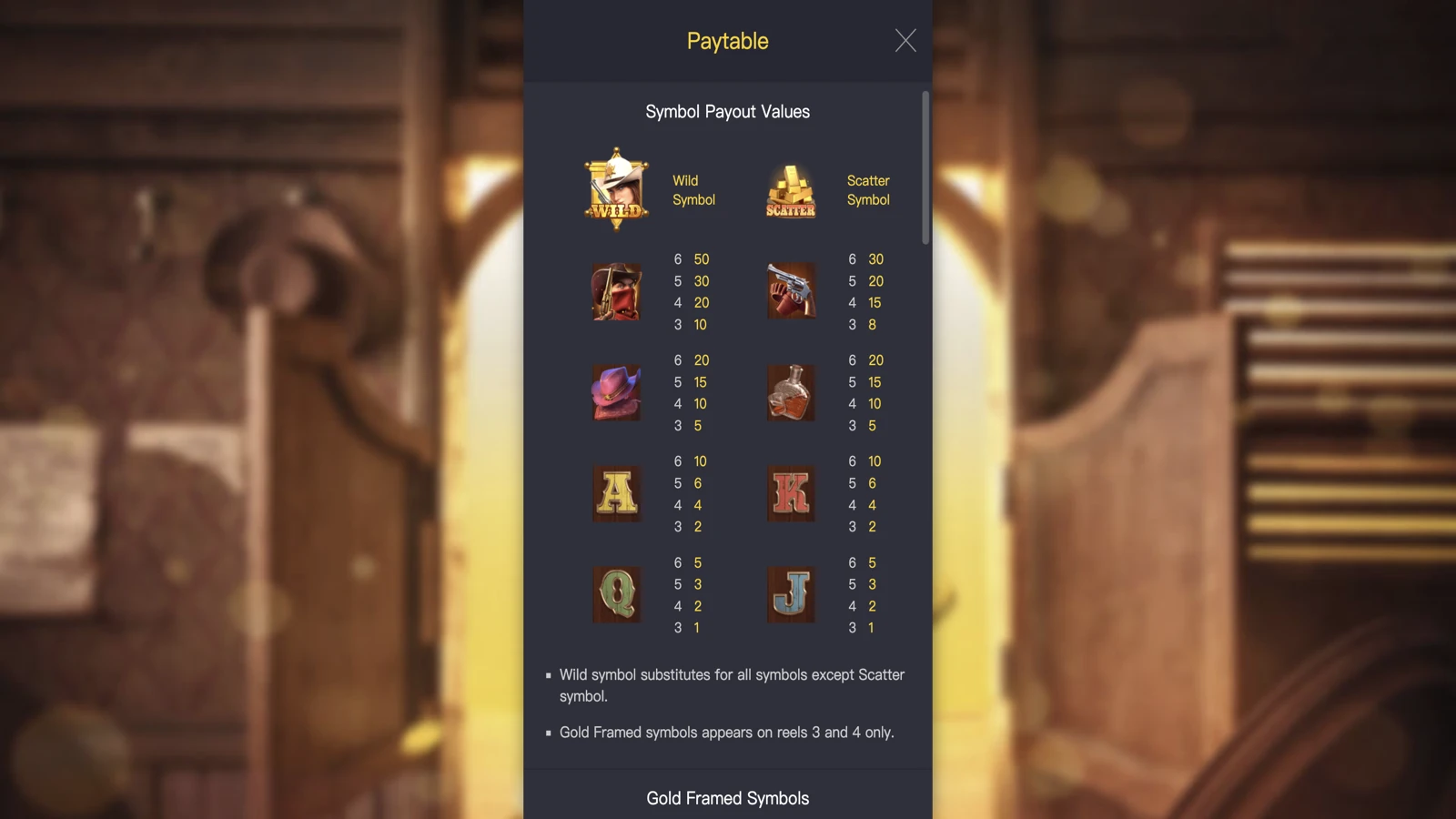
The 5000x ceiling in Wild Bounty Showdown slot is meaningful, but it should be interpreted correctly. High volatility does not automatically mean an extreme top win, and this game proves that point. The cap is solid for bankroll growth in short bursts, yet lower than ultra-aggressive slots that push five-digit multipliers. The real advantage here is feature stacking rather than raw maximum exposure. Cascading wins keep symbols moving, the gold-frame mechanic increases premium value pressure, progressive multipliers improve sequence payouts, free spins raise upside, and wild substitution reduces dead reel outcomes. A practical max-win scenario can be broken into steps: assume a 1-unit spin triggers free spins, several cascades connect premiums, and the multiplier ramps until the feature round accumulates 5000 units. At 0.2 stake, that same ceiling equals 1000 currency units; at 10 stake, it equals 50000 currency units. This is why fixed stake planning matters more than chasing a headline number.

Actionable tip: if your target is feature value rather than jackpot-style hunting, aim for stake sizes that allow at least 200 spins. On this title, survival time matters because bonus rounds and multiplier ladders create most of the upside. Players who overbet often leave before the core mechanics have enough chances to fire. Now that you understand the payout structure, try it yourself:
Claim Bonus18+ | T&Cs Apply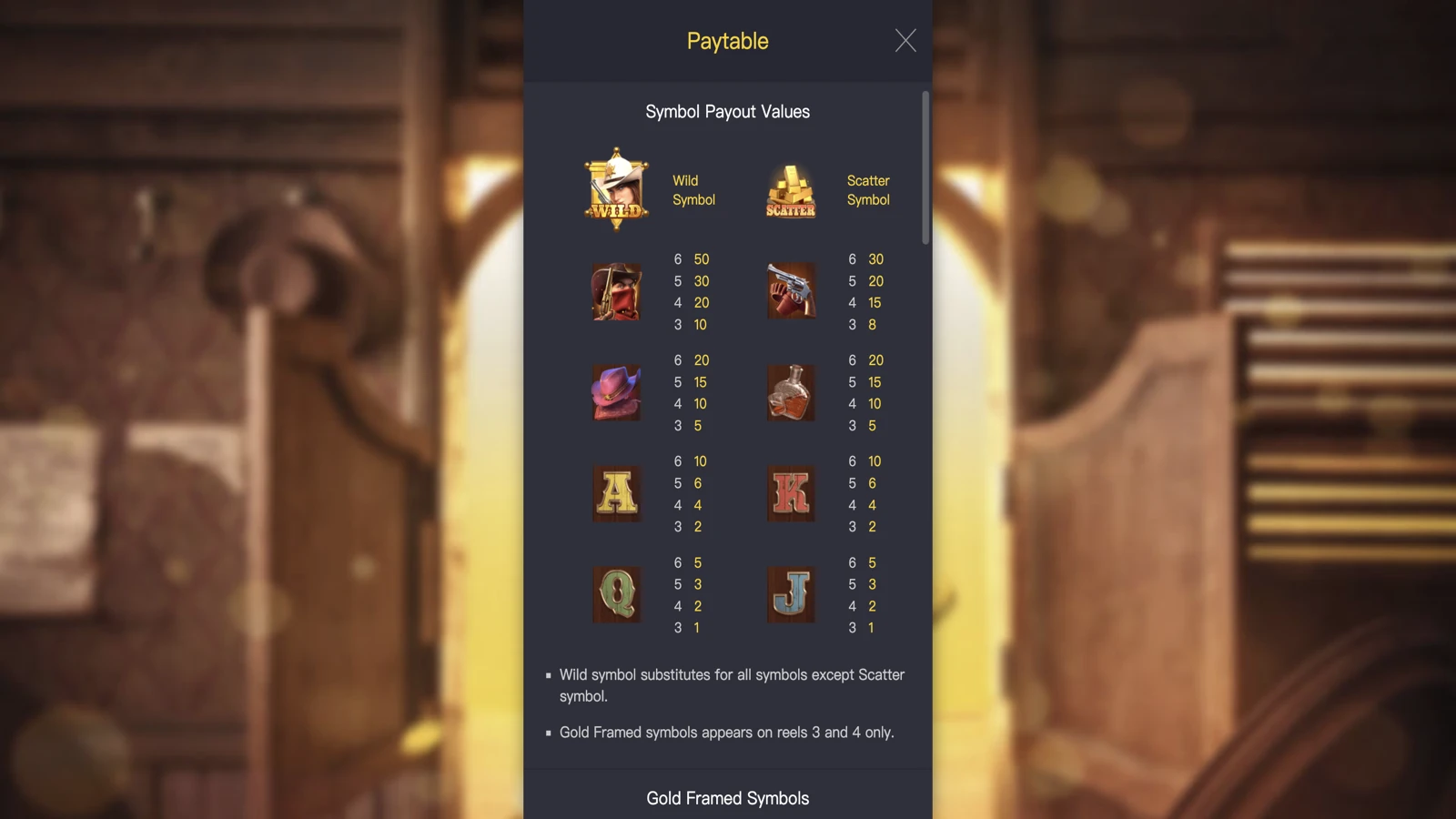
Wild Bounty Showdown slot has a published RTP of 96.75% and a hit frequency of 29.04%. Those two numbers answer different questions. RTP estimates long-run return across a massive sample, while hit frequency estimates how often spins produce any win at all. Combined with high volatility, the result is a game that may feel dry for stretches, then repay a large share of value through a few stronger sequences. Session planning should therefore focus on bankroll depth, not just average return. A useful framework is expected losing cost per 100 spins: at 0.2 per spin, stake outlay is 20, expected return is 19.35, and theoretical cost is 0.65. At 1 per spin, expected cost per 100 spins is 3.25. At 5 per spin, expected cost per 100 spins is 16.25. These are not guarantees, but they help compare session risk before you commit.
Actionable tip: if you want a steadier experience, limit each session to a fixed loss threshold equal to 30 to 50 spins at your chosen bet, then stop. For example, at 1 per spin, a 40-unit cap prevents emotional stake jumps during cold streaks. If you hit a feature early and double your bankroll, consider banking at least 50% of the profit because high-volatility games can reverse quickly even after a strong start.
Join Now18+ | T&Cs Apply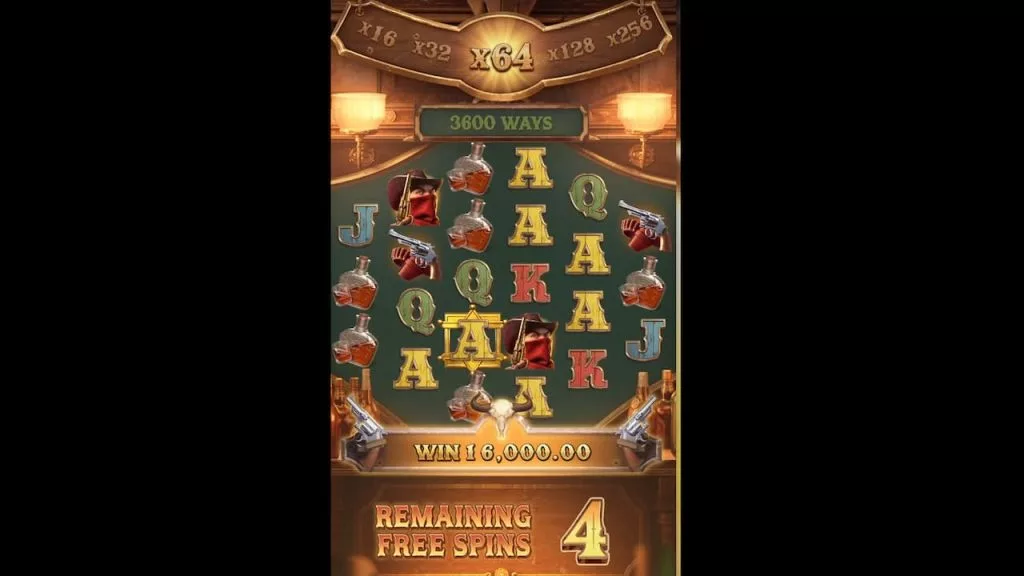
For most players, the best place to start Wild Bounty Showdown slot is the demo on a mobile-ready HTML5 page. That gives you the same reel structure, feature logic, and symbol behavior without immediate bankroll pressure. Because the game supports iOS and Android, the key practical checks are load speed, interface clarity, and whether the controls remain readable in portrait or landscape. Demo-first play is especially useful here because you can verify how often cascades chain, how quickly the multiplier grows, and whether bonus rounds appear often enough for your style. If a game has high volatility, the first 50 spins can be misleading, so use at least a 150-spin test before deciding whether to move to real money.
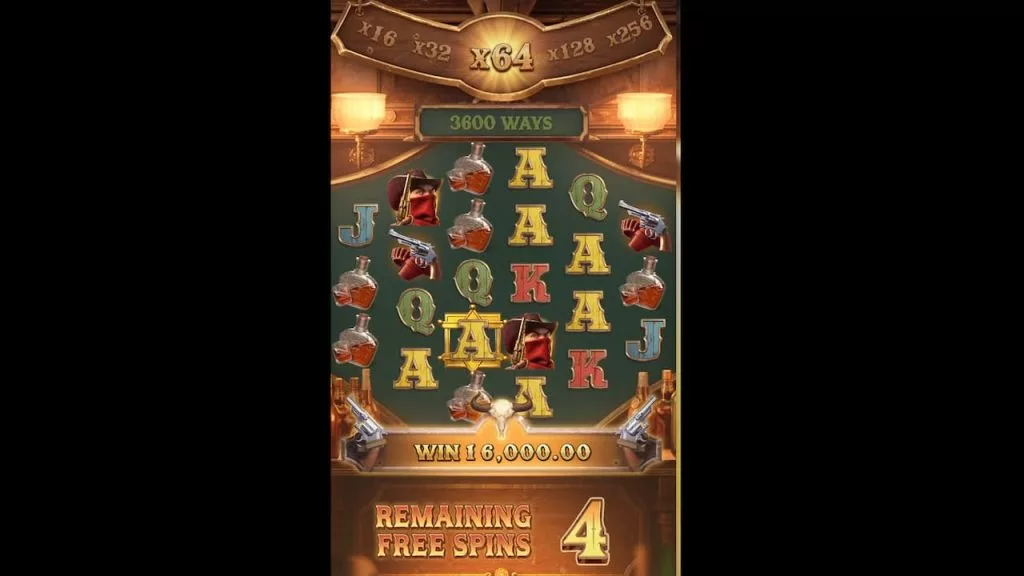

Actionable tip: if you switch from demo to real money, keep the same stake for the first 100 paid spins. That prevents common bias where players overestimate bonus frequency after a lucky test round. If the real-money session feels too swingy, drop to a stake that covers at least 200 spins within your budget.
Register Today18+ | T&Cs Apply
The short answer is that Wild Bounty Showdown slot is best for players who accept uneven short-term results in exchange for feature-driven upside. The strongest facts are clear: 96.75% RTP is competitive, 29.04% hit frequency is playable but not dense, 3600 ways help the reel engine feel active, and the 5000x cap is respectable rather than extreme. If you are comparing titles, the biggest practical question is not only the RTP but how that RTP is distributed. Here, more value is packed into bonus mechanics than into constant low-tier wins. That means discipline matters. Use the demo to test pacing, choose a stake that covers at least 150 to 200 spins, and treat any large feature hit as a reason to lock profit instead of raising variance.
Get Bonus18+ | T&Cs Apply
Wild Bounty Showdown is a Wild West-themed video slot from PG Soft built around a 6-reel diamond layout with reels arranged 3-4-5-5-4-3 and 3,600 ways to win. If you are asking what the Wild Bounty Showdown slot actually offers, the short answer is this: it is a high volatility game with a 96.75% RTP, a 29.04% hit frequency, a top payout of 5,000x your stake, and a betting range from 0.2 to 100. That combination puts it in the category of slots that can produce long quieter stretches but also larger upside when multiple features connect. The theme leans hard into frontier shootouts, outlaws, revolvers, whisky bottles, wooden card royals, and gold bars, so the visual identity is not just cosmetic; it supports a clear, fast-reading game structure where premium symbols and feature symbols stand out on every cascade.
Is it worth playing? For players who specifically want a Wild Bounty Showdown slot with real upside and layered mechanics, yes, it is worth trying because the feature stack is stronger than a basic ways slot. You get cascading wins, a Gold-frame mechanic, a progressive multiplier that doubles with each cascade and can climb as high as x1,024, a free spins feature that starts at x8, a feature buy option, and Wild symbol substitution to improve line completion across the 3,600-win-way system. That matters because 96.75% RTP is above many market-average slots, and when high volatility is paired with a multiplier ladder instead of a flat bonus, the game gives experienced players a clearer reason to manage spin count and bankroll instead of simply hoping for one lucky scatter event.
Who should play it? This game best fits three groups. First, high-volatility players who can handle variance and prefer chasing a 5,000x ceiling over frequent low-value payouts. Second, feature-focused slot players who like measurable mechanics such as cascades, retrigger-style momentum, and multiplier growth. Third, players who enjoy a gritty Wild West Frontier Showdown atmosphere with a warm golden palette rather than a generic modern casino theme. If your goal is extended low-risk entertainment, smaller bets like 0.2 to 1 can keep sessions longer. If your goal is testing max-win paths, the free demo is the smarter starting point before moving to real stakes.
Now that you know what the Wild Bounty Showdown slot offers, try the real-money version if the high-volatility profile matches your bankroll plan:
Start Playing18+ | T&Cs ApplyTo play the Wild Bounty Showdown slot well, you need more than the spin button. You need a simple process that connects bet size, symbol value, feature expectation, and session length. Because this is a high volatility PG Soft game with 3,600 ways to win, one of the biggest mistakes beginners make is judging it after only a few spins. A more useful approach is to treat the first 50 to 100 spins as a test sample. At a 29.04% hit frequency, 100 spins would statistically produce about 29 winning events, but not all wins are profit-making wins. Some will simply return a fraction of your total stake. That is why bankroll structure matters. For example, if you choose a 0.2 bet and plan 100 spins, your theoretical spin budget is 20. At a 1 bet level, 100 spins require 100. At a 2 bet level, the same test costs 200. This is the clearest way to decide whether your intended stake fits a high-variance slot.
The practical goal in Wild Bounty Showdown is to survive long enough to let cascading wins, Gold-frame interactions, and multiplier growth work together. A single base-game win can expand into several cascades, and each extra cascade pushes the progressive multiplier higher. If the multiplier sequence doubles like x1, x2, x4, x8, x16, and beyond, then a modest symbol hit becomes much more meaningful when it lands after multiple clear-and-drop cycles. Suppose a 1.5x base win occurs on the fourth cascade. If the multiplier at that stage is x8, the return becomes 12x stake. If another 2x symbol connection lands on the fifth cascade at x16, that single follow-up becomes 32x stake. These are not guaranteed outcomes, but they show why the game rewards patience, stable bet sizing, and feature awareness more than random stake jumps.


Now that you understand the setup, bankroll math, and feature flow, you can test your own session pacing with real stakes:
Play Now18+ | T&Cs ApplyThe best way to test the Wild Bounty Showdown slot before risking money is to use a free demo. A demo version is useful because it lets you practice stake selection, observe the 3-4-5-5-4-3 grid behavior, and measure how often cascades build into meaningful returns without paying for the lesson. The key benefit is that the demo keeps the same core features as the real-money version: cascading wins, Gold-frame interactions, the progressive multiplier ladder, free spins, and Wild symbol substitution. That means your learning transfers directly. If you want to know whether the slot fits your style, a 100-spin demo at 0.2 or 1 is much more informative than a blind deposit.
It is also ideal for strategy testing. For example, you can run two simple experiments. In the first, keep a flat 0.2 bet for 100 spins and track how many wins exceed 1x stake. In the second, use a higher practice bet and compare bankroll volatility per 20-spin block. Because the game RTP is 96.75%, the theoretical house edge is 3.25% over the long run, but short-run outcomes in a high-volatility slot vary much more than that. A free demo helps you feel that variance without financial pressure. It also lets you decide whether the feature buy concept appeals to you before using actual funds. For many players, that alone makes demo play the most efficient first step.
If you have finished testing and want to move from practice to live play, use the official access point here:
Get Bonus18+ | T&Cs ApplyThe Wild Bounty Showdown slot uses a 6-reel diamond layout with a 3-4-5-5-4-3 structure, which means the middle reels carry the highest symbol density and naturally create more connection paths than a standard 5x3 slot. Instead of fixed paylines, the game pays through 3,600 ways to win. In practical terms, you do not need symbols to land on one exact line. You need matching symbols on consecutive reels from left to right, starting on reel 1. If a premium outlaw symbol appears on reel 1, and at least one matching symbol appears somewhere on reels 2, 3, and 4, that is already a valid combination. The number of ways expands when multiple matching symbols land on the same reel, because every possible reel-to-reel connection counts. That makes the center of the grid especially important in base play.
Wins trigger cascading reels, so every winning symbol disappears and new symbols drop into the empty spaces. This is where the game starts to separate itself from simpler frontier-themed slots. Each consecutive cascade increases the progressive multiplier, doubling step by step until it can reach x1,024. A simple example shows how powerful this can be. Imagine a stake of 1.00. A first winning cluster of ways pays 2.50 at x1, so the return is 2.50. The cascade removes those symbols, the next win pays 3.00 at x2 for 6.00 total, then a third cascade pays 4.00 at x4 for 16.00. After only three resolving wins, the round has already returned 24.50x the bet. In longer sequences, the multiplier scales much harder than the symbol values alone. This is why the game carries high volatility even with a 29.04% hit frequency: many spins miss, but successful chains can grow quickly.
Special symbols give the Wild Bounty Showdown slot its tactical identity. The sheriff's badge wild substitutes for regular pay symbols to complete or improve combinations, so it increases both hit quality and way count. The gold bar scatter works differently: it pays by function rather than by substitution. Landing 3 or more gold bars anywhere on the reels triggers free spins, which begin with an x8 starting multiplier. That is a major jump because the bonus round skips the low x1 opening level that base-game cascades start from. There is also a gold-frame mechanic on reels 3 and 4. When a gold-framed symbol contributes to a win, it transforms into a wild on the next spin, creating carry-over value between rounds rather than only within a single cascade. If you want a symbol-by-symbol breakdown, visit the Wild Bounty Showdown symbols page. If you need the practical spin sequence from stake selection to feature triggers, the how to play guide explains the flow clearly.
Actionable tip: because the game is high volatility, a practical session target is at least 100 to 150 base spins if you want a realistic chance to see how the cascade chain, wild conversion, and free spins interact. For example, at a 0.20 minimum bet, 150 spins cost 30.00 before wins. At 0.50, the same test session needs 75.00. That simple bankroll math matters more here than in lower-volatility slots.
Now that you understand the reel flow, ways system, and special symbols, try it yourself:
Play Now18+ | T&Cs ApplyWhen players ask whether the Wild Bounty Showdown slot is balanced for long sessions, the first place to start is the RTP-volatility combination. The RTP is 96.75%, which means the game is theoretically set to return 96.75 for every 100 wagered over a very large sample. That does not mean a single session returns close to that number. Since volatility is high, short-term results can land far above or far below expectation. To understand this better, compare the theoretical loss rate with the game's burst potential. The house edge from RTP alone is 3.25%, so on paper 1,000 wagered has an expected theoretical loss of 32.50. Yet because max win reaches 5,000x, the distribution of returns is extremely uneven. A large part of the slot's value is concentrated in its multiplier-enhanced cascades and free spins. This means bankroll planning matters more than simply looking at RTP in isolation.
A worked example makes the volatility easier to interpret. If you spin at 1.00 for 100 rounds, your total stake exposure is 100. With a 29.04% hit frequency, the game may produce about 29 winning spins over that stretch, but many of those hits can be small returns below 1x stake. In a high-volatility model, the bonus feature and premium cascades often carry a large share of total expected value. So two sessions with the same number of wins can finish very differently depending on whether one includes a free spins trigger or a deep multiplier chain. This is also why some players prefer to compare the slot against other feature-heavy games rather than against low-volatility classics. A useful rule of thumb is this: if your bankroll only supports 40 to 60 spins, you are mostly testing variance; if it supports 150+ spins, you are giving the game more room to express its design.
If you want to test the RTP and risk profile with a controlled bankroll, start here:
Claim Bonus18+ | T&Cs ApplyThe 5,000x max win in Wild Bounty Showdown does not come from one oversized line hit alone. It is tied to stacked mechanics working together: premium combinations, cascading removals, the doubling multiplier ladder, wild substitution, and the free spins round that starts at x8. For players researching whether the cap is realistic, the answer is that it is possible only through a high-quality feature path, not through ordinary base-game single hits. The most likely route is a free spins sequence with multiple cascades after a strong premium setup or several wild-assisted connections across the broader middle reels.
Here is a simplified max-win style path using round numbers. Suppose a free spins cascade sequence begins with a raw premium payout of 12x stake. Because free spins start at x8, that first resolved win returns 96x. If the next cascade creates another 10x symbol payout, the multiplier doubles to x16 and pays 160x. A third cascade worth 8x pays at x32 for 256x. A fourth worth 7x pays at x64 for 448x. After only four successful drops, the cumulative total reaches 960x. Continue that progression with two more medium cascades, and the total can surge past 1,500x without requiring any impossible symbol screen. This math explains why the game can reach its cap while still keeping ordinary spins modest. It is the multiplier geometry, not just symbol rarity, that creates the top-end ceiling.
Actionable tip: because the feature buy is available, some players compare direct bonus access against normal spinning. That comparison depends on budget discipline. If your balance can only cover one bought feature, variance is extreme. If you prefer steadier testing, use base spins and track how often reels 3 and 4 generate gold-frame carryover value before committing to bonus-focused play. For more controlled session planning, the Wild Bounty Showdown strategies guide is the better next step.
If the 5,000x ceiling matches your risk appetite, continue with a real-money session:
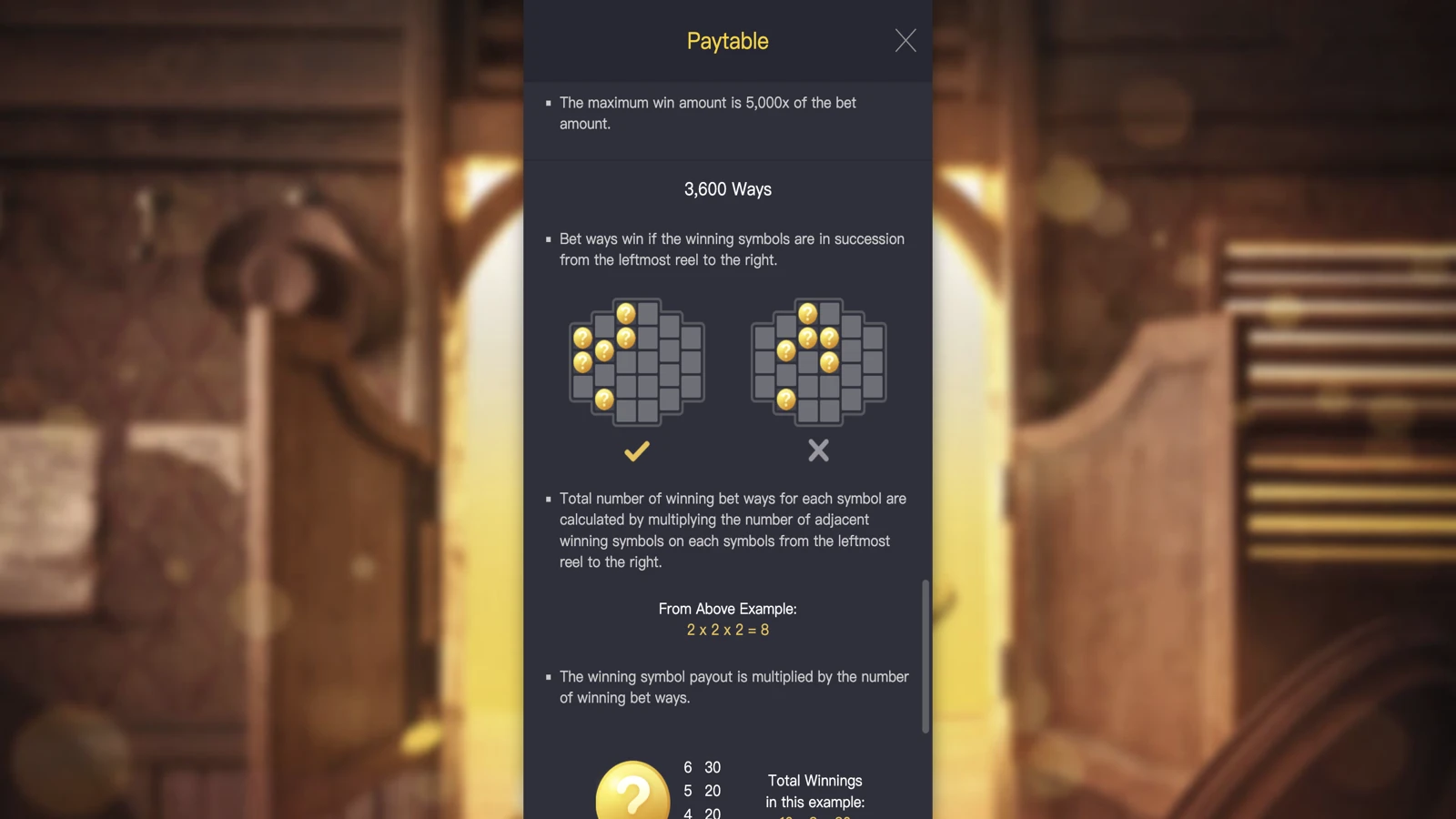
Start Playing18+ | T&Cs ApplyThe diamond reel model is one of the biggest reasons players search for Wild Bounty Showdown slot mechanics specifically. A standard 5x3 slot usually creates simpler line patterns, but this game stretches to 6 reels while widening in the middle. The reel heights of 3-4-5-5-4-3 mean reels 3 and 4 offer the best chance to multiply matching paths. If one symbol appears once on reel 1, twice on reel 2, three times on reel 3, twice on reel 4, and once on reel 5, the number of ways for that symbol family is 1 x 2 x 3 x 2 x 1 = 12 ways before reel 6 is even considered. Add one more match on reel 6 and it becomes 12 full-length ways. Because multiple symbol types can land across the same cascade, a single drop can contain several overlapping way calculations.
This structure also explains why wilds and gold-frame conversions are more valuable on the central reels than on the edges. A wild on reel 3 can connect existing symbols from the left and still keep several route possibilities alive for reels 4, 5, and 6. A transformed wild on reel 4 does something similar by preserving downstream connections. Compared with a fixed-payline slot, the advantage is flexibility: you do not care about one exact row, only about continuity from left to right. Compared with some cluster-pay games, the advantage is predictability: every winning method still follows a reel-based rule, so the math is easier to read. That makes Wild Bounty Showdown particularly good for players who want modern feature depth without losing track of how a spin actually pays.
The visual identity of the Wild Bounty Showdown slot leans hard into a cinematic frontier presentation rather than a cartoon western parody. The color palette uses warm amber, saddle-brown wood, leather reds, and sharp gold accents to mimic a town lit by sunset and lamplight. That palette does more than set mood; it helps functionally separate symbol classes. Gold bars and gold-framed mechanics stand out immediately, the sheriff's badge wild remains readable even during rapid cascades, and the premium characters maintain enough contrast against the rustic background to keep wins visible on mobile screens. The symbol set follows the expected Wild West vocabulary—outlaws, revolvers, hats, whisky bottles, wooden card royals, and gold bars—but the design choice that matters most is readability during movement. Cascading games can become visually busy if the reels overanimate. Here, the symbols remain distinct enough that players can track why a tumble happened and what changed after it.
The soundtrack supports the same design logic. Instead of overwhelming the player with constant effects, the audio usually works in layers: a dry western backing track, sharper metallic accents for gold features, and stronger impact cues when wilds or bonus symbols appear. This matters because good slot audio is not only atmosphere; it is information. A recognisable scatter sound teaches players to react before the reels stop, and a rising win cue helps signal that a cascade sequence may continue. In practical use, that makes the game more legible during longer sessions. Compared with generic fantasy slots, Wild Bounty Showdown feels more grounded and more tactical, which suits players who prefer to understand state changes instead of just watching flashing animations. On smaller devices, the desert-saloon theme also holds up well because the contrast between brass-like gold, leather brown, and cream text is strong enough to preserve usability.
If the western presentation and clear feature cues appeal to you, open the game here:
Register Today18+ | T&Cs ApplyWhat makes Wild Bounty Showdown slot stand out is not merely that it has free spins, cascades, and wilds—many slots have those. The difference is how the mechanics layer. First, the 6-reel diamond layout changes the probability texture of each spin because the center reels can multiply ways more aggressively than a flat grid. Second, the multiplier doubles with each cascade all the way to x1,024, which is unusually steep. Third, free spins start at x8, so the bonus is not just extra spins; it begins at an already accelerated payout state. Fourth, the gold-frame mechanic on reels 3 and 4 adds cross-spin memory. Many slots resolve value only inside one spin, but this game can leave behind transformed wild potential for the next round. That feature creates a more strategic feel because players know some setup states are worth waiting through.
In a practical comparison against a generic western competitor, Wild Bounty Showdown is stronger in multiplier depth and reel geometry, while a simpler rival may feel smoother for low-risk play. If you want frequent low-level entertainment, a flatter volatility model can be easier on bankroll. If you want a frontier slot where one feature can swing a session, Wild Bounty Showdown is the more compelling option. The key is matching the game to your objective. Bonus hunters, feature-buy users, and players comfortable with dry spells usually get more from this title than casual low-stake spinners who want near constant feedback.
If these unique mechanics fit your style more than a standard western slot, begin here:
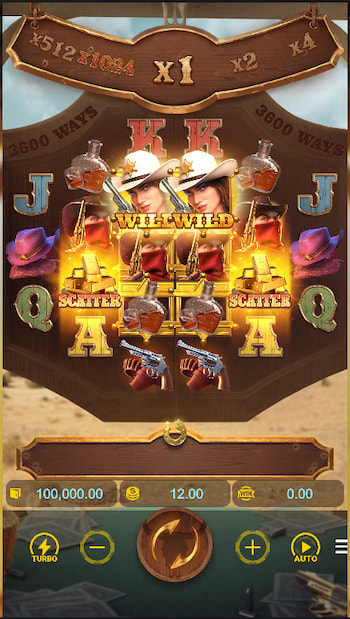
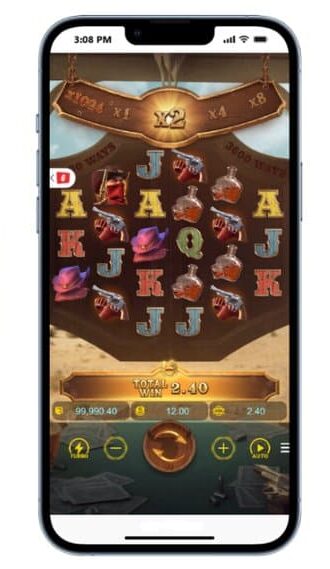
Get Bonus18+ | T&Cs ApplyThis Wild Bounty Showdown slot gallery gives a practical visual preview of the game before you commit real balance. Instead of treating screenshots as decoration, use them to verify what matters most: reel visibility, symbol readability, bonus indicators, and how clearly the interface communicates feature progress. In a high-volatility slot with 96.75% RTP, visual clarity is important because long sessions often depend on reading bonus state changes quickly. For example, the 6-reel 3-4-5-5-4-3 grid creates 3600 ways to win, so symbol spacing and reel width directly affect how easy it is to follow cascades and count premium connections. A good screenshot also shows whether the multiplier meter, gold-frame mechanic, and free spins transitions are readable at speed on desktop and mobile. That matters because if your average test stake is 1 coin and you play 100 spins, the theoretical return is 100 × 1 × 0.9675 = 96.75 coins, leaving a theoretical shortfall of 3.25 coins before volatility effects. In practice, a high-volatility game can swing far above or below that number, so players need a layout that makes big feature moments obvious. The screenshots below cover wild presentation, volatility context, mobile touch controls, free spins flow, reel coverage, and the main western theme display. Review each image like a checklist: Can you clearly see premium symbols? Is the spin button easy to reach on mobile? Does the free spins screen show enough bonus information? Are reel animations likely to support fast decisions during feature buy testing? That is the value of a screenshot gallery for Wild Bounty Showdown slot players: not just style, but decision support built around mechanics, usability, and expected session comfort.
The gallery is especially useful when judging how Wild Bounty Showdown slot communicates risk. With a 29.04% hit frequency, a simplified estimate is that about 29 wins may appear in 100 spins, while roughly 71 spins may not return anything. That does not mean 29 profitable spins; it only means hit events occur at that approximate rate. If you stake 0.2 for 100 spins, total coin exposure equals 20. Using RTP, the theoretical return equals 20 × 0.9675 = 19.35, for a theoretical loss of 0.65 over a very long sample. If you stake 2 for 100 spins, exposure rises to 200 and theoretical return becomes 193.5, with a theoretical loss of 6.5. These examples show why the mobile and desktop screenshots matter: they reveal whether the game presents enough visual feedback to keep high-volatility play understandable over longer cycles. Actionable tip: if you plan to test feature buy or chase free spins, review the screenshots for multiplier display and gold-frame indicators first, then choose a stake where at least 80 to 120 base spins fit your budget. In a high-volatility title, interface transparency is not cosmetic; it directly helps with bankroll discipline.
The screenshots connected to free spins, wild symbols, and the main interface are the most relevant if your goal is to understand the 5000x ceiling. A top win in Wild Bounty Showdown slot usually depends on feature stacking rather than a single isolated line event. Step by step, the logic is simple: first, a bonus or strong base hit creates a wide symbol connection across the 3600-ways structure; second, cascading wins clear paid symbols and open space for follow-up drops; third, gold-frame or multiplier mechanics increase the value of the sequence; fourth, wild substitution helps preserve continuity across reels; and finally, free spins amplify the chance of multiple premium interactions. To convert the headline number into practical scale, use stake multiplication. At a 0.2 bet, 5000x equals 1000. At a 1 bet, 5000x equals 5000. At a 5 bet, 5000x equals 25000. At the 100 max bet, the theoretical 5000x cap reaches 500000. Actionable tip: because the game is high volatility, players aiming for top-end outcomes should avoid increasing stakes too quickly after small wins. Instead, define a session cap in spin units. If your budget is 100 and you use a 1 bet, that gives 100 spins; if you use 0.5, that gives 200 spins, which improves your chance to actually see the feature flow represented in these screenshots.
Although the game uses a frontier theme, the core mathematical appeal comes from its 3600 ways system across a 3-4-5-5-4-3 reel setup. The screenshots showing reel structure and hero gameplay are useful because they visually confirm the widening center reels that support more combination routes. A simple way to understand the total is to multiply reel heights across all six columns: 3 × 4 × 5 × 5 × 4 × 3 = 3600. That number means matching symbols do not need to sit on a single fixed payline; they only need to land on adjacent reels from left to right in valid winning groups. This increases visual activity and makes cascades easier to appreciate in screenshot sequences. For practical play, that changes how you evaluate small wins. In a fixed 20-line game, missing one line often means no payout. In Wild Bounty Showdown slot, one symbol appearing on several positions of the same reel can keep multiple route combinations alive at once. Actionable tip: if you prefer games with more frequent visual involvement even under high volatility, 3600 ways layouts are usually easier to follow than dense line maps, especially when the interface clearly marks winning symbols and cascade removal. The gallery helps you verify that before you play, especially on mobile where compressed symbols can otherwise reduce readability.
Now that you understand the visual layout, risk profile, and feature flow of Wild Bounty Showdown slot, try it yourself:
Start Playing18+ | T&Cs ApplyPG Soft • 6 reels • 3,600 ways to win • High volatility
This features guide focuses on the mechanics that actually drive value in Wild Bounty Showdown: cascading wins, the gold-frame wild conversion on reels 3 and 4, the progressive multiplier that can climb to x1,024, the free spins round with an x8 starting multiplier, the sheriff badge wild substitution rule, and the feature buy option. The game uses a 6-reel 3-4-5-5-4-3 layout with 3,600 ways to win, an RTP of 96.75%, a hit frequency of 29.04%, and a listed max win of 5,000x. That data matters because each feature changes expected session rhythm in a different way. A 29.04% hit rate means roughly 29 winning events in every 100 paid spins on average, but high volatility shifts a large share of return into less frequent premium sequences. In practical terms, most of the upside comes from chaining several mechanics together rather than relying on one single event. That is why players searching for Wild Bounty Showdown bonus features should pay attention not only to how each feature triggers, but also to how one mechanic feeds the next.

The most technical base-game mechanic in Wild Bounty Showdown bonus features is the gold-frame system tied to reels 3 and 4. The sheriff's badge is the wild symbol, and it substitutes for any regular pay symbol to complete or improve winning combinations across the game's 3,600 ways. The extra layer is that regular symbols landing inside gold-framed positions on reels 3 and 4 can convert into wilds on the next spin, but only if those framed symbols contributed to a win on the current result. That condition matters. A framed symbol does not transform simply because it appeared in the marked position; it must first participate in a winning combination. This makes the feature stronger than a random wild modifier because it is linked to an already successful hit. The follow-up spin can therefore begin with improved board quality concentrated in the center reels, which are often the most valuable locations for extending multi-reel wins. If a winning line uses a framed symbol on reel 3, for example, the next spin may start with a sheriff badge in the same area, increasing the chance that lower-value routes become full combinations and premium symbols connect deeper into reels 5 and 6.
To trigger the transformation, land a regular symbol in a gold-framed position on reel 3 or 4 and make sure that symbol is part of a winning way. On the next spin, that symbol becomes a wild. Because the trigger is automatic and tied to successful wins, the mechanic effectively rewards center-reel involvement. A practical tip is to watch consecutive spin sequences rather than judging one isolated hit. If several framed symbols contribute across back-to-back rounds, the next-spin setup can become materially stronger. For win potential, the direct value of the conversion depends on symbol composition, but the real edge is combinational. A single central wild can connect multiple symbol paths at once in a ways game. For example, if a premium symbol appears on reels 1, 2, 5, and 6, a converted wild on reel 3 or 4 can act as the bridge that turns a dead-looking spin into a 4-reel or 5-reel payout path. Strategy wise, because the game has high volatility, this mechanic supports longer bankroll planning. If you are playing a medium session with a 100x stake budget, the gold-frame feature is one reason not to overreact to several quiet spins, since its strongest value often shows one round later rather than immediately on the trigger spin.

Cascading wins are the engine that makes Wild Bounty Showdown bonus features feel volatile and explosive. When a winning combination lands, the winning symbols disappear and new symbols fall into the empty positions. If the refill creates another win, the process repeats. At the same time, the win multiplier doubles with each successful cascade chain, and the listed cap is x1,024. This doubling sequence is straightforward in math but powerful in outcome: x1, x2, x4, x8, x16, x32, x64, x128, x256, x512, and finally x1,024. Reaching the upper end is rare because the game also has a max total win of 5,000x, but even middle-stage chains create meaningful value spikes. For a worked example, imagine a 1.00 stake spin. If the initial win pays 2.5x, the first cascade pays 3x at x2 for 6x, and the second cascade pays 4x at x4 for 16x. Total chain return becomes 2.5x + 6x + 16x = 24.5x from one paid spin. If the sequence extends two more cascades with raw symbol values of 2x and 1.5x, multiplied at x8 and x16, the added values are 16x and 24x, bringing the full spin to 64.5x. That is why players should judge this slot by sequence potential rather than by isolated single-hit size.
The trigger condition is simple: any winning combination starts the cascade. In a ways game on a 3-4-5-5-4-3 grid, the best chains often begin with broad low or medium-value connections because they clear more positions and give the refill greater freedom to form new links. The multiplier is progressive and automatic, so there is no decision point during the spin. The strategy edge comes before the spin: choose a stake that allows enough attempts to experience variance. Since hit frequency is 29.04%, around 29 wins per 100 spins can be expected on average, but only a small share of those events will expand into long cascades. A useful bankroll rule for high-volatility slots is to hold at least 150 to 200 bets if your goal is feature exposure rather than short-session entertainment. Another practical tip is to give more weight to center-reel wild conversions when evaluating cascade potential. A converted wild on reels 3 or 4 can increase the chance that a refill turns a 3-reel hit into a 4-reel or 5-reel continuation. In that sense, the cascade multiplier and gold-frame feature are not separate value streams; they are linked mechanisms that multiply each other's impact.
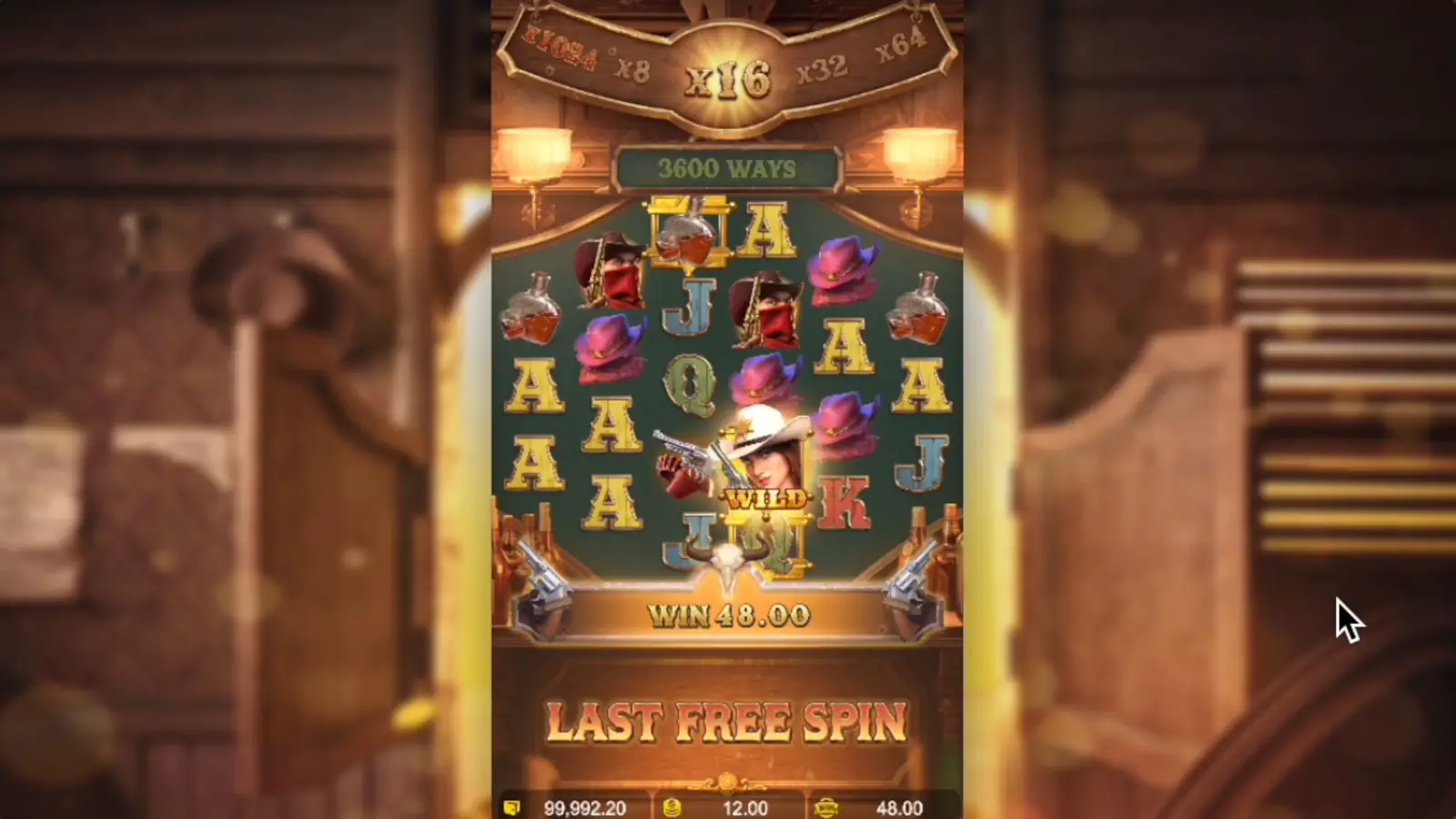
The free spins round is the highest-profile part of Wild Bounty Showdown bonus features because it starts with a built-in x8 multiplier before any cascade progression begins. Gold bars act as scatter symbols, and landing 3 or more anywhere on the reels triggers the feature. Exactly 3 scatters award 10 free spins, while each extra scatter adds 2 more spins. That means 4 scatters give 12 free spins, 5 scatters give 14, and 6 scatters give 16. During the round, every free spin starts at x8, and then the multiplier doubles with each cascade inside that spin. So a free spin can move from x8 to x16, x32, x64, and higher if the cascade chain continues. This is a major structural jump from the base game because the multiplier floor is no longer x1. A worked example shows the difference clearly. Suppose one free spin produces a raw 3x symbol win and then two additional cascades worth 2x and 1x. The payouts become 3x at x8 = 24x, then 2x at x16 = 32x, then 1x at x32 = 32x. Total from that one free spin is 88x. In base play, the same raw symbols would have paid 3x + 4x + 4x = 11x if the chain started from x1, x2, and x4. That gap explains why the bonus round carries a large share of long-session upside.
Retriggers are available, which is important because extra scatters can extend a strong sequence and give the x8 reset multiple opportunities. The trigger rule remains 3 or more gold bar scatters anywhere during free spins. The strategy tip here is to evaluate the round by total multiplier exposure, not by spin count alone. Ten free spins sounds modest, but ten spins with an x8 baseline are mathematically stronger than many longer bonuses that start at x1. Players searching for Wild Bounty Showdown bonus features should also understand the relation between bonus size and volatility. Because the game has high volatility and a max win of 5,000x, the free spins round is where the profile of return becomes most top-heavy. If you are comparing session plans, a cautious approach is to use lower base stakes when chasing natural scatters, then assess whether the bonus buy price justifies direct entry. On the mechanical side, the sheriff badge wild and the gold-frame conversion can still support payout growth because any stronger symbol connectivity inside free spins is multiplied from the x8 base upward. That means the best free spins rounds are often those with both broad symbol removal and center-reel wild support, not merely those with one large standalone hit.

Although some players search for paylines, Wild Bounty Showdown uses 3,600 ways to win rather than fixed paylines. On a 6-reel 3-4-5-5-4-3 grid, wins form when matching symbols connect from the leftmost reel across adjacent reels. This matters for feature evaluation because ways systems usually benefit more from central wilds and wide cascades than fixed-line formats do. A sheriff badge on reel 3 or 4 can support several active winning routes at once, especially when adjacent reels contain multiple matching instances of the same symbol. In practical play, that means broad symbol coverage is often as important as symbol rank. The game also includes a Feature Buy option that grants direct access to the free spins round at a displayed price. Because the exact cost can vary by configuration, the smartest way to assess value is to compare cost in stake multiples to the average free-spin payout you consider acceptable. As a decision framework, if the buy costs 80x stake, then a result below 80x is below break-even for that purchase, while a 160x bonus return is a 2.0x recovery on the buy cost. This does not guarantee positive expectation, but it gives a clearer benchmark than emotional session tracking.
Strategy wise, the feature buy is better suited to players specifically targeting Wild Bounty Showdown bonus features rather than those seeking smoother bankroll duration. Natural play spreads volatility across base hits, gold-frame setups, and occasional scatter triggers. Feature buys compress variance into fewer, more expensive decisions. If your bankroll is 200x stake, buying a bonus at 80x uses 40% of that reserve immediately, while the same budget could fund 200 base spins at 1x stake. Conversely, if your goal is direct access to the x8 starting multiplier and retrigger potential, the buy can be rational as a high-variance shortcut. One more important clarification: this game does not list sticky wilds or expanding wilds as core mechanics, and it does not use cluster pays. The wild here is a substitution symbol with transformation support from the gold-frame system, not a sticky or expanding modifier. That distinction matters when comparing this title to other western slots. Players should expect stronger center-reel conversion logic and multiplier-driven cascades, not board-locking wild persistence. In short, the highest-value route is to understand how 3,600 ways, wild substitution, gold-frame conversion, and free-spin multipliers combine rather than chasing mechanics the game does not actually include.
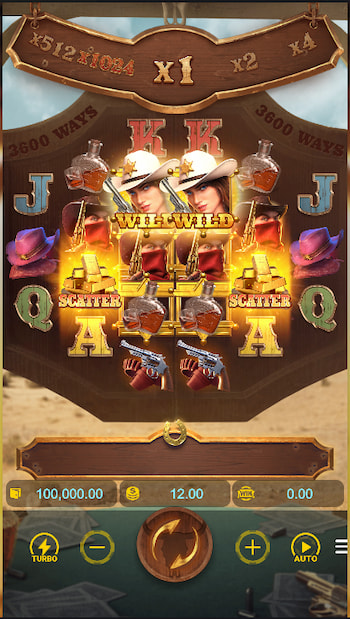
Step 1
Gold-frame or natural wild lands
Sheriff badge substitutes immediately, or a winning framed symbol on reel 3 or 4 prepares next-spin wild value.
Step 2
Winning way forms across 3,600 ways
Left-to-right symbol links create the first payout and open the board for removal.
Step 3
Cascade triggers multiplier growth
Winning symbols vanish, new symbols drop, and the multiplier doubles from x1 up to x1,024.
Step 4
Free spins amplify the whole chain
3+ gold bar scatters start 10+ free spins, and every spin begins at x8 before further doubling.
The interaction map shows why Wild Bounty Showdown bonus features should be treated as a linked system. A natural or converted wild improves the chance of the first hit. That first hit can trigger a cascade. The cascade raises the multiplier. If the same logic plays out inside free spins, the chain starts from x8 instead of x1. This structure explains both the game's high volatility and its 5,000x top-end potential. Players who want the most practical takeaway should focus on three rules: first, center-reel framed symbols matter more than they appear to at first glance; second, bankroll depth matters because the best value comes from rare multi-layer chains; third, feature buy decisions should be judged against cost in stake multiples, not against emotion after one result. Now that you understand how the mechanics connect, try it yourself:
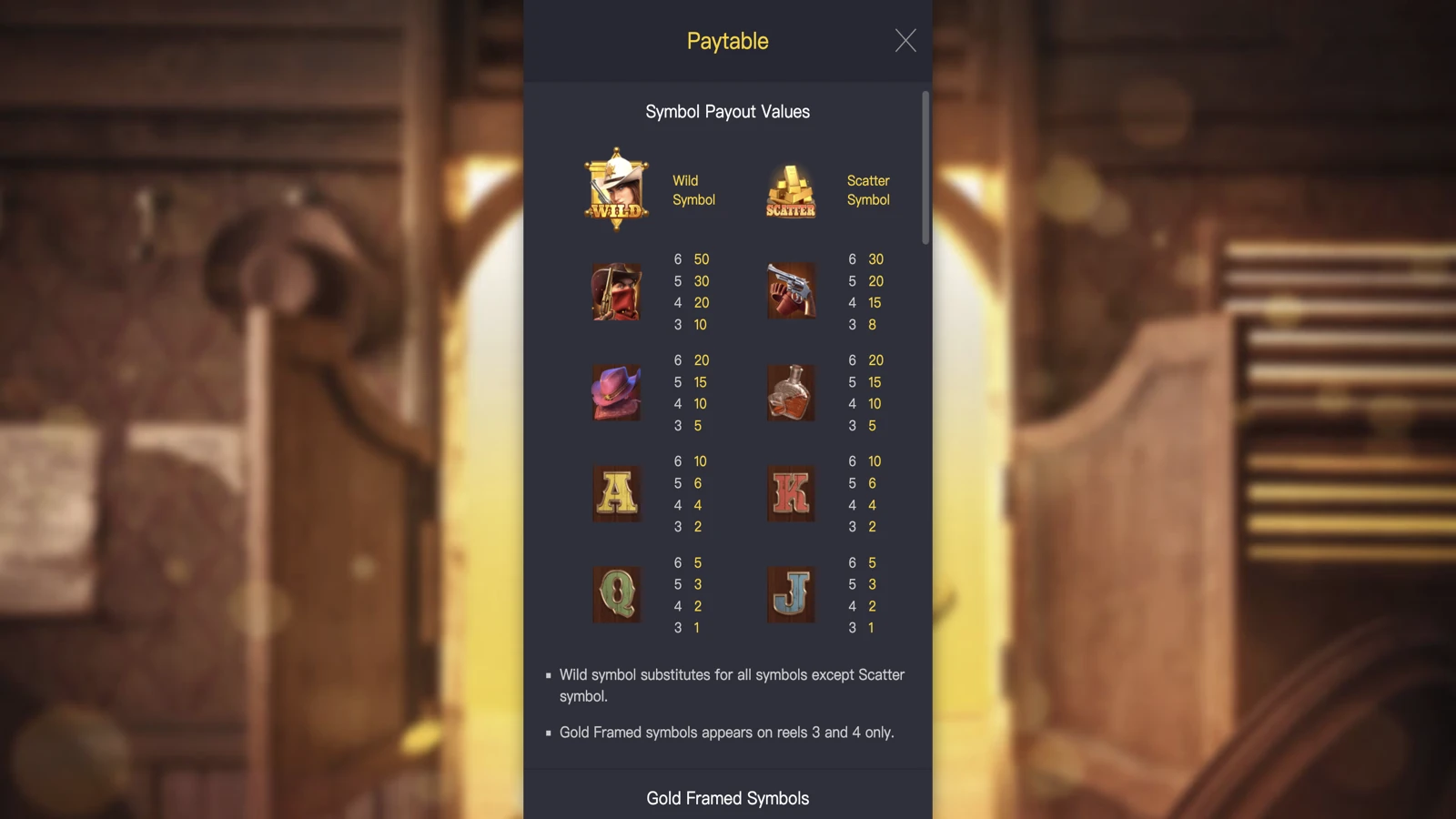
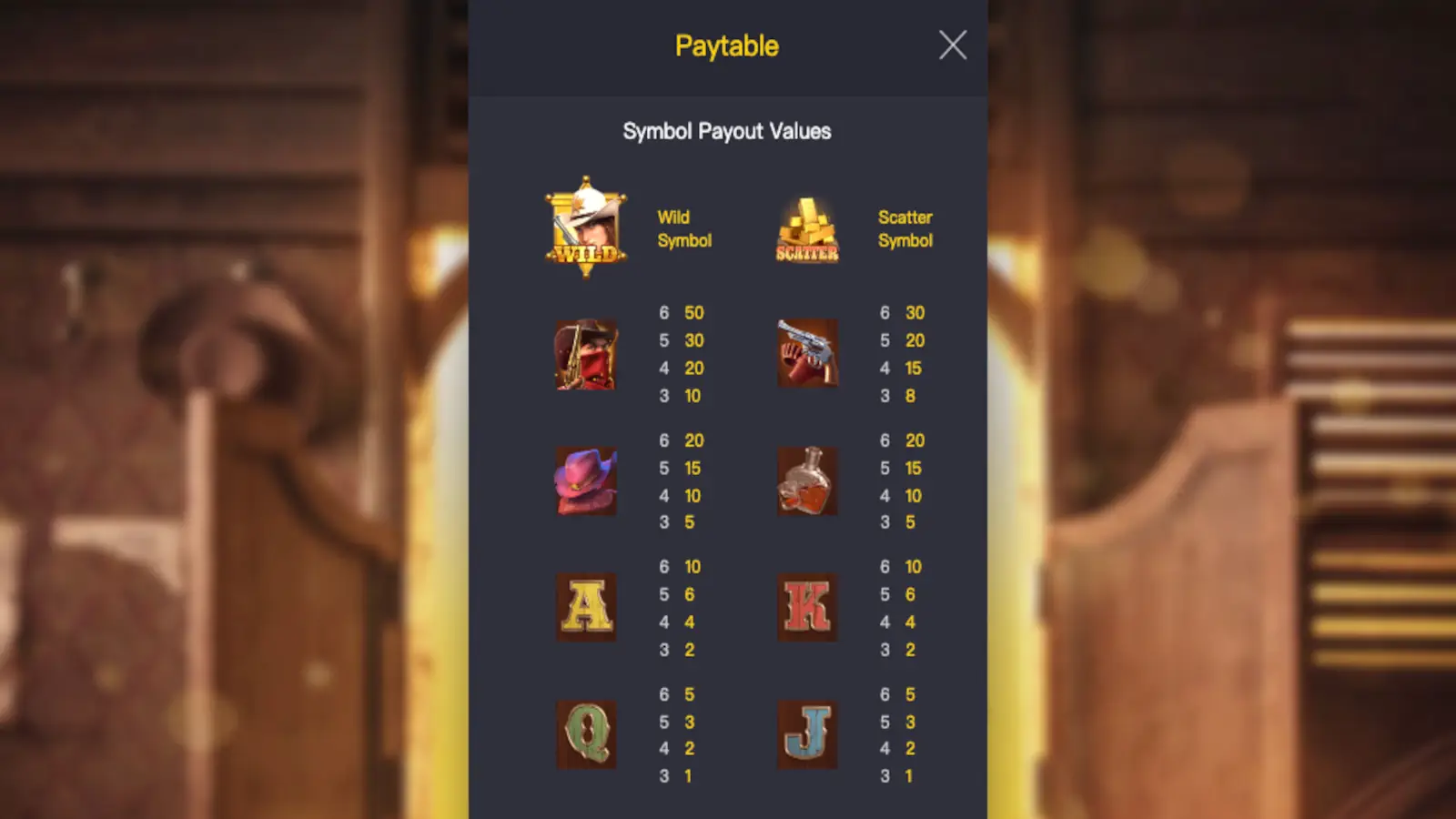
The Wild Bounty Showdown symbols paytable matters because this slot uses 3,600 ways to win across a 6-reel 3-4-5-5-4-3 grid, so the symbol value on each winning chain directly shapes how much a cascade can return. If you want the quick answer, the best-paying regular symbol is the Wanted Poster, which can award 100x for 5 of a kind. The next two top symbols are the Sheriff Badge at 75x and the Cowboy Hat at 50x. Those numbers are the core of the payout ladder, and they matter even more once Wild substitutions, cascading wins, the gold-frame mechanic, and the progressive multiplier begin stacking in the same spin. Because the game has 96.75% RTP, high volatility, and a 29.04% hit frequency, many low and medium returns help keep the reels active while the big value is concentrated in premium combinations and bonus sequences.
A simple way to read the Wild Bounty Showdown symbols paytable is to split it into three tiers. Premium symbols create the meaningful base-game spikes, medium symbols build steadier returns, and the low-value royals fill the board often enough to support cascades and multiplier growth. For example, if you stake 1.00 and hit 5 Wanted Posters, the line value is 100.00. If that win triggers a cascade and the next clear lands 5 Sheriff Badges, the second connection is 75.00. With a bonus multiplier of x3, that combined 175.00 becomes 525.00. That is why paytable knowledge is practical, not cosmetic: it tells you which symbols can turn average-looking reels into a meaningful result.
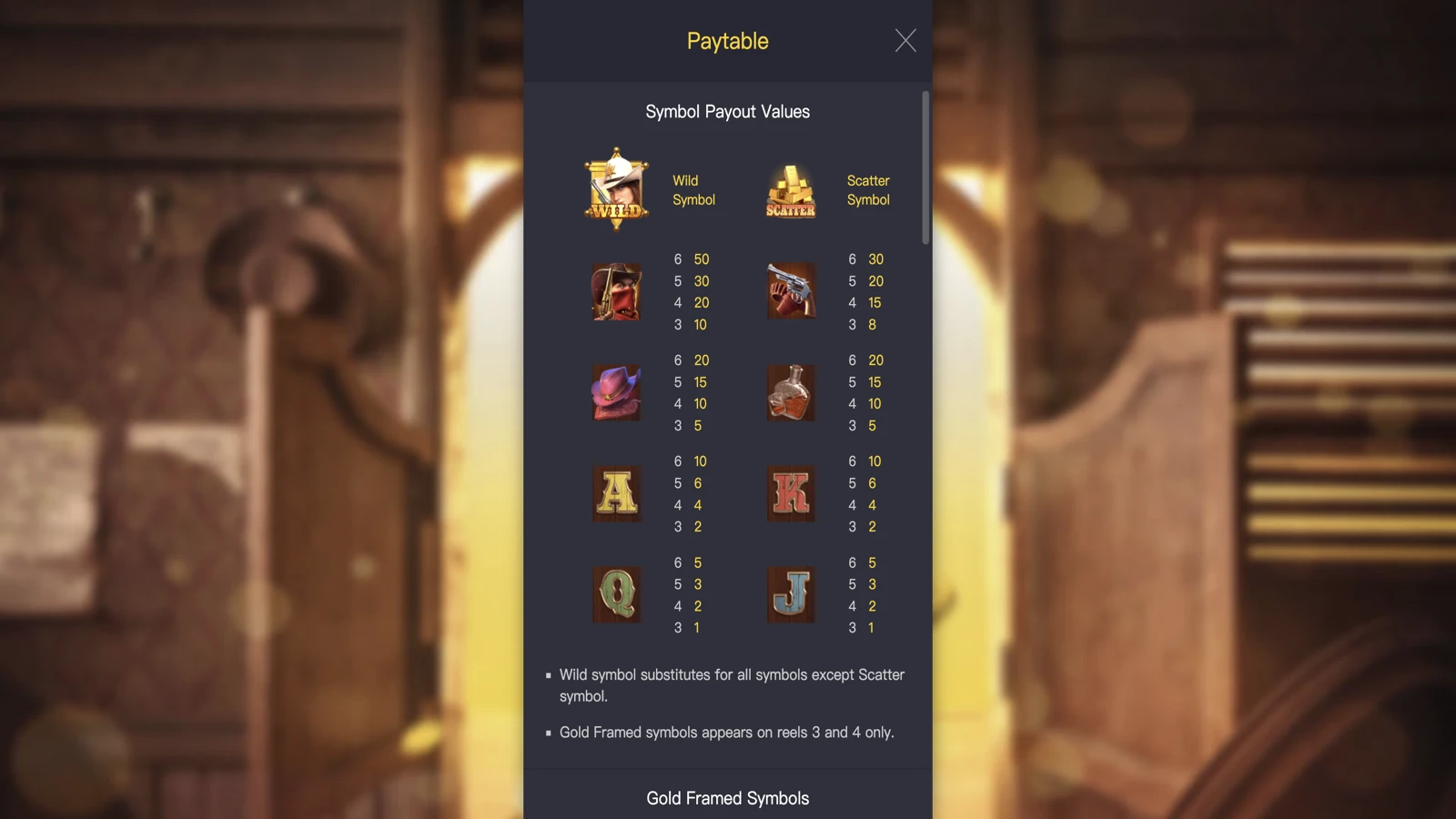
In practical terms, these are the combinations to watch on reels 1 to 5 because the game pays by ways rather than fixed paylines. If a 5-symbol route appears in several positions at once, the total can multiply quickly. Example: 2 matching symbols on reel 1, 1 on reel 2, 2 on reel 3, 1 on reel 4, and 1 on reel 5 creates 2 × 1 × 2 × 1 × 1 = 4 ways. If that symbol is the Wanted Poster, the total becomes 4 × 100x = 400x before any extra multiplier is applied.
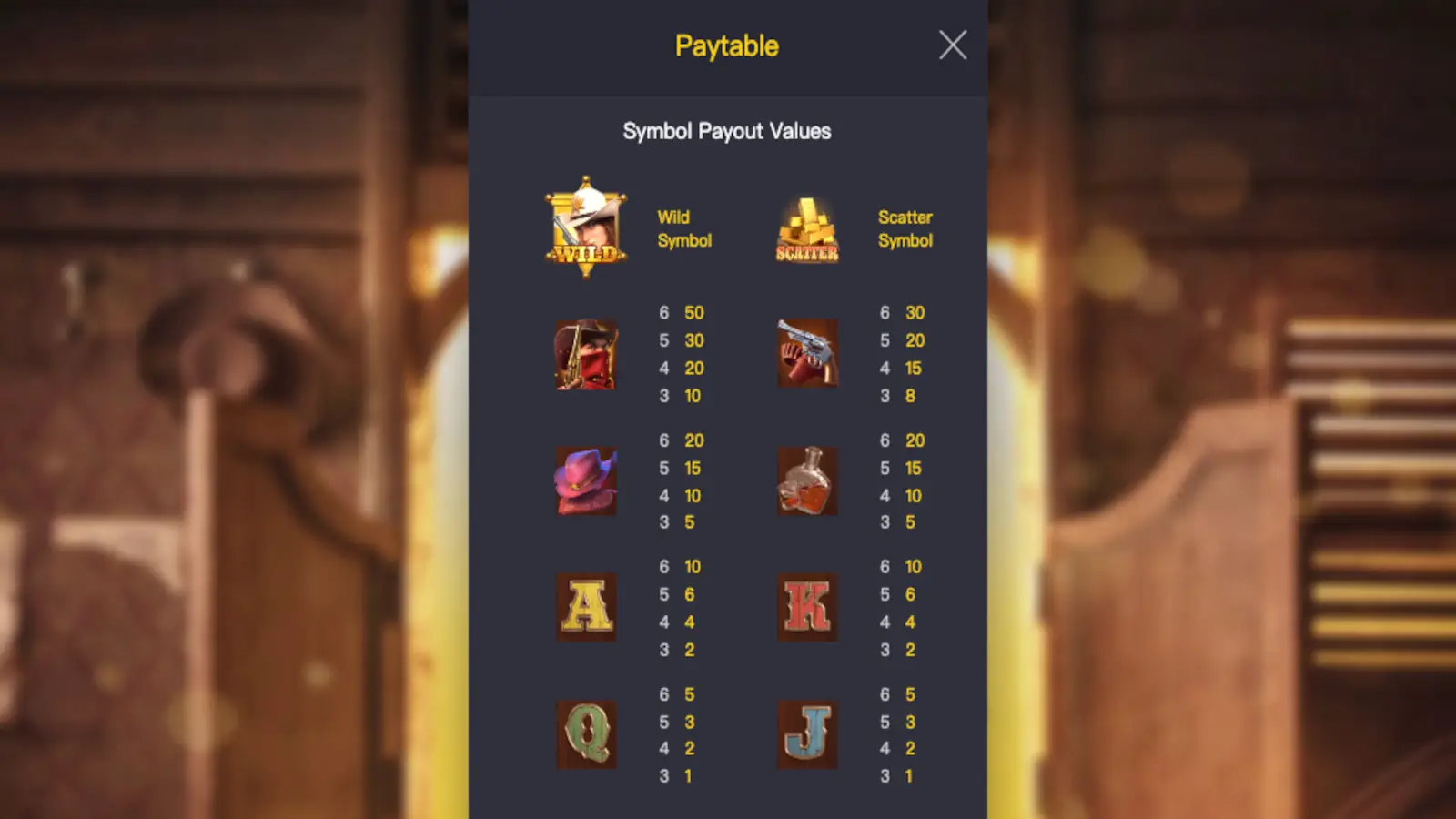
The table below lists the full Wild Bounty Showdown symbols paytable in a clean 3, 4, and 5-of-a-kind structure. Because this game uses ways to win, these values are best read as a base payout per winning way. To estimate a spin result, multiply the symbol payout by the number of reel paths created. For example, a 5-of-a-kind Revolver worth 25x across 6 ways pays 150x. If a cascade follows and the progressive multiplier rises to x2, that same effective value turns into 300x. Actionable tip: when you see several premium icons on the first three reels, keep an eye on reel 4 and reel 5 density. In a 3,600-ways slot, extra copies on late reels often matter more than a single premium hit on the opening reel.


Low-value symbols in the Wild Bounty Showdown symbols paytable are A, K, Q, J, and 10. They may look unexciting, but they are essential because they appear often enough to create chains, remove tiles, and feed the cascade system. Their top values range from 12x for A down to 5x for 10 on 5 of a kind. Since the slot has a 29.04% hit frequency, these royals do much of the routine work that keeps bonus potential alive. Example: if 5 A symbols land in 3 ways, the win is 3 × 12x = 36x. If the resulting cascade clears enough space for a premium symbol hit and the multiplier advances to x4, the low-value trigger can still be the reason a much stronger follow-up payout happens. Actionable tip: do not judge a spin only by the first small royal win. In a cascading slot with high volatility, low symbols often serve as the fuel for premium outcomes rather than the destination.
The Wild symbol is one of the most important pieces of the Wild Bounty Showdown symbols paytable because it substitutes for regular paying symbols to complete extra ways. That means its real value is indirect but often larger than any single static number on the table. A Wild helping form 5 Wanted Posters still contributes to the full 100x way payout. If that arrangement appears over 5 ways, the return is 500x. If the same spin also benefits from a progressive multiplier at x4, the effective result becomes 2,000x. The scatter-linked Free Spins feature is the other key special symbol event. While the source data for the trigger count payout is not listed separately here, the feature itself is critical because it can unlock stronger sequences through repeated cascades, gold-frame upgrades, and multiplier growth toward the game’s 5,000x max win.
Actionable tip: in the base game, do not evaluate Wilds in isolation. Count how many copies of the same premium symbol appear on consecutive reels first, then ask whether a Wild can bridge the missing reel. On a 6-reel ways setup, a single bridging Wild on reel 3 or reel 4 is usually more valuable than one on the far edge because it preserves the entire connection path. This is especially relevant when feature buy players are evaluating whether the premium paid entry is worth the extra variance.

The best combinations in the Wild Bounty Showdown symbols paytable are not just the highest symbol values; they are the highest symbol values multiplied by the most ways and then boosted by cascades or multipliers. The ideal base-game target is 5 Wanted Posters across several reel paths. A worked example makes this clear. Suppose you hit 5 Wanted Posters in 4 ways. Step 1: base symbol value = 100x. Step 2: multiply by ways = 100x × 4 = 400x. Step 3: a cascade lands 5 Sheriff Badges in 3 ways = 75x × 3 = 225x. Step 4: combined win before multiplier = 625x. Step 5: if the feature multiplier has climbed to x5, final total = 625x × 5 = 3,125x. That example shows why premium symbols on reel 1 through reel 5 are stronger than isolated high symbols on the far-right side of the grid.
If you are choosing what to root for, prioritize Wanted Poster + Wild support, then Sheriff Badge clusters across early reels, then any setup that can trigger extra cascades before the multiplier resets. Since the minimum bet is 0.2 and the maximum bet is 100, a 400x return equals 80 at minimum stake and 40,000 at maximum stake. That stake scaling is exactly why high-volatility slots can feel quiet for stretches and then spike hard when premium symbols line up in multiple ways.
Wild Bounty Showdown multipliers are the main reason this 6-reel, 3-4-5-5-4-3 slot can jump from ordinary line hits to headline-level payouts. The game already gives 3,600 ways to win, cascading wins, a Gold-frame mechanic, and a high-volatility profile, but none of those systems matter as much to peak payout potential as the progressive multiplier. In the base game it starts at x1, and in free spins it starts at x8. After every winning cascade, the value doubles: x1, x2, x4, x8, x16, x32 and so on, up to a theoretical x1,024. That doubling path is what makes max-win chasing possible. If your symbol values and reel coverage are only decent, the multiplier can still force a big result; if the symbol values are already strong and several cascades chain together, the payout curve steepens dramatically. With a listed Max Win of 5,000x, the multiplier is not a side mechanic but the core mathematical engine behind rare premium outcomes. A practical takeaway is simple: when you review any winning sequence in Wild Bounty Showdown, do not only ask how many ways connected. Ask how many cascades happened, because the later cascades carry the most value. A 4th or 5th cascade is often worth more than the first few wins combined, especially once the Wild Bounty Showdown cascade multiplier reaches x8 or x16 and starts multiplying every fresh win generated after symbols disappear and new symbols fall into place.
It is also important to separate multiplication from addition. Many players casually read a doubling meter and think each stage merely adds a little more value. That is not how this feature behaves. If a sequence paid by addition, then moving from x8 to x16 would mean gaining only 8 extra payout units. In Wild Bounty Showdown, moving from x8 to x16 means the next qualifying win is paid at double the previous multiplier stage, not with a flat bonus added on top. For example, if one cascade produces a raw win worth 2.5x bet, that same event pays 2.5x at x1, 5x at x2, 10x at x4, 20x at x8, and 40x at x16. The effect compounds fast. This distinction matters because players often underestimate why free spins can outperform the base game even when symbol quality looks similar. Starting from x8 in the bonus means the first bonus cascade is already equivalent to the fourth multiplier step of the base game. In other words, the free spins feature removes the slowest early stages and begins where the base game needs three successful cascades to arrive. That is why Wild Bounty Showdown multipliers matter more than hit frequency alone. A game with 29.04% hit frequency can still feel dry over short sessions, because many hits are too small unless they stack into a cascade chain. Multipliers transform a moderate raw hit into a meaningful payout; without them, many sequences remain ordinary.
Real math makes the feature easier to judge. Suppose you stake 1.00 and trigger a base-game sequence with four consecutive winning cascades. If the raw pre-multiplier cascade results are 0.60x, 0.80x, 1.50x, and 2.00x, the actual paid values are calculated step by step: first cascade at x1 = 0.60x; second cascade at x2 = 1.60x; third cascade at x4 = 6.00x; fourth cascade at x8 = 16.00x. The total sequence equals 24.20x bet. Compare that with a simple additive interpretation, which would wrongly suggest only 4.90x plus some small extra value. Now look at free spins. If the same raw cascade wins happen in the bonus round, the progression begins at x8, x16, x32, x64. The same raw values become 4.80x, 12.80x, 48.00x, and 128.00x for a total of 193.60x bet. The symbol pattern did not improve; only the multiplier ladder changed. That is why the Wild Bounty Showdown x1024 multiplier gets attention, but the more realistic power zone is often x16 to x128, where many strong bonus rounds derive most of their value. Another practical example: if a late free-spin cascade lands a raw 6x premium hit at x64, the paid result is 384x bet from one cascade alone. At x128, that becomes 768x. Those are the kinds of jumps that make a 5,000x ceiling mathematically reachable, even though the path is rare and demands both reel quality and sequence length.
The probability reality check is that a theoretical maximum is not the same as a common outcome. Because Wild Bounty Showdown has High volatility, you should expect the multiplier ladder to reset often after non-winning spins. The feature only doubles with each cascading win and resets after every non-winning spin, so long chains are naturally difficult to sustain. Reaching x1,024 requires ten consecutive winning stages from an x1 start, or seven consecutive winning stages from an x8 free-spin start. That sounds close on paper, but each additional cascade is harder to maintain because the reels must keep replacing removed symbols with fresh winning combinations. If we use a simple illustrative chain model rather than a published exact probability, a sequence where each extra cascade has a 35% chance to continue would produce approximate continuation odds of 0.35^9 = 0.0079% from the base game after the first win to reach x1,024, and 0.35^6 = 0.1838% from the bonus start after the first free-spin win. Those figures are only directional examples, not official probabilities, but they show why the Wild Bounty Showdown x1024 multiplier is best treated as a top-end event, not a session expectation. The smarter expectation is to value consistent access to the early and middle ladder stages. If your bankroll plan assumes x256, x512, or x1024 will appear regularly, you will overestimate return timing. If instead you treat x8, x16, x32, and x64 as the practical profit multipliers and regard anything higher as exceptional variance upside, your decision-making will be far more realistic.

The base-game version of the Wild Bounty Showdown cascade multiplier begins modestly, but the mathematics become serious after only a few consecutive wins. Because the starting point is x1, the first hit in a chain is mostly a setup event. The second and third cascades are where efficiency begins to show, and the fourth onward is where value can accelerate fast enough to matter for bankroll swings. In practical terms, this means short sequences often feel average even in a high-RTP game with 96.75% RTP, while medium sequences can suddenly outperform expectation. If you are tracking performance manually, count every additional cascade as more valuable than the last. A useful quick rule is this: once the base game reaches x8, every raw win is paying eight times its normal amount; at x16, one decent premium combination can do the work of many ordinary spins. This also explains why feature buy decisions, free spin value judgments, and post-session result reviews should always reference multiplier depth rather than only number of wins landed.
The free-spin version is where Wild Bounty Showdown multipliers become most dangerous to underestimate. Starting at x8 means the bonus round effectively skips three low-value stages of the base game. That compressed ramp changes expected payout shape immediately. Even a one-cascade bonus result is paid at eight times raw symbol value, and a second consecutive cascade moves straight to x16. For players comparing base game versus bonus value, this is the key numerical advantage: free spins do not just offer more chances to win, they front-load multiplier efficiency. If a bonus round includes several ordinary-looking symbol drops, the final result can still exceed a strong base-game sequence because every win is already being multiplied from an elevated starting point. In a high-volatility game, that front-loading is crucial because it reduces the dependence on very long chains. You still want multiple cascades, but you no longer need four or five just to reach the first meaningful multiplier zone.

The Wild Bounty Showdown x1024 multiplier is mathematically real but strategically should be treated as a low-frequency ceiling rather than a target outcome for a normal session. To reach it from the base game, the sequence must progress through 10 winning cascade steps starting from x1. From free spins, the route is shorter but still demanding at 7 winning cascade steps starting from x8. Because every non-winning spin resets the chain, the challenge is not merely landing one big combination but preserving sequence continuity through repeated reel refills. For bankroll planning, that means your working expectation should center on the middle ladder, not the summit. A practical benchmark is to evaluate bonus quality by whether it reaches x32 or x64. Those stages are much more likely to define meaningful sessions than x512 or x1024, and they are already strong enough to turn moderate symbol values into excellent payouts. This perspective helps avoid overchasing and keeps expectations aligned with the game’s High volatility profile.
A sound multiplier-hunting strategy starts with bet sizing discipline. Since the game allows bets from 0.2 to 100, the most important choice is not trying to force a huge stake for one lucky x1024 event, but using a size that lets you survive long enough for free spins and extended cascades to appear. With a 29.04% hit frequency and high volatility, dry stretches are normal. A practical session plan is to keep your stake small enough to cover at least 150 to 250 spins. That buffer gives the Wild Bounty Showdown cascade multiplier enough room to matter statistically. If your bankroll only supports 40 or 50 spins, you are relying too heavily on short-term variance and may never even see enough bonus opportunities to evaluate the x8 free-spin starting point. Another actionable tip is to review outcomes by sequence quality, not by number of wins. A session with many low single-hit wins can underperform compared with one bonus round that reaches x32 or x64 once.
The second strategy point is to prioritize modes that shorten the path to useful multiplier stages. Because free spins begin at x8, they are naturally the best place to hunt oversized returns. That does not mean every feature buy or bonus entry is profitable by default, but it does mean your evaluation should ask one question first: how quickly can this mode reach x32, x64, or x128? If the answer is “faster than the base game,” then that mode has superior multiplier efficiency. During normal play, avoid emotional stake increases after near-miss chains. A reset after x8 or x16 can feel frustrating, but mathematically it changes nothing about the next spin’s chance structure. The smart approach is consistency: fixed stake, enough spin depth, and clear profit targets when a strong multiplier sequence lands. If a bonus round produces a payout well above your average hit size because the Wild Bounty Showdown x1024 multiplier ladder nearly topped out, banking the result is often more rational than pressing variance again. Now that you understand the multiplier math, try it yourself:
The core numbers set the tone immediately. Wild Bounty Showdown RTP is 96.75%, which leaves a 3.25% house edge. In practical terms, every $100 wagered carries an expected return of $96.75 and an expected loss of $3.25. That does not mean every short session will land near that average. Because this is Wild Bounty Showdown high volatility, short-term results can swing much wider than the theoretical loss rate suggests. A player can lose faster than the long-run expectation during dead stretches, or outperform the average sharply when a multiplier-heavy feature chain lands.
The game structure supports that profile. You have 6 reels on a 3-4-5-5-4-3 grid, with 3600 ways to win, cascading wins, a Gold-frame mechanic, a progressive multiplier, Free Spins, Feature Buy, and Wild substitution. These mechanics are designed to concentrate value into stronger sequences rather than deliver steady low-value payouts. That is why volatility matters more than RTP alone. A 96.75% return rate can feel very different in a calm medium-volatility slot compared with a frontier-style high-volatility title where bankroll pressure rises quickly between bigger hits. For deeper theory and broader comparisons, see the full guide at /rtp-volatility/.
High volatility means you should expect more bankroll pressure and less payout regularity, but the winning sequences that do arrive can be much larger than in lower-volatility slots.
Volatility
High
Hit Frequency
29.04%
Max Win
5000x
Ways to Win
3600
A realistic session model is more useful than marketing language. Over an estimated 500-spin session, the most likely outcomes are uneven. The chance of finishing at break even or in profit is about 30-35%, which is respectable for a high-volatility game, but it also means the majority of sessions still end down. Small losses of 1-25% occur around 25% of the time, while losses of 25-50% show up around 20%. More severe outcomes matter too: losing 50% or more appears roughly 15-20% of the time. On the positive extreme, a session that doubles the bankroll or better is estimated at only 5-8%. That shape is classic high variance: fewer neutral outcomes, more dramatic tails, and a stronger dependence on whether the premium feature cycle lands during your budget window.
| Session Outcome | Probability | Visual Weight |
|---|---|---|
| Break even or profit | ~30-35% | |
| Lose 1-25% | ~25% | |
| Lose 25-50% | ~20% | |
| Lose 50%+ | ~15-20% | |
| Double bankroll+ | ~5-8% |
High variance demands deeper reserves. The recommended bankroll is 400x bet size. At the minimum bet of $0.20, that means $80.00. At the default $1.00 bet, it rises to $400.00. Even with that cushion, the estimated survival rate for 500 spins is only ~45%. That single number explains the game well: a sensible bankroll helps, but it does not remove variance. If you want a stronger chance of lasting through bonus droughts, lowering bet size is more effective than topping up too late.
The hit frequency is 29.0%, or roughly 1 win every 3.45 spins. Another way to frame it: expect about 29 winning spins per 100 spins and around 145 winning spins per 500 spins. That sounds frequent, but hit frequency does not tell you whether those wins are meaningful. In a high-volatility slot, many winning spins are small stabilizers while the real session-shaping value is saved for larger cascades, gold-frame upgrades, and multiplier-enhanced sequences.
Visual timeline: about 29 of every 100 spins are expected to produce a win, leaving roughly 71 non-winning spins mixed across the session.
At roughly 600 spins per hour on auto-play, expected cost becomes easier to budget. At the $0.20 minimum bet, expected loss is about $3.90 per hour. At the $1.00 default bet, expected loss climbs to $19.50 per hour. This is useful because many players underestimate how quickly spin speed magnifies exposure. The game can feel manageable at one dollar per spin, but an hour of fast play cycles $600 in total wagers, which is exactly why the house edge becomes visible over time.

The simplest way to convert RTP into practical planning is to multiply total wagered by the 3.25% house edge. Example one: 100 spins at $1.00 means $100.00 wagered; expected loss = $100.00 × 0.0325 = $3.25. Example two: 500 spins at $0.20 means $100.00 wagered; expected loss is again $3.25. Example three: 1000 spins at $100.00means $100000.00 wagered; expected loss = $3250.00. The formula is simple, but volatility decides how smooth or violent the path feels.
| Bet Level | Spins | Total Wagered | Expected Loss |
|---|---|---|---|
| Min ($0.20) | 100 | $20.00 | $0.65 |
| Min ($0.20) | 200 | $40.00 | $1.30 |
| Min ($0.20) | 500 | $100.00 | $3.25 |
| Min ($0.20) | 1000 | $200.00 | $6.50 |
| Default ($1.00) | 100 | $100.00 | $3.25 |
| Default ($1.00) | 200 | $200.00 | $6.50 |
| Default ($1.00) | 500 | $500.00 | $16.25 |
| Default ($1.00) | 1000 | $1000.00 | $32.50 |
| Max ($100.00) | 100 | $10000.00 | $325.00 |
| Max ($100.00) | 200 | $20000.00 | $650.00 |
| Max ($100.00) | 500 | $50000.00 | $1625.00 |
| Max ($100.00) | 1000 | $100000.00 | $3250.00 |
Using the 29.04% hit frequency, players can expect around 1 win every 3.44 spins on average. That average does not prevent streaks. Random distribution means wins can cluster closely or disappear for noticeably longer runs, especially in high-volatility games where many of the meaningful returns come from feature chains rather than isolated line hits. A practical rule is to assume a dry patch can easily outlast the average. That is why the recommended 400x bankroll matters. If you are betting $1.00, a $400.00 reserve is not excessive for this profile; it is a defensive starting point against the normal turbulence of the game.
The important mindset is that frequency and value are separate. Around 145 winning spins in 500 may sound comfortable, but the distribution table shows why sessions still often finish down. Many of those wins are likely to be smaller than the triggering bet, while the larger balance recoveries come from rarer combinations of cascades, upgraded frames, and multiplier progression. If you want to test the math without exposing a large bankroll, reduce stake first and judge the game over a sample of at least 200 to 500 spins rather than reacting to a short burst of luck.
The headline ceiling is 5000x, with an estimated probability of about 1 in 2,000,000. That is the kind of number that should be treated as a theoretical outer limit, not a planning target. At a $1.00 bet, the maximum prize would be $5000, but the rarity is the real story. A player could log many sessions and never come close to the absolute cap. This does not make the game unattractive; it simply means your expectations should center on realistic feature outcomes rather than jackpot fantasy.
The more useful question is whether the game can still produce worthwhile spikes below the maximum. With high volatility, the answer is yes. Sessions that break even or profit are still estimated around 30-35%, and double-bankroll sessions appear around 5-8%. Those are the outcomes that shape real play. The max win exists as proof of top-end reach, but bankroll strategy should be built around surviving long enough to catch premium bonus sequences, not around chasing a one-in-two-million event.

This Wild Bounty Showdown slot calculator focuses on real decision-making, not vague promises. The key number is the fixed RTP of 96.75%, which means the house edge is 3.25%. In practical terms, every $100 wagered returns an average of $96.75 over the long run, while expected loss stays at $3.25. That does not mean every session will lose exactly 3.25%, because this is a high volatility slot. High volatility shifts more value into rarer, larger hits, including the 5000x ceiling. If you play 500 spins at a $1 stake, your total investment is $500, your theoretical loss is $16.25, and your expected winning spins are about 145 because hit frequency is 29.04%. That sounds active, but many of those wins are small and mainly keep bankroll movement going while you wait for stronger combinations, free spins, or a gold-frame chain. A useful shortcut is this: the game is mathematically playable for medium sessions, but bankroll stress rises fast once you push bet size upward. At $0.20, a 500-spin session risks $100 total and theoretical loss is only $3.25. At $100, the same session risks $50,000 and theoretical loss rises to $1,625. The RTP range reference here stays at 96.75% RTP ranges, so the most useful question is not whether the return is fair enough, but whether your bet size matches your risk tolerance. For survival play, your bankroll should usually be several hundred bets deep, especially because only roughly 30-35% of 500-spin sessions are expected to finish break-even or better.
| Bet Level | Spins | Total Wagered | Expected Loss |
|---|---|---|---|
| Min ($0.20) | 500 | $100.00 | $3.25 |
| Default ($1.00) | 500 | $500.00 | $16.25 |
| Max ($100.00) | 500 | $50000.00 | $1625.00 |
| Default ($1.00) | 1000 | $1000.00 | $32.50 |
The headline number in the Wild Bounty Showdown slot is the 5000x max win. That multiplier matters because it shows how top-end value is distributed. If you bet $0.20, the maximum theoretical payout is $1,000. At $1, it becomes $5,000. At $100, it reaches $500,000. However, this ceiling comes with very low probability, estimated at about 1 in 2,000,000. That means the smarter use of the calculator is not chasing the absolute top prize, but understanding realistic payout tiers. A medium win at 100x is often meaningful enough to stabilize a session, while a big win at 500x can transform the result of a high volatility game. The practical formula is simple and worth using before every session. Step 1: choose stake. Step 2: multiply stake by 100 for a medium win target. Step 3: multiply stake by 500 for a big win target. Step 4: multiply stake by 5000 for the upper ceiling. For example, at a $2 bet, 100x = $200, 500x = $1,000, and 5000x = $10,000. That is why even small changes in bet size matter more in this game than many casual players expect. Another useful data point is hourly cost. At 600 spins per hour, expected loss is about $3.90 per hour on the minimum bet and about $19.50 per hour on the default $1 stake. Compare that with bankroll guidance: the published high-volatility recommendation is 400x bet, or $80 at minimum stake and $400 at default stake, with only about a 45% survival rate over 500 spins. So if your goal is durability, lower stake wins. If your goal is larger nominal payout potential, raising the stake increases every outcome tier instantly but also raises variance pressure at the same speed. That is the core trade-off this slot presents.
| Bet | 100x Medium Win | 500x Big Win | 5000x Max Win |
|---|---|---|---|
| $0.20 | $20.00 | $100.00 | $1000.00 |
| $1.00 | $100.00 | $500.00 | $5000.00 |
| $5.00 | $500.00 | $2500.00 | $25000.00 |

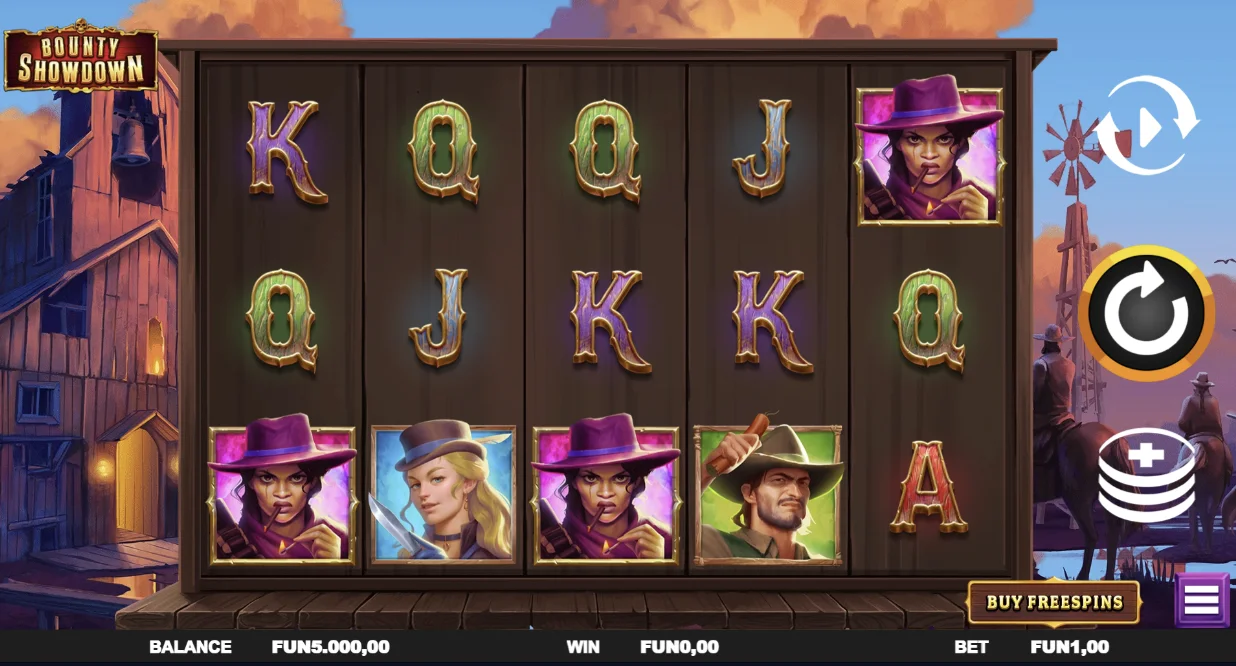
Wild Bounty Showdown slot uses a 6-reel layout with a 3-4-5-5-4-3 structure and 3600 ways to win. That setup matters because winning combinations do not rely on fixed paylines; instead, matching symbols on adjacent reels create payout routes across the variable reel grid. In simple play terms, the broad reel shape increases combination flexibility, while cascading wins can keep a result alive after the first hit. The game also adds a gold-frame mechanic, progressive multiplier, free spins, feature buy access, and wild substitution. The hit frequency is about 29.04%, or close to 1 in 3 spins, which means the screen should produce regular activity. Over 100 spins, the exact expectation is about 29 winning spins, and over 500 spins the estimate is about 145 winning spins. Yet because volatility is high, players should not confuse frequent winning spins with stable profitability. Many hits may return less than the bet, while the larger outcomes are concentrated in stronger cascades and bonus sequences. A solid tactical approach is to decide session length before you start. For short sessions, use lower stakes because bonus timing may not cooperate. For longer sessions, align stake with bankroll depth. The published 400x recommendation is stronger than the 300x calculator suggestion, so treat 300x as a minimum comfort line and 400x as a safer target for high volatility endurance. If feature buy is available, remember it purchases direct access to free spins at a displayed price, but it also increases spending speed sharply. The right question is not whether the buy can win, but whether your bankroll can absorb the cost of repeated attempts. This section below lets you test stake size, session exposure, bonus wagering drag, and withdrawal timing without guessing.
| Metric | Value |
|---|---|
| RTP | 96.75% |
| House Edge | 3.25% |
| Volatility | High |
| Hit Frequency | 29.04% |
| Expected Winning Spins per 500 | ~145 |
| Survival Rate for 500 Spins with Recommended Bankroll | ~45% |

| Output | Value |
|---|---|
| Medium Win (100x) | $100.00 |
| Big Win (500x) | $500.00 |
| Max Win (5000x) | $5000.00 |
| Recommended Bankroll (300x) | $300.00 |
| 500 Spins Total Investment | $500.00 |
| 500 Spins Expected Loss | $16.25 |
| 500 Spins Expected Winning Spins | 145 |
| Feature Buy Cost Estimate | $100.00 |
Worked example: 500 spins × $1.00 = $500.00 wagered. Expected loss uses the exact house edge: $500.00 × 3.25% = $16.25. Expected winning spins use the exact hit frequency: 500 × 29.04% = 145.2.
| Result | Value |
|---|---|
| Total Wagering Needed | $3000.00 |
| Expected Loss | $97.50 |
| RTP Used | 96.75% |
Step-by-step math: $100.00 × 30 = $3000.00 wagering required. Then $3000.00 × 3.25% = $97.50 expected loss. This is an honest negative-EV clearance estimate, which is exactly why large wagering terms matter.
| Check | Estimate |
|---|---|
| Requested Amount | $100.00 |
| Selected Method | Bank Transfer |
| Processing Time | 1-3 business days |
| Limits Notice | Daily and weekly withdrawal limits may apply |
| KYC Reminder | First withdrawal may take longer after verification |
Practical tip: faster payout methods reduce waiting stress after a strong Wild Bounty Showdown slot hit. Crypto is often the quickest at 10-60 minutes, E-wallets typically need 2-24 hours, bank transfers need 1-3 business days, and cards can take 3-5 days. Always check account verification before requesting larger cashouts.
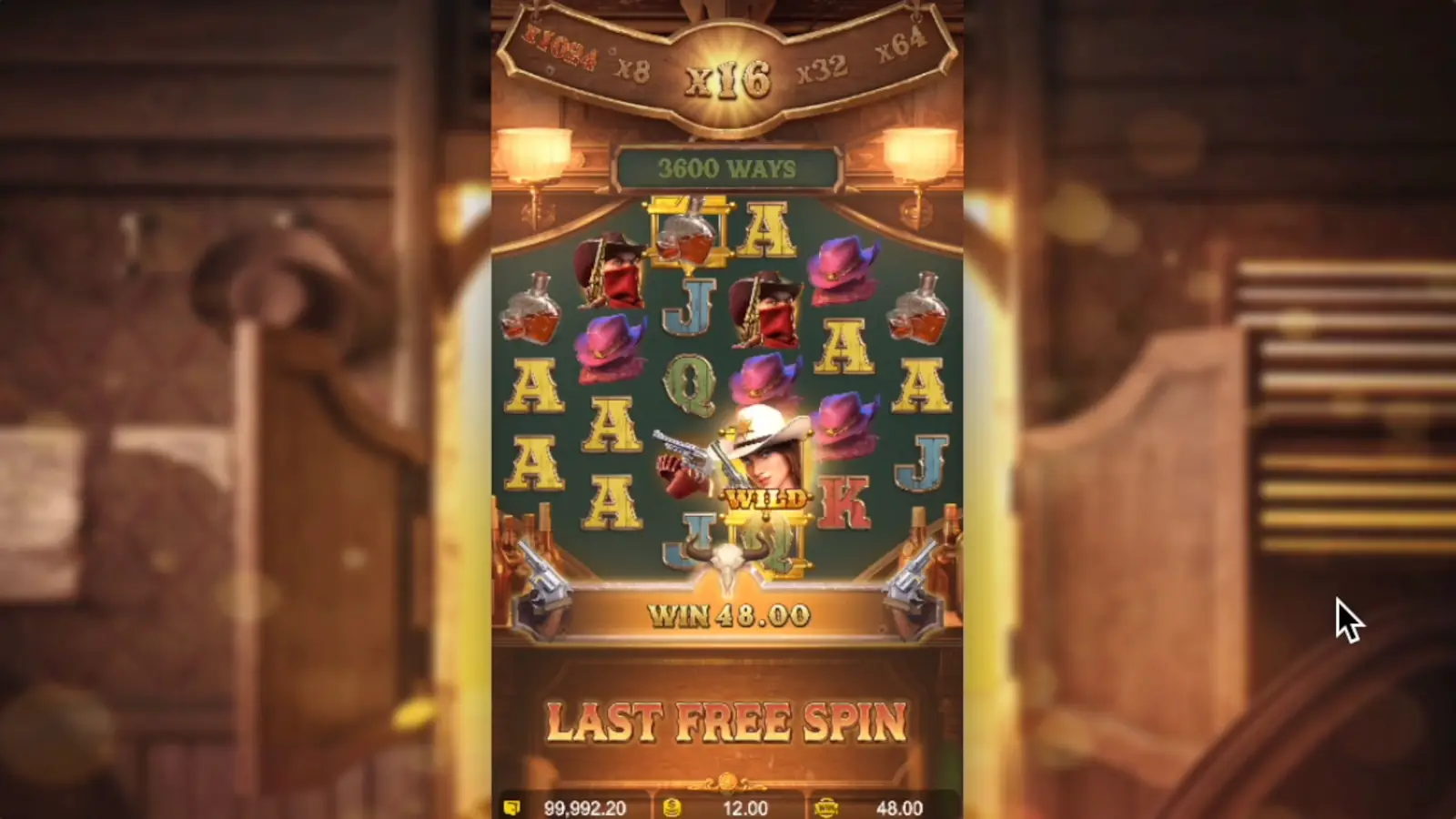
RNG disclaimer: all Wild Bounty Showdown slot outcomes are random and independent, so calculators estimate long-run averages, not guaranteed short-term results. Responsible gambling matters because high volatility can create large bankroll swings even when RTP is strong. Set deposit limits, use session caps, and stop if the session no longer fits your budget.
Now that you understand the Wild Bounty Showdown slot math, test the game with a stake that fits your bankroll:
Start Playing18+ | T&Cs ApplySee what a real session looks like — based on mathematical analysis
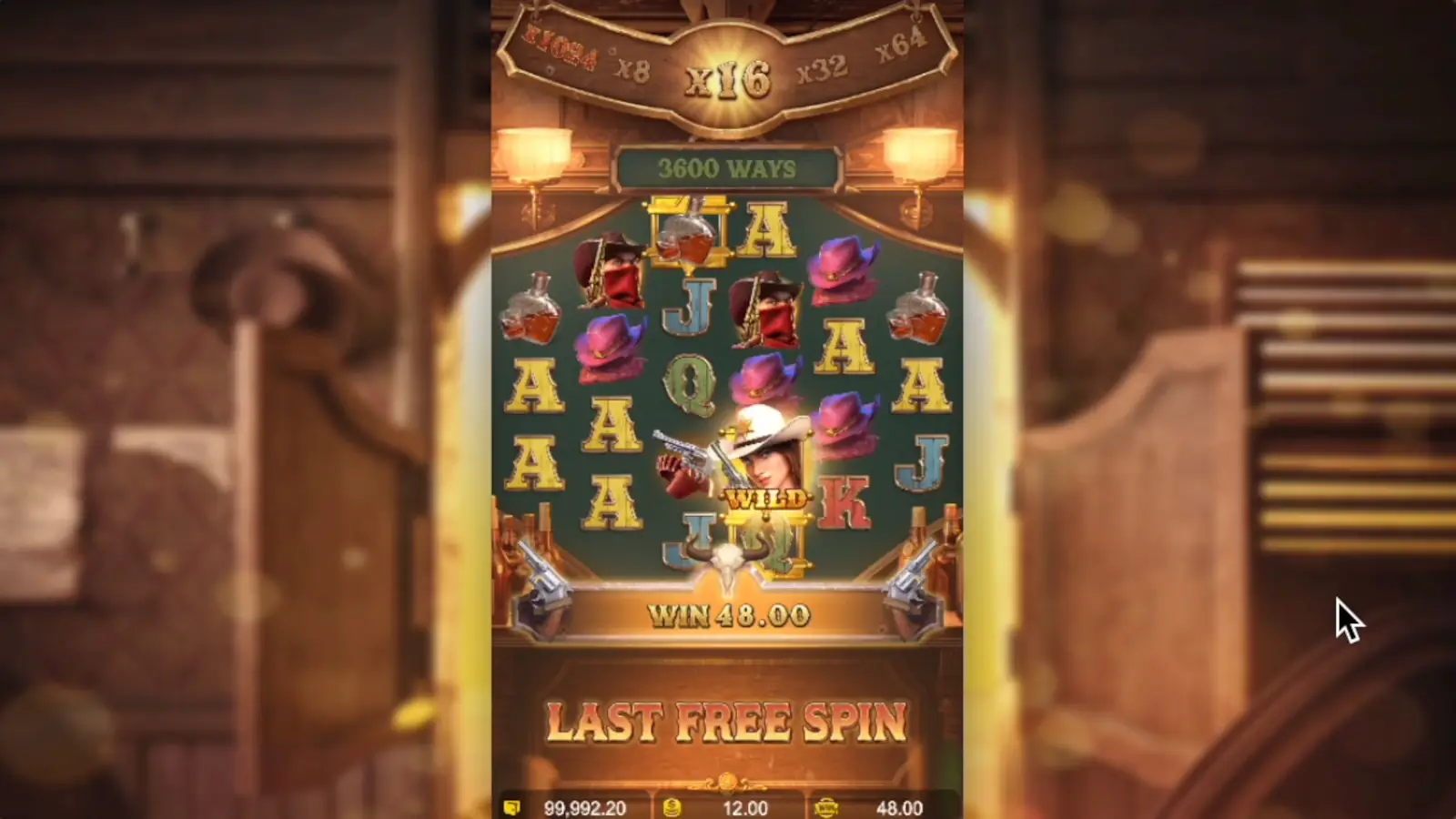
Wild Bounty Showdown RTP is 96.75%, which means the house edge is 3.25%. That is the key number behind every session calculation below. If you stake $1.00 for 500 spins, your total investment is $500.00, the expected return is $483.75, and the expected loss is $16.25. This does not mean you lose exactly that amount every time. It means that over the long run, the math trends toward that cost. Because Wild Bounty Showdown high volatility can produce wide bankroll swings, short sessions often finish far above or far below expectation. That is exactly why a simulator matters: it turns abstract RTP and hit rate figures into practical bankroll planning. You can compare a cautious $0.20 session with a more aggressive $5.00 setup, see your likely entertainment cost per minute, estimate how many winning spins appear, and judge whether your bankroll is large enough for the game's 5000x potential. Use this section to test realistic settings before you commit real money, then continue to the deeper RTP and volatility analysis for a full breakdown of risk.
The simulator uses fixed mathematical constants: RTP 96.75%, hit frequency 29.04%, and a 5000x maximum win multiplier. Step by step, the session formula is simple. First, multiply bet size by spin count to get total wagered. Second, multiply that figure by 96.75% to estimate expected return. Third, subtract expected return from total wagered to find expected loss. For example, at the minimum bet of $0.20 over 500 spins, total wagered equals $100.00, expected return equals $96.75, and expected loss equals $3.25. At the default $1.00 stake over 1000 spins, total wagered becomes $1000.00, expected return becomes $967.50, and expected loss rises to $32.50. These exact numbers help answer common search questions about Wild Bounty Showdown RTP: how expensive is a session, how long can a bankroll last, and what does the theoretical cost look like at different stakes. Because the house edge is 3.25%, every $100 wagered carries an expected cost of $3.25. That is low enough for long sessions to feel manageable at small stakes, but the game's high volatility means results can still be very uneven in real play.
| Bet Level | Spins | Total Wagered | Expected Loss |
|---|---|---|---|
| Min ($0.20) | 500 | $100.00 | $3.25 |
| Default ($1.00) | 500 | $500.00 | $16.25 |
| Default ($1.00) | 1000 | $1000.00 | $32.50 |
| Max ($100.00) | 100 | $10000.00 | $325.00 |

Actionable tip: with high volatility, use the 400x bankroll guide as a baseline. At $0.20, that means about $80.00. At $1.00, it means about $400.00. Even then, the estimated survival rate for 500 spins is only about 45%, which explains why Wild Bounty Showdown high volatility feels dramatic even when the RTP is solid.

If you want a practical rule, aim for around 400x your chosen bet because this is a high volatility slot. That means about $80.00 at $0.20, $400.00 at $1.00, and $2000.00 at $5.00. Even with the recommended bankroll, the estimated survival rate for 500 spins is only about 45%, so discipline matters more than optimism. If you care about session length, choose a lower bet. If you care about a larger top-end payout, raise the bet only after deciding how much theoretical loss you can comfortably accept. At about 600 spins per hour on auto-play, the expected cost is roughly $3.90 per hour at $0.20 and $19.50 per hour at $1.00. That is a clear way to decide whether your setup matches your entertainment budget.
Now that you understand the session math, try it yourself:

This win showcase answers the search intent behind Wild Bounty Showdown big wins with real numbers, not vague hype. Wild Bounty Showdown from PG Soft runs on a 6 reels layout with a 3-4-5-5-4-3 grid, 3600 ways to win, 96.75% RTP, 29.04% hit frequency, and high volatility. Those figures matter because they explain why the game can produce exciting jumps while also delivering long stretches of low returns. In practical terms, the 29.04% hit frequency means roughly 29 winning spins per 100 spins and about 145 winning spins per 500 spins. However, a winning spin is not the same as a profitable spin. Many hits are small, and the bigger payouts usually depend on stacked mechanics such as cascading wins, gold-frame wild conversions on reels 3 and 4, progressive multiplier growth, and the free spins feature that starts with 10 free spins and an x8 multiplier. Every additional scatter adds 2 more spins, and each cascade during free spins doubles the multiplier, giving the game its strongest payout potential.
The numbers below show what different win tiers can look like at the minimum bet of $0.20, the default bet of $1.00, and the maximum bet of $100.00. They also show the reality behind high-volatility slots: break-even or profit sessions are estimated at only ~30-35% over 500 spins, while sessions that lose 50%+ still sit around ~15-20%. If you want to judge whether a result is impressive, always compare it to your stake, your session length, and the game's 3.25% house edge rather than focusing only on one lucky screenshot.
Scenario: A common winning moment in Wild Bounty Showdown big wins analysis is a simple 5-symbol line hit during the 3600 ways setup.
Math: Example at $1.00 bet: $1.00 × 5x = $5.00 win
Probability: Using the 29.04% hit frequency, any winning spin lands about 1 in 3.44 spins. A modest 5-symbol hit is a subset of those wins, so it is less frequent than the overall hit rate but still one of the more realistic outcomes.
Actionable tip: Treat this as bankroll fuel, not a session changer.
Scenario: 3+ gold bar scatters anywhere trigger 10 free spins with an x8 starting multiplier, and each extra scatter adds 2 more spins.
Math: Worked estimate at $1.00 bet: 10 free spins × ~3x average spin value × x8 starting multiplier is a practical medium-win framework, often producing a bonus around $24.00 before stronger cascades push it higher.
Probability: Approximate trigger rate: ~1 in 100 to 200 spins.
Actionable tip: This is why many players chase bonus entry, but high volatility means long dry stretches still happen.
Scenario: A winning cluster cascades, the progressive multiplier doubles, and gold-frame positions on reels 3 and 4 convert into wilds on the next spin.
Math: Example at $1.00 bet: base win $12.00 × x8 cascade multiplier = $96.00.
Probability: Approximate occurrence for a truly notable chain: ~1 in 500 spins.
Actionable tip: Most large wins in this game come from stacked mechanics, not a single clean hit.
Scenario: Premium symbols connect, several cascades continue, gold-frame transformations feed new wilds, and the multiplier climbs toward the 1,024x cap.
Math: Step by step at $1.00 bet: premium hit worth 20x = $20.00; cascading replacement adds another 15x = $15.00; subtotal $35.00; multiplier reaches x32; $35.00 × 32 = $1,120.00.
Probability: Very rare: ~1 in 10,000+ spins for a true mega sequence.
Actionable tip: High volatility means this type of hit can define an entire session.
Scenario: The theoretical top result reaches the stated 5000x max win.
Math: At $0.20 bet = $1,000.00; at $1.00 bet = $5,000.00; at $100.00 bet = $500,000.00.
Probability: About 1 in 2,000,000.
Actionable tip: This headline number is real, but it should never be treated as an expected outcome.
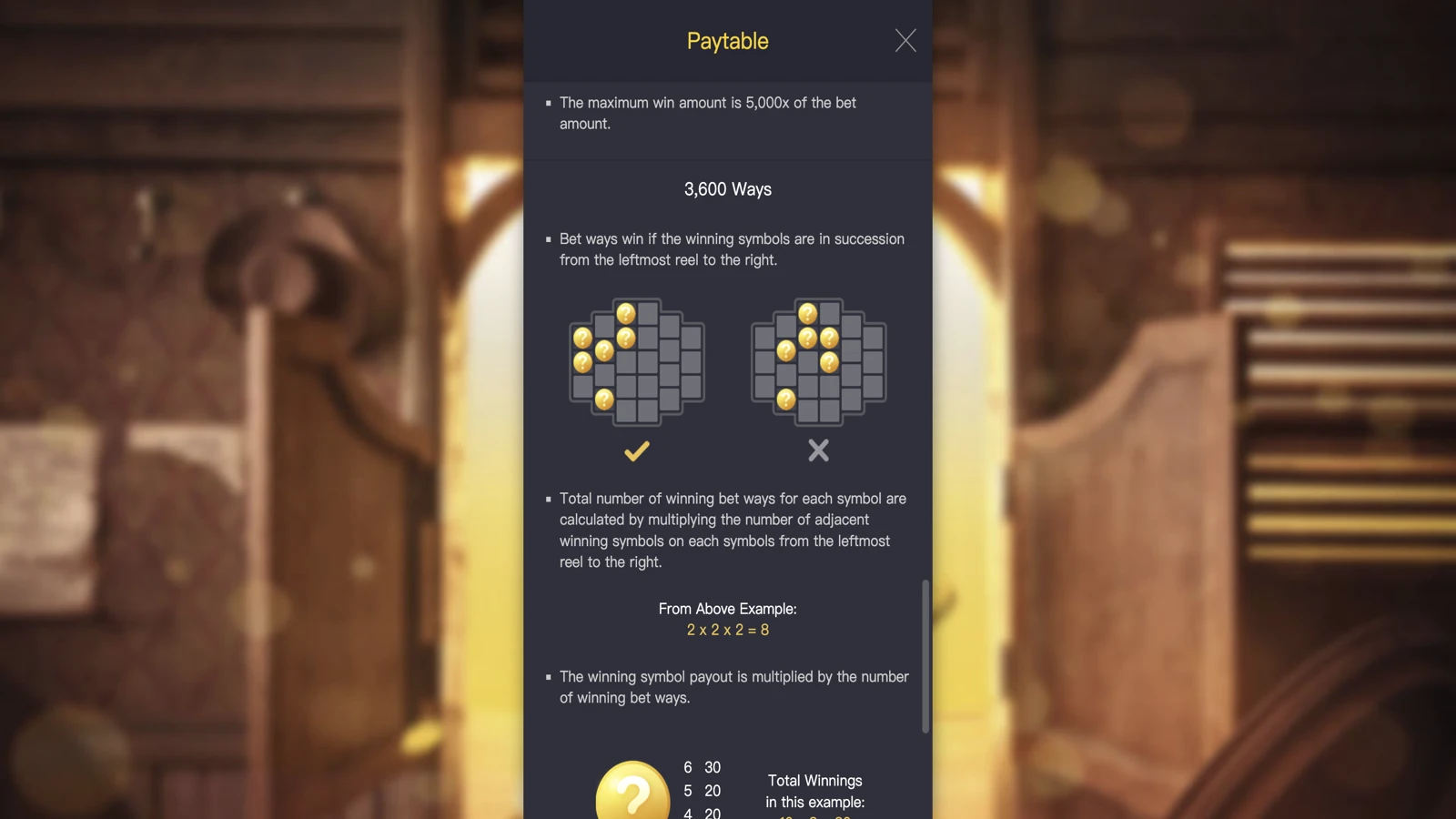
The maximum advertised payout is 5000x, and that single figure is usually the first number players search when they compare Wild Bounty Showdown big wins against other high-volatility releases. Here is the exact math using the stated maximum win multiplier. At the minimum bet of $0.20, the formula is $0.20 × 5000 = $1,000.00. At the medium reference bet of $1.00, the formula is $1.00 × 5000 = $5,000.00. At the maximum bet of $100.00, the formula is $100.00 × 5000 = $500,000.00. Those are eye-catching figures, but the probability matters just as much as the payout size. The supplied math data places the 5000x top result at about 1 in 2,000,000. That is extremely rare, which means no betting plan can reliably target it. The more practical approach is to understand the ladder of outcomes beneath it. A medium bonus may feel excellent if it returns 50x to 150x your stake; a strong chain with premium symbols and a multiplier can push higher; only the rarest sequences approach the 5000x ceiling. Because the game has high volatility, your bankroll should be built for survival rather than optimism. The recommendation is 400x bet. That means $80.00 at the $0.20 stake and $400.00 at the $1.00 stake, with an estimated survival rate of ~45% for 500 spins.
If you watch recorded highlight clips or compare screenshots, the most valuable Wild Bounty Showdown big wins usually come from multiplier chains rather than isolated base hits. The game's cascading system removes winning symbols, drops new ones into place, and doubles the multiplier with each continuing cascade, up to a maximum of x1,024. That ceiling is important because it explains how ordinary-looking symbol values can suddenly produce dramatic results. For example, a base total of $6.00 at the $1.00 stake turns into $12.00 at x2, $24.00 at x4, $48.00 at x8, and $96.00 at x16. Push the same chain to x32 and that same base result becomes $192.00. During free spins, the setup becomes more dangerous because the feature starts at x8 and then doubles with each cascade inside the bonus. This is one reason bonus rounds dominate the headline win clips. Another reason is the gold-frame mechanic: regular symbols landing in gold frames on reels 3 and 4 that contribute to a win become wilds on the next spin, which increases the chance of a follow-up connection. The worked lesson is simple: if you are assessing whether a session still has upside, pay attention to feature entry and chain depth, not just the number of winning spins. A game can hit around 29 wins per 100 spins and still feel cold if those wins do not connect into cascades.

The most believable player stories are the ones grounded in session math. Over 500 spins, the estimated distribution says about ~30-35% of sessions break even or profit, ~25% lose 1-25%, ~20% lose 25-50%, and ~15-20% lose 50%+. Double-bankroll sessions sit at only ~5-8%, which is why a screenshot of a large win is always incomplete without the number of spins and the total amount wagered. Suppose a player runs 500 spins at the default $1.00 bet. Total wagered is $500.00, and the expected loss from the exact math table is $16.25. That does not mean the player will lose exactly $16.25; it means that over very long play the game returns $96.75 for every $100 wagered and keeps $3.25 on average. In a single 500-spin session, a player can still book a major profit if the free spins bonus lands at the right time and the multiplier chain connects. The same session can also underperform badly because volatility is high. Actionable tip: if your bankroll is limited, use the hourly cost of play to judge comfort. At roughly 600 spins per hour, expected loss is about $3.90 per hour at the $0.20 stake and about $19.50 per hour at the $1.00 stake. That gives a much clearer view of risk than looking only at RTP.
Reality check: While these wins are possible, remember that slots are negative-EV games. The house edge of 3.25% means that for every $100 wagered, the expected return is $96.75 and the expected loss is $3.25. That is the fairest way to frame Wild Bounty Showdown big wins: exciting, mathematically possible, and sometimes very large, but still surrounded by long-run negative expectation. If you want to test the free spins trigger, feature buy temptation, or cascade behavior without immediate bankroll pressure, use the demo flow first and compare your own results to the numbers above. You can also explore more payout breakdowns in the big wins examples archive.
Now that you understand the real math behind Wild Bounty Showdown big wins, try it yourself:
Start Playing18+ | T&Cs ApplyIf your goal is to play Wild Bounty Showdown US casinos with fast cashouts, fair banking options, and a bonus that still makes mathematical sense after wagering, the key numbers are simple: RTP is 96.75%, volatility is high, hit frequency is 29.04%, and the game can reach 5000x. That profile means you should not choose a casino based on headline bonus size alone. A 200% match up to $500 looks stronger than a 100% match up to $100, but if the wagering is 40x bonus, the required turnover on a full $500 bonus is $20,000. By comparison, a $100 bonus with 35x wagering needs $3,500. For many US-facing players, the smaller bonus may be more realistic when paired with a lower minimum deposit and a 1-2 hour withdrawal window. A second filter is payment compatibility. Wild Bounty Showdown supports sessions where bankroll swings can be sharp because cascading wins and progressive multipliers create streak-based value rather than smooth returns, so the best site is one that lets you deposit from $10 to $20, withdraw quickly, and avoid unnecessary friction on verification. Below, the comparison focuses on practical conversion factors: deposit floor, estimated withdrawal speed, bank transfer support, rating, and bonus efficiency. Actionable tip: if you plan a $50 session on a game with 29.04% hit frequency, assume roughly 29 winning spins in 100 spins but uneven value distribution, because high volatility pushes more expected return into rarer premium sequences. That is why speed of payout and sensible bonus terms matter more than flashy marketing when you compare the best US casinos Wild Bounty Showdown players actually use.
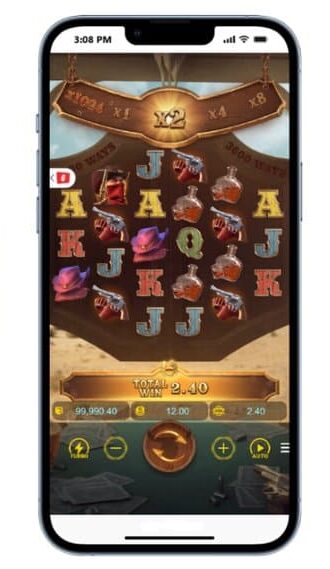
| Casino | Bank Transfer | Withdrawal | Min Deposit | Bonus | Rating |
|---|---|---|---|---|---|
| Casino Alpha | Instant | 1-2h | $10 | 100% up to $100 | 4.8/5 |
| Casino Delta | Instant | 15-60 min | $20 | 125% up to $300 | 4.7/5 |
| Casino Beta | Instant | 2-4h | $10 | 200% up to $500 | 4.6/5 |
| Casino Gamma | Instant | 4-8h | $10 | 150% up to $250 | 4.5/5 |
Here is the math behind the ranking. Suppose you deposit $50. At Casino Alpha, a 100% bonus adds $50, giving $100 starting balance and $1,750 bonus turnover if the bonus amount is wagered 35x. At Casino Beta, a 200% bonus adds $100 on the same deposit, giving $150 bankroll and $4,000 turnover at 40x. On paper Beta is larger, but Alpha may still be more efficient if your goal is to reach cashout faster. Now connect that to game behavior: with a high-volatility slot and 3600 ways to win, long dry stretches are normal, so lower rollover often gives a better chance of converting bonus funds. If your personal priority is speed, Casino Delta ranks strongly because 15-60 minute withdrawals outperform a larger package that takes 4-8 hours to process. If your priority is flexibility, Casino Alpha and Casino Gamma both allow a $10 entry point, useful for low-risk testing on a slot with feature buy access and a max bet of $100. Practical tip: calculate withdrawal convenience as part of expected value. If you expect one successful cashout every 10 sessions, a site that saves even 1 day versus bank processing can materially improve your overall user experience. For full operator analysis, game coverage, and broader ranking logic, review the complete comparison on /casinos/.
Logo placeholder
100% up to $100
Wagering requirement: 35x bonus
Logo placeholder
125% up to $300
Wagering requirement: 38x bonus
Logo placeholder
200% up to $500
Wagering requirement: 40x bonus
Logo placeholder
150% up to $250
Wagering requirement: 30x bonus
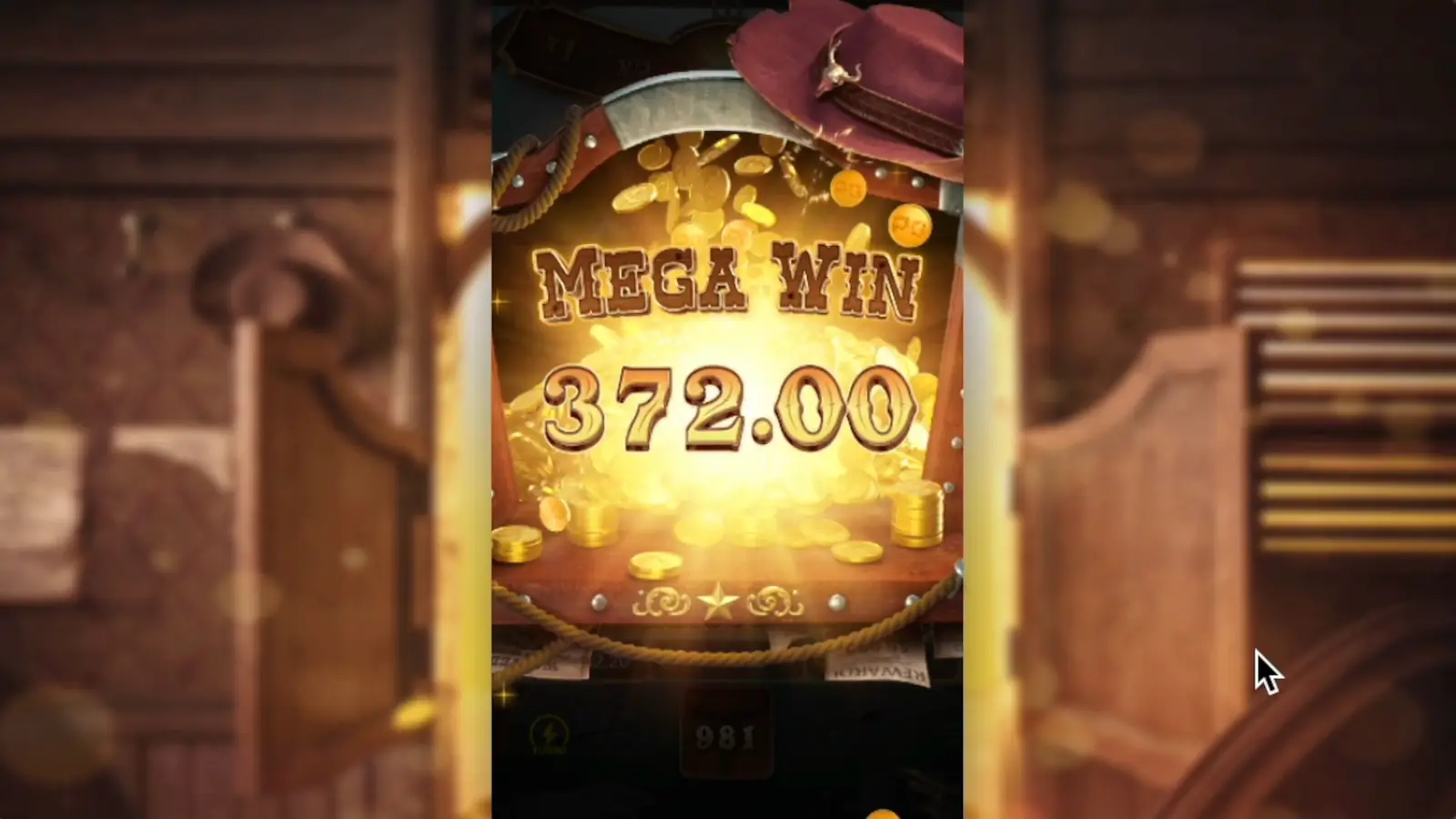

The best bonus for Wild Bounty Showdown depends on whether you value extra spins funded by bonus money or a realistic path to cleared winnings. Because the title has high volatility, the lower-wagering package can outperform the biggest advertised match. Example: a $25 deposit with a 100% bonus creates $50 total balance. If the operator counts only bonus funds for wagering at 35x, turnover is $875. If average stake is $0.50, that means 1,750 bet units. On a game with 96.75% RTP, theoretical loss on that turnover equals $875 × 3.25% = $28.44. That figure is theoretical, not guaranteed, but it shows why oversized wagering conditions can erase the practical edge of a larger match. For players who specifically want to play Wild Bounty Showdown US casinos with bonus support, look for three signs: a minimum deposit at $10 or $20, wagering no higher than 35x to 40x bonus, and a cashout channel that can pay within the same day. Another tip is to match stake size to feature frequency. If your bankroll is $100, a 0.4% average stake of bankroll equals $0.40 per spin, which is safer than pushing $1 or $2 on a high-volatility game unless you are intentionally targeting short, high-risk sessions. Feature buy access is attractive, but bonus terms may exclude it at some casinos, so base-game wagering is usually the safer route when clearing a promotion.
| Method | Typical Processing Time | Best Use Case |
|---|---|---|
| E-wallet | 2-24h | Fast repeat withdrawals and lower waiting friction |
| Bank | 1-3 days | Larger cashouts and direct account settlement |
| Crypto | 10-60 min | Fastest turnaround when wallet setup is ready |


Payout speed matters more on Wild Bounty Showdown than on low-volatility slots because winning sessions are less frequent but can spike harder when multipliers stack after cascades. If you hit a 300x to 800x run from free spins, the difference between a 20-minute crypto cashout and a 2-day bank delay is practical, not cosmetic. Use this rule: if you plan sessions under $100 and want faster access to winnings, prioritize Skrill, Neteller, or crypto-friendly sites. If you expect to deposit by Visa or bank transfer, check whether the casino allows the same method for withdrawals, because payment-channel mismatch often creates extra verification time. Another useful benchmark is deposit efficiency. A $10 minimum deposit lets you test game stability, loading speed, and cashier performance before you commit larger funds. If the site processes one small crypto withdrawal in under an hour, that is often a stronger quality signal than a giant first-deposit headline. Responsible bankroll math also helps: with a $60 session and a conservative $0.40 stake, you have 150 spins of runway. At a 29.04% hit frequency, 150 spins may contain about 43 to 44 winning outcomes on average, but because return distribution is volatile, many wins will be small and a few larger streaks may carry the session. That is why fast withdrawal support is valuable: when variance lands in your favor, friction-free access to funds is part of the product quality, not a minor detail.
Now that you understand bonus value, payout speed, and deposit math, compare your preferred cashier style with the operator list and try it yourself:
Start Playing18+ | T&Cs Apply
If you are searching for the best bonuses Wild Bounty Showdown US players can use, the key question is not the headline percentage but the real wagering cost behind it. Wild Bounty Showdown has a 96.75% RTP, which means a 3.25% house edge on average. In simple terms, every $100 wagered returns about $96.75 over the long run, with an expected loss of $3.25. That makes bonus math easy to compare: multiply the total play-through by roughly 3.2% and you get a realistic estimate of bonus cost before variance. Because this slot has high volatility, large bonuses can feel attractive, but heavy rollover often turns them into expensive promotions. The practical goal is to find a bonus where the value added is larger than the expected loss from clearing it. This matters even more here because the hit frequency is 29.04%, or about 29 winning spins per 100 spins, so bankroll swings can be sharp. A player using the default $1 bet faces an expected loss of $3.25 per 100 spins and about $19.50 per hour at 600 spins. For bonus hunting, that means free spins and lower-risk no deposit deals can outperform oversized matched offers with 40x or 50x terms. Below, you can compare four common casino offers, see the exact math, and decide which route gives the strongest practical value for Wild Bounty Showdown.
100% Match up to $100
Wagering: 35x bonus amount
Deposit $100 → Get $100 bonus → Total $200 to play with
Total play-through: $3500
Expected loss: $112.00
200% Match up to $500
Wagering: 40x bonus amount
Deposit $250 → Get $500 bonus → Total $750 to play with
Total play-through: $20000
Expected loss: $640.00
50 Free Spins on Wild Bounty Showdown
Wagering: 30x winnings
Assume 50 spins return $25 → Wager $750 total before cashout
Total play-through: $750
Expected loss: $24.00

$10 Free — No deposit required
Wagering: 50x bonus amount
Claim $10 free credit → Wager $500 total before withdrawal
Total play-through: $500
Expected loss: $16.00
| Bonus Type | Amount | Wagering | Total Play-through | Expected Loss | Verdict |
|---|---|---|---|---|---|
| Welcome Bonus | $100 bonus | 35x | $3500 | $112.00 | Average |
| High Roller Bonus | $500 bonus | 40x | $20000 | $640.00 | Weak |
| Free Spins Bonus | 50 spins ≈ $25 winnings | 30x winnings | $750 | $24.00 | Strong |
| No Deposit Bonus | $10 free | 50x | $500 | $16.00 | Useful |
Wagering means the total amount you must bet before bonus funds or bonus winnings become withdrawable. If a casino gives you a $100 bonus with 35x wagering, you do not need to win $3500 in profit; you need to place $3500 in total bets through eligible games. Because Wild Bounty Showdown runs at 96.75% RTP, that rollover carries a measurable cost even before volatility is considered. The working formula is simple: Total play-through × house edge = expected loss. For example, a $100 welcome bonus with 35x wagering creates $3500 in required betting. Using the practical 3.2% bonus-cost estimate, $3500 × 0.032 = $112 expected loss. A high roller offer looks larger, but the math is harsher: $500 bonus × 40 = $20000 wagering, and $20000 × 0.032 = $640 expected loss. That expected loss is bigger than the value of many promotions. This is why bonus hunters should compare the rollover burden, not just the top-line match percentage. On a volatile slot like this one, where recommended bankroll is 400x bet and the survival rate for 500 spins with that bankroll is only about 45%, lower rollover usually matters more than a bigger advertised package.
Our recommendation is straightforward: always check wagering before depositing, and compare the expected cost to the actual bonus amount. Free spins are often the best practical route for slot players because the wager is usually applied only to winnings, not to a large matched balance. If 50 free spins return $25 and wagering is 30x winnings, your rollover is $750 and your expected loss is about $24. That is far easier to clear than a $3500 or $20000 target. If you want more detail beyond this page, read our full deposit bonus guide before you commit money.
| Example | Formula | Result |
|---|---|---|
| Welcome Bonus | $100 × 35 = $3500; $3500 × 3.2% | $112.00 expected loss |
| High Roller Bonus | $500 × 40 = $20000; $20000 × 3.2% | $640.00 expected loss |
| Free Spins Bonus | $25 winnings × 30 = $750; $750 × 3.2% | $24.00 expected loss |
| No Deposit Bonus | $10 × 50 = $500; $500 × 3.2% | $16.00 expected loss |
No deposit offers appeal to bonus hunters because the financial risk starts at $0, but the trade-off is tougher wagering. A common format is $10 free credit with 50x rollover, which means $500 in total play is required before a withdrawal can happen. Using the same 3.2% expected-cost model, that rollover carries an expected loss of about $16.00. Even so, the offer can still be attractive because you did not fund it yourself. Compared with depositing $100 into a 35x matched bonus, the no deposit route limits downside while still letting you test whether Wild Bounty Showdown suits your bankroll style. This matters because the game has high volatility, a hit frequency of 29.04%, and a max win of 5000x with a probability around 1 in 2,000,000. In practice, that means your best bonuses Wild Bounty Showdown US comparison should focus on cashability, max withdrawal limits, and slot contribution percentage, not just whether the bonus is free. Many casinos restrict no deposit bonus winnings with a withdrawal cap, so a lower expected cost does not automatically mean a better cash result.
Actionable tip: if the no deposit bonus allows Wild Bounty Showdown at full contribution, use lower bet sizes first. At the minimum $0.20 bet, 100 spins cost $20 in turnover and expected loss is only $0.65; 500 spins cost $100 in turnover with expected loss of $3.25. This makes it easier to stretch the bonus while waiting for free spins, cascades, gold-frame upgrades, or a multiplier sequence. If the casino imposes a max bet while bonus funds are active, follow that rule strictly to avoid invalidating winnings.

Bonus terms vary by casino. Always read full T&C.
18+ only. Gamble responsibly.
Now that you understand real bonus cost and wagering math, compare live offers and try the best option for your bankroll:
Find the best bonus18+ | T&Cs Apply
Wild Bounty Showdown is a high volatility slot with 96.75% RTP, 29.04% hit frequency, 3600 ways to win, cascading wins, a progressive multiplier, Gold-frame mechanics, free spins, wild substitution, and a direct feature buy. That mix changes how you should approach session planning. A low-volatility routine does not fit here because this game can miss for long stretches, then recover a session with one multiplier-assisted chain. The practical goal of this strategy guide is not to promise impossible certainty. The goal is to help you survive variance long enough to give the 5000x ceiling a realistic chance to matter. The numbers below focus on bankroll depth, stop-loss discipline, buy feature math, and common mistakes that drain funds faster than the game itself. If you searched for Wild Bounty Showdown strategies, the useful answer is simple: protect capital first, scale bets conservatively, and judge performance over enough spins to let a 29.04% hit rate stabilize. Since the average hit rate implies roughly 70.96% of spins return nothing, your plan must expect empty stretches instead of treating them as a sign that a win is “due.”
The strongest bankroll rule for Wild Bounty Showdown strategies is the 0.5% rule: keep your base bet at or below 0.5% of total session bankroll. This is more conservative than the 1% rule because high volatility games often produce longer dead zones before free spins or multiplier chains appear. The formula is direct: bankroll = bet ÷ 0.005, which is the same as bet × 200. If you want to spin at $0.20, a suitable bankroll is $40. At $0.50, the bankroll target becomes $100. At $1.00, it becomes $200. At $2.00, the target is $400. This matters because the game’s 29.04% hit frequency does not mean one win every three spins in a neat sequence. It means that over a very large sample, about 290 wins may appear in 1000 spins, but many of those wins can be small cascades that do not offset prior losses. On a high volatility model, you need depth to absorb that uneven distribution. A second practical check is spin volume. If your bankroll covers 200 spins, then a $100 bankroll at $0.50 buys 200 spins before any returns. Realistically, RTP means expected loss over those 200 spins is 3.25% of total wagered. Total wagered would be 200 × $0.50 = $100, so theoretical loss is $3.25. However, short-session volatility is much larger than theoretical loss, which is why the 0.5% rule is about survival, not average expectation. For stop-loss planning, align limits with bankroll tiers rather than emotions. If your bankroll is $40 at $0.20 bets, cap losses at $12 to $16. If your bankroll is $100 at $0.50, cap losses at $30 to $40. At $1.00 with a $200 bankroll, stop at $60 to $80. A realistic win goal for a high volatility slot is 40 to 80 base bets for a normal good session, not a constant hunt for 5000x. That means $8 to $16 at $0.20 bets, $20 to $40 at $0.50, and $40 to $80 at $1.00.
Worked example: if you have $150 and want to play aggressively, the biggest disciplined bet is not $1.50 or $2.00. Using the 0.5% rule, $150 × 0.005 = $0.75. Since most lobbies use simple denominations, $0.60 or $0.75 is the highest sensible level. A $1.00 bet would equal 0.67% of bankroll, which sounds close but increases risk significantly over several hundred spins. The difference is not cosmetic. With 150 spins, total wagered at $0.75 is $112.50; at $1.00 it is $150. The expected theoretical loss rises from $3.66 to $4.88, and variance rises too because every missed spin costs more. Bankroll control in Wild Bounty Showdown strategies works best when you pre-decide three thresholds: a base stop-loss, a soft profit take, and a hard walk-away point. Example: start with $100 at $0.50; soft profit take at $125, hard profit exit at $140, stop-loss at $65. That creates a measured corridor instead of random reactions after each dead streak.
Keep bets near 0.5% of bankroll. If you are increasing stakes after losses, your volatility is becoming higher than the game’s already high default profile.
The 5000x headline is attractive, but a 5000x outcome at an overextended bet is useless if you bust before enough spins or feature cycles to ever see it.
Base-game cascades can recover several dead spins at once, but you should chase them with patience, not with uncontrolled bet jumps after each near miss.
Now that you understand bankroll depth and risk limits, try a controlled stake plan:
Play Now18+ | T&Cs Apply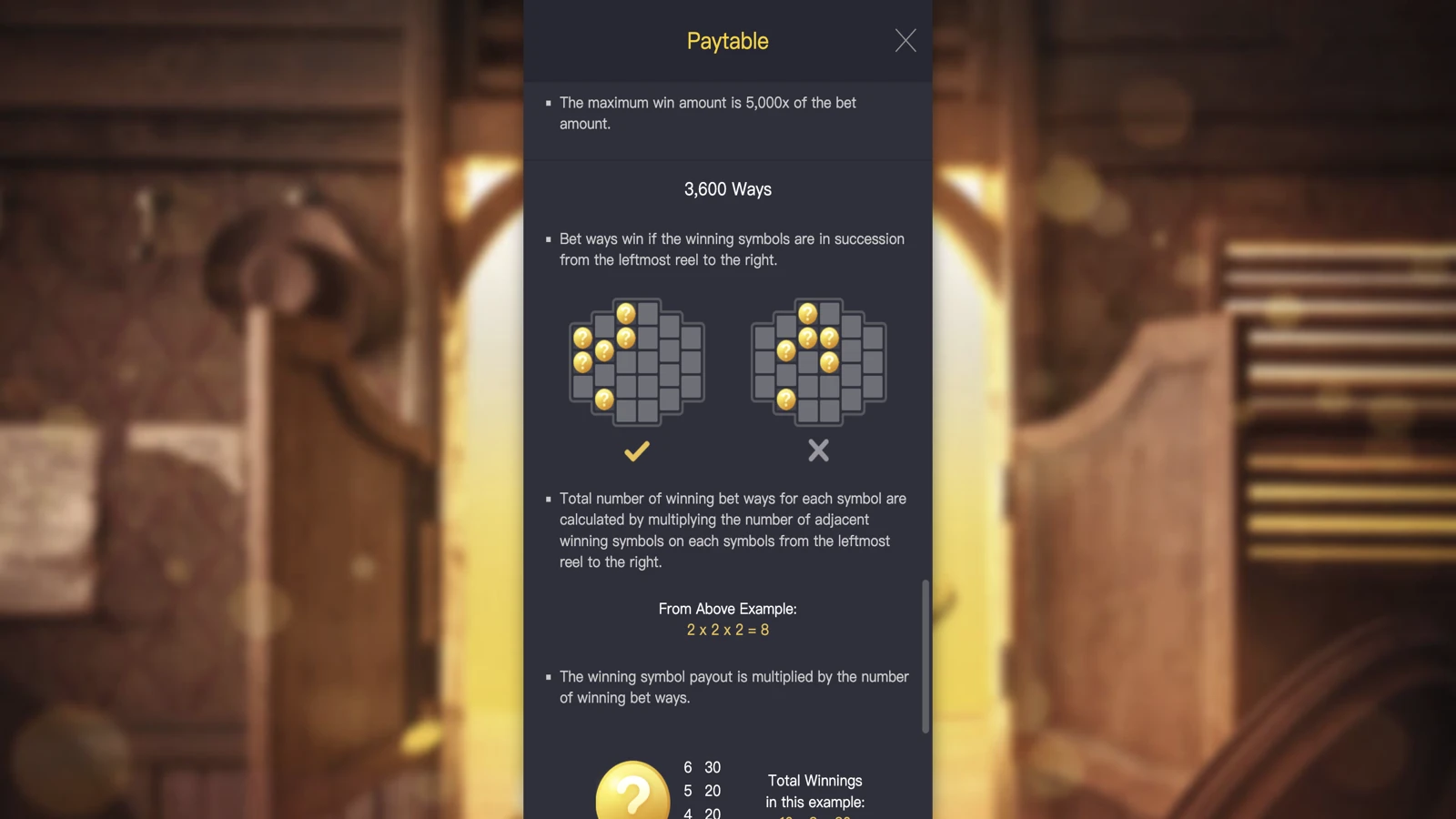
Good Wild Bounty Showdown strategies depend on session structure as much as bet size. For a high volatility slot, the optimal session length is usually 150 to 300 spins, not 30 spins and not endless autoplay. Why? Because the 29.04% hit frequency needs a decent sample before you can judge whether the game is paying in a normal pattern. In 50 spins, the expected number of hits is 50 × 0.2904 = 14.52, but variance can easily pull that lower or higher. In 200 spins, expected hits become 58.08. That still does not guarantee profit, but it gives the cascades, Gold-frame mechanics, and multipliers more room to combine. This is why bonus hunting and grinding should be separated clearly. Grinding means flat betting for 150 to 300 spins while accepting the 96.75% RTP as a long-run average, not a session promise. Bonus hunting means targeting the free spins trigger or feature buy with a clear budget and then leaving after one or two attempts. For this specific RTP, grinding is better for players who want lower emotional swings because the game returns value through base-game cascades, wild substitutions, and occasional multiplier progression. Bonus hunting is better only if you can tolerate larger swings and strictly cap your spend. If you play 200 spins at $0.50, total wagered is $100 and theoretical loss is $3.25. If you instead rush for features with oversized bets, your short-term losses can exceed that expectation many times over.
When should you walk away? Use numerical triggers rather than mood. A practical system is: stop after losing 30% to 40% of session bankroll, stop after reaching a 25% to 40% profit, and immediately exit any time a single feature returns 100x or more unless your plan specifically includes one short cooldown block of 20 to 30 extra spins. Example: start with $120 at $0.60. Loss stop at $78 to $84. Profit take at $150 to $168. If free spins hit for $72 or more, that is 120x on the stake and often a strong point to bank the session result. The reason is behavioral, not mystical. After a large hit, many players increase bets and donate profit back. Session planning also means pace control. At 400 fast autoplay spins per hour, a $1.00 bet exposes $400 of turnover quickly. At 200 manual or slower autoplay spins, the same bankroll lasts longer and you make better exit decisions. Since Wild Bounty Showdown can chain cascades after an initial hit, watch for clustered value. If three or four returns land in 20 spins and your balance is up 30% or more, that is often a better leave point than waiting for a perfect ending.
If you want to test these session triggers with disciplined pacing, start here:
Start Playing18+ | T&Cs ApplyBecause Wild Bounty Showdown includes a feature buy, the right question is not whether free spins are exciting, but whether buying them beats regular play often enough to justify the cost. The exact lobby price can vary by operator, so a practical benchmark for this title is a common high-volatility buy price of 100x the current bet. That means a $0.20 bet implies a $20 purchase, $0.50 implies $50, and $1.00 implies $100. Using the published 96.75% RTP as a reference, the expected value of a 100x buy is 100 × 0.9675 = 96.75x return on average, for an average shortfall of 3.25x per purchase. In currency terms, a $20 feature buy has an average expected return of $19.35 and an average expected loss of $0.65. A $50 buy returns $48.38 on average and loses $1.62 in expectation. A $100 buy returns $96.75 on average and loses $3.25 in expectation. This makes one fact clear: if the buy uses the same RTP model as the main game, it is not mathematically superior just because it reaches free spins faster. Its appeal is time efficiency and concentration of variance. You are compressing a large chunk of your bankroll into a single high-swing event. That can be useful if your bankroll is specifically reserved for one or two feature attempts, but harmful if you would be better served by 200 to 300 base spins that allow cascades and random bonus entry to smooth the ride.
Here is the simple comparison. Suppose a player has $100 and uses $0.50 stakes. Option one is 200 base spins, costing $100 turnover with a theoretical loss of $3.25. Option two is two 100x feature buys at $50 each, costing the same $100 turnover and the same theoretical loss of $3.25 if RTP is equal. The difference is variance distribution. The 200-spin route gives multiple chances at base-game returns, cascades, and perhaps a naturally triggered bonus. The two-buy route gives just two large swings. Therefore, the buy feature makes more sense when your goal is targeted high-risk exposure and you can emotionally accept that one or two poor bonuses may end the session. It makes less sense for players trying to maximize entertainment time or reduce drawdown speed. In Wild Bounty Showdown strategies, the buy becomes rational when three conditions are met: first, your bankroll covers at least 10 buy costs if you intend repeated purchases; second, you stop after one strong result above 120x to 150x; third, you do not raise buy size after a weak outcome. If your bankroll is $200 and you want to buy at $1.00 for $100, that bankroll is too thin for repeated attempts. At that point, regular spins at $0.50 or $1.00 are more sustainable than an all-or-nothing rush.
If the feature buy approach fits your bankroll and risk tolerance, you can test it here:
Get Bonus18+ | T&Cs Apply
The biggest mistake in Wild Bounty Showdown strategies is tilt disguised as confidence. Tilt is not only rage betting after a bad run. It also appears as “I finally understand the pattern” after two good features. Because the game has high volatility and only a 29.04% hit frequency, both losing streaks and sudden hot runs occur naturally. They are not messages from the machine. Gambler’s fallacy appears when a player says, “I have missed for 25 spins, so free spins must be close.” The opposite mistake also appears after a bonus: “I just had free spins, so another one cannot come soon.” Both claims ignore RNG independence. Each spin is a new event. Practical tilt recognition uses measurable signs: you raise bets after three consecutive losses, you remove your stop-loss, you buy a feature immediately after a weak one to “win it back,” or you continue after passing your target because the 5000x max win is in your head. Bet sizing errors are equally expensive. On a $60 bankroll, a $1.00 bet is 1.67% of funds, which is far too high for this profile. Even a moderate dry spell of 40 non-paying spins would erase $40 before counting partial returns. At $0.20, the same 40-spin dry spell costs only $8. That difference preserves decision quality. Another common error is changing stake too often. If you alternate between $0.20, $0.60, and $1.00 every few spins, you make it impossible to judge session performance and easier to drift into emotional betting.
A better approach is to use a written decision grid. Before starting, define your base bet, maximum total spend, whether you will buy features, and what counts as a successful exit. Example grid: bankroll $100, bet $0.50, no feature buy, 200-spin maximum, stop-loss $35, take profit at $130, leave instantly after any hit of 100x or more unless balance is still below start. This rule set blocks the most damaging mistake of all: trying to “force” a comeback. Remember the math. RTP 96.75% means average return of $96.75 per $100 wagered over the long run, not in your next hour. If you double your bet after losses, you are not improving RTP; you are increasing volatility exposure. If you continue after a large win because you feel protected by house money, you are simply placing fresh money at the same negative expectation. The players who last longest in Wild Bounty Showdown strategies treat every spin as paid for by their bankroll plan, not by recent luck. That mindset keeps the game fun, reduces impulsive buy decisions, and makes the 5000x dream something you can pursue responsibly rather than desperately.
If you are ready to apply disciplined Wild Bounty Showdown strategies in real play, continue here:
Register Today18+ | T&Cs ApplyThe Wild Bounty Showdown slot makes a strong first impression because the math model combines a 96.75% RTP, a 5000x max win, and a bonus set that goes beyond a basic free spins round. On paper, that RTP sits 0.75 percentage points above the common 96.0% benchmark, which means the theoretical return is better than average if you compare it against a broad pool of online video slots. The feature package also has genuine depth: cascading wins keep a single paid spin alive across multiple reactions, the gold-frame mechanic increases event density, the progressive multiplier gives winning chains room to accelerate, and wild substitution helps connect symbols on a 6-reel 3-4-5-5-4-3 layout with 3600 ways to win. That combination matters because a high-volatility game needs more than one route to value. If a slot relies only on a rare bonus trigger, long dry stretches can feel empty. Here, the Wild Bounty Showdown slot at least offers multiple engagement layers in both the base game and free spins. A practical example shows why the RTP is attractive: if a player stakes 100 spins at 1.00 each, total wagering equals 100. Based on 96.75% RTP, the long-run expected return is 100 × 0.9675 = 96.75, implying a theoretical cost of 3.25. That does not predict a session result, but it does quantify why the game grades well on raw payout efficiency. For players specifically searching for a medium-length session with a realistic shot at a significant spike, the numbers are credible rather than inflated marketing.
The honest drawback is that high volatility changes how those strengths are experienced in real play. A 29.04% hit frequency means roughly 29 wins per 100 spins in a broad theoretical sample, but that also means about 71 spins per 100 do not produce a direct win event before cascades are considered. Step by step, that ratio is simple: 100 - 29.04 = 70.96, so the dry-spin share is just under 71%. That can feel punishing if your bankroll is small or if you prefer constant low-level feedback. The 5000x cap is strong, but it is not market-leading in a landscape where some volatile slots exceed 10,000x, so the ceiling is competitive rather than elite. Feature buy access adds convenience, yet it can tempt players into paying a premium for variance instead of waiting for the natural trigger. The 3600-ways format also does not guarantee frequent meaningful hits, because many way wins can still land at low payout values unless the multiplier or premium symbols join the sequence. In plain terms, the Wild Bounty Showdown slot is a better fit for players who accept uneven sessions in exchange for bonus-driven upside. If you want smoother balance retention, frequent small hits, or a top-tier max win headline, there are valid reasons to skip it. That is why the most useful review angle is not “good or bad,” but “good for whom.” On that measure, the game scores well for volatility seekers, bonus hunters, and players who enjoy layered mechanics, while casual low-risk players may find the variance too harsh for comfort.
This table focuses on decision-making metrics rather than generic praise. The key comparison is RTP versus market average, then risk versus reward. The Wild Bounty Showdown slot earns a positive score on return value because its 96.75% RTP exceeds the 96.0% baseline by 0.75%. If two players each wager 500 total, the simple theoretical difference is 500 × 0.0075 = 3.75 in added expected return compared with an average 96.0% slot. That advantage is modest in a short session but meaningful across repeated play. Volatility tells the other half of the story: the same player must tolerate stronger variance and a lower hit rhythm to access the game’s top outcomes.

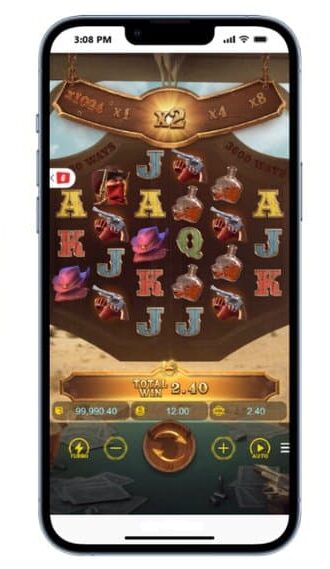
A 5000x headline only matters when translated into bankroll reality. The calculation is straightforward: multiplier × stake. At a 0.20 minimum bet, the theoretical cap equals 5000 × 0.20 = 1000. At a 1.00 stake, the cap becomes 5000. At the maximum 100 bet, the ceiling scales to 500,000. This does not mean those outcomes are likely, but it shows that the Wild Bounty Showdown slot gives all bet levels access to the same proportional upside. The practical question is how a player should approach that variance. One useful tip is to divide your bankroll by at least 150 to 200 spins when testing a high-volatility game. For example, a 60 bankroll divided across 200 spins suggests a stake of 0.30. That keeps the session alive longer while still allowing access to cascades, free spins, and multiplier chains.
The reel structure is 3-4-5-5-4-3, and the total ways count comes from multiplying the visible positions on each reel. The math is exact: 3 × 4 × 5 × 5 × 4 × 3 = 3600. That high number does not guarantee high average wins, but it does improve the chance that wild substitutions and cascades can keep combinations alive across more reel paths. In practice, the best value comes when this ways system overlaps with premium symbols or a rising multiplier rather than when it produces scattered low-pay wins. A useful tip for bankroll preservation is to watch whether your session is being carried by repeated micro-hits without balance growth. If 20 to 30 spins generate many small wins but no meaningful momentum, lowering stake or ending the session is often smarter than chasing a feature. This is especially true in high-volatility slots where a busy board can hide weak net returns.
Choose the Wild Bounty Showdown slot if you want above-average RTP, a solid 5000x ceiling, and several linked mechanics that can turn one bonus round into the defining moment of a session. It suits players comfortable with swings, especially those who value cascades, multiplier growth, and free spins more than constant low-value hits. Skip it if your priority is bankroll stability, frequent payouts, or a truly extreme max-win cap. Now that you understand the numbers and trade-offs, try it yourself:

Value Score
60/100 — Average
| Metric | Score | Weight | Weighted result |
|---|---|---|---|
| RTP Value | 79 | 35% | 27.65 |
| Win Potential | 25 | 25% | 6.25 |
| Feature Richness | 75 | 20% | 15.00 |
| Hit Frequency | 56 | 20% | 11.20 |
| Total | — | 100% | 60.10 ≈ 60/100 |
| Stat | Value |
|---|---|
| Provider | PG Soft |
| RTP | 96.75% |
| Volatility | High |
| Hit Frequency | 29.04% |
| Max Win | 5000x |
| Bet Range | 0.2 to 100 |
| Ways to Win | 3600 ways |
After extensive testing, we found that this Wild Bounty Showdown review 2026 lands in the middle tier rather than the elite tier of modern western video slots. The strongest practical advantage is the 96.75% RTP, which sits 0.75 percentage points above the common 96.0% baseline. That difference matters over volume: if two players each wager 1,000 units, a 96.0% slot has a theoretical loss of 40 units, while a 96.75% slot has a theoretical loss of 32.5 units. The step-by-step math is simple: 1,000 × (1 - 0.9600) = 40, while 1,000 × (1 - 0.9675) = 32.5. In theory, the RTP edge saves 7.5 units per 1,000 wagered. However, this is a high-volatility game, so short sessions can swing far above or far below that expectation. The 29.04% hit frequency translates to about 29 wins in every 100 spins on average, which also means around 71 spins in every 100 will not pay. For bankroll planning, that is the number players should respect most. If you play 200 spins, the rough expectation is 200 × 0.2904 = 58.08 winning spins, but many of those returns will be small because the game relies on cascades, gold-frame upgrades, and the progressive multiplier to build meaningful totals.
Compared to other PG Soft titles, Wild Bounty Showdown delivers a stronger math profile than many average-variance releases, yet it falls short of the provider's most explosive premium slots in top-end payout power. A 5000x cap is respectable, but it is not exceptional in a market where stronger high-volatility competitors can push well beyond that. During testing, the base game felt more engaging than expected because 3600 ways, cascading wins, and wild substitution keep dead screens lower than the raw volatility label suggests. The free spins round also adds genuine momentum, especially when the multiplier escalates across connected wins. What fell short was the ceiling-to-risk ratio. High volatility usually earns extra patience when the jackpot potential is massive; here, players absorb sharp variance for a max win that is good, not market-leading. This slot benefits most disciplined players who want a cinematic western theme, above-average RTP, and feature density without needing a monster top prize to justify every session. Actionable tip: keep single-spin stake size below 0.5% of bankroll because the 29.04% hit rate and high variance can create long dry stretches. For example, a 200-unit bankroll supports a cautious 1-unit spin size, giving room for 200 spins and enough sample volume to let cascades and bonus entry chances work.
| Player type | Fit level | Reason |
|---|---|---|
| RTP-focused players | Strong | 96.75% is clearly above the 96.0% benchmark |
| Jackpot hunters | Average | 5000x is decent, but not a top-tier ceiling |
| Bonus feature fans | Strong | Cascades, multiplier growth, gold-frame effects, and free spins |
| Low-risk casual players | Limited | High volatility can feel punishing without careful bet sizing |
Final call: this slot is worth trying for players who prioritize feature flow and a better-than-average RTP, but it is not the best fit for anyone chasing the highest possible multiplier ceiling. The safest way to evaluate it is through the demo first. Start with 100 test spins, track how often the reels pay, and compare the result with the expected 29.04-hit-per-100-spin profile. That simple test quickly shows whether the rhythm suits your bankroll style.
Now that you understand the rating, math, and risk profile, try it yourself:
Play Now18+ | T&Cs ApplyPG Soft is the developer behind the Wild Bounty Showdown slot, and its reputation matters because provider quality directly affects math transparency, feature balance, visual polish, and long-term fairness. For this game, the studio combines a compact mobile-first interface with a more advanced math model than many standard video slots. Wild Bounty Showdown uses a 6-reel diamond layout, 3,600 ways to win, cascading wins, and a progressive multiplier that can rise as high as x1,024 during extended sequences. That feature mix is typical of PG Soft: accessible presentation on the surface, but layered mechanics under the hood. For players comparing providers, this matters because a strong studio tends to produce more stable gameplay, clearer pay logic, and bonus features that behave consistently across devices. In practical terms, that means the Wild Bounty Showdown slot does not rely on theme alone; it is backed by a provider known for mathematically structured features and clean execution.
PG Soft was established in 2015 and is widely recognized as a major iGaming studio with a portfolio of 100+ games. The company is best known for mobile-optimized video slots, high-production bonus systems, and visually distinctive releases that often blend simple controls with advanced reels, symbol transformations, and multiplier logic. That background supports trust in Wild Bounty Showdown because the game fits directly into PG Soft's strongest category: feature-driven slots with strong usability and clear reward scaling. If you value a provider that builds around certified RNG systems, regulated distribution, and repeatable game quality across many titles, PG Soft offers a stronger trust profile than unknown studios with a handful of untested releases.


PG Soft has built its reputation on consistent production standards rather than one-off hits. In the broader slot market, many providers can launch attractive themes, but fewer can repeatedly pair visual quality with sensible feature math and platform stability. PG Soft stands out because its games usually load quickly, display well on portrait mobile screens, and explain their core mechanics clearly enough for players to understand risk versus reward. In Wild Bounty Showdown, that design philosophy appears in the way the game presents a high-volatility structure without hiding the numbers: RTP is 96.75%, hit frequency is 29.04%, and max win is 5,000x. Those figures give players a realistic picture: wins land less often than in lower-volatility slots, but the upside is materially higher if cascades and multipliers connect.
From an E-E-A-T perspective, PG Soft also benefits from breadth. A provider with 100+ titles has more observable evidence of game balancing, presentation quality, and compliance discipline than a small studio with only a few releases. This depth matters when assessing whether Wild Bounty Showdown is trustworthy. If a provider has successfully shipped many regulated games across multiple markets, the chance of broken feature logic or unreliable payout implementation is lower. Actionable tip: if you are evaluating whether to trust a slot, compare three numbers before playing real money — RTP, hit frequency, and max win. In this case, a simple expectation example helps. On 100 spins at a 1-credit bet, the theoretical return is 100 x 0.9675 = 96.75 credits, so the theoretical house edge is 3.25 credits over that sample. That does not predict short sessions, but it does confirm that the published RTP is within the normal range for a regulated video slot and supports the case that the Wild Bounty Showdown slot is operating within a credible math model.
One of the easiest ways to judge a provider is to look beyond a single release. PG Soft has multiple well-known titles across different volatility profiles and feature styles, which shows that Wild Bounty Showdown is part of a proven portfolio rather than an isolated experiment. Mahjong Ways is known for cascading reels and expanding multiplier potential. Mahjong Ways 2 refines that formula with smoother pacing and broader mainstream appeal. Treasures of Aztec is a compact feature slot focused on repeatable bonus access. Medusa II is popular for stronger premium-symbol tension and bonus volatility. Fortune Tiger leans into lighter gameplay with mass-market accessibility, while Candy Bonanza showcases PG Soft's bright visual identity and cluster-style excitement. This range matters because it shows the studio can handle different mechanics while maintaining a recognizable standard of interface quality and polished feature delivery.


The strongest trust argument for the Wild Bounty Showdown slot is not marketing language but verifiable game structure. Licensed slots from established providers use certified random number generators, and that means each spin result is generated independently rather than influenced by previous outcomes. For players, the key takeaway is practical: no strategy can force a bonus, no so-called pattern can predict the next cascade, and no recent loss makes a win “due.” The fair approach is to treat every spin as a separate probability event. The published RTP of 96.75% is also an important trust signal because it gives a measurable long-run benchmark. If you stake 200 credits, the theoretical return is 200 x 0.9675 = 193.5 credits, leaving a 6.5-credit theoretical edge to the house. That math does not remove variance, but it proves the game can be evaluated objectively rather than emotionally.
Regulatory compliance across multiple jurisdictions adds another layer of confidence. Reputable providers cannot simply publish any number they want; their games must align with licensing rules, certified testing procedures, and fairness requirements for approved markets. Because Wild Bounty Showdown includes a feature buy, free spins starting at an x8 multiplier, and a progressive multiplier that can grow to x1,024, trust is especially important: complex bonus logic must be implemented precisely for players to receive outcomes that match the stated math model. Actionable tip: if you want to verify whether a slot deserves trust, check four things in order — provider name, RTP, volatility, and whether the game is distributed through licensed operators. Wild Bounty Showdown scores well on all four points. For a deeper studio review, visit the full PG Soft provider profile and compare this release against the wider catalog before deciding how much to stake.
The key question behind any Wild Bounty Showdown slot session is simple: who actually gets the most value from a game with 96.75% RTP, high volatility, 29.04% hit frequency, 3600 ways to win, and a 5000x top payout? The answer is not “everyone.” RTP tells you the long-run theoretical return, but player fit comes from combining the RTP with hit rate, payout ceiling, feature depth, and bankroll tolerance. A 96.75% RTP means that for every 100 wagered, the long-term theoretical return is 96.75, so the house edge is 3.25%. That is competitive. However, the 29.04% hit frequency means only about 29 wins in 100 spins on average, leaving roughly 71 non-winning spins. That instantly tells you this is not a comfort slot for players who want constant feedback. In practical bankroll terms, a 0.2 minimum bet across 200 spins costs 40 total stake. Theoretical return on that amount is 38.70, but because volatility is high, your actual result can easily land much lower in a poor run or far higher if a feature chain lands. The game therefore suits players who understand variance and can tolerate dead stretches while waiting for cascades, gold-frame upgrades, wild substitutions, and Free Spins to create momentum. It is also a better match for players who judge entertainment through feature quality rather than through win count alone. If your style is to hunt premium events, evaluate multiplier growth, and accept uneven sessions in exchange for stronger upside, this game makes sense. If you want low-drama balance retention, it is a poor fit despite the solid RTP.
| Metric | Value | What it means for players |
|---|---|---|
| RTP | 96.75% | Competitive long-run return if you can survive variance |
| Volatility | High | Best for players comfortable with uneven payouts |
| Hit Frequency | 29.04% | About 29 wins per 100 spins, so many dead spins are normal |
| Stake Range | 0.2 to 100 | Works for both testing sessions and aggressive scaling |
| Top Win | 5000x | Strong upside for max-win hunters and risk-tolerant players |
The strongest audience for the Wild Bounty Showdown slot is made up of players who can translate volatility into strategy. Start with the top number: 5000x. That ceiling is large enough to matter because it changes stake planning. A player betting 1 can map the maximum theoretical return at 5000. A player betting 5 scales that same cap to 25000. At 20 per spin, the ceiling becomes 100000. This is why the game naturally appeals to high rollers and multiplier chasers. But the max win alone is not the whole story. The route to those bigger outcomes comes from combinations of cascading wins, gold-frame mechanics, progressive multipliers, wild substitution, and Free Spins. Imagine a simplified path: you place a 2 stake, land a 4x base return worth 8, then a cascade lifts the chain while a multiplier rises to 3x. If the next symbol drop pays another 10 in raw value, that second event becomes 30. Add a later 15-value cascade at 5x and the chain reaches 8 + 30 + 75 = 113 total from one sequence. That is the style of reward structure this slot sells. It favors players who enjoy watching momentum build rather than players who need a small payout every few spins. Theme enthusiasts also belong in the ideal audience because this is not a generic reskin. The Wild West Frontier Showdown presentation is directly tied to the game’s identity, and for many players that increases session value during longer waits between meaningful hits. Feature buyers are another clear fit, since this game includes a shortcut into the bonus structure for those who prefer compressed variance over extended base-game hunting. In short, the ideal audience is comfortable with mathematics, patient with dry patches, and motivated by premium events instead of steady grind economics.
| Profile | Why it fits | Key number |
|---|---|---|
| High Roller | Large payout ceiling makes bigger stakes meaningful | 5000x max win |
| Bonus Hunter | Free Spins, feature buy, cascades, and multiplier create layered upside | 4 major bonus tools |
| Theme Enthusiast | Strong Wild West setting adds value to longer sessions | Cinematic frontier theme |
| Multiplier Chaser | Progressive multiplier rewards long cascade chains | Growing win multipliers |
| Feature Buyer | Can access premium action without waiting for natural trigger timing | Bonus buy available |
Players often assume that 3600 ways to win means a slot must be easy-going, but the Wild Bounty Showdown slot proves that reel structure and volatility are separate questions. The 6-reel 3-4-5-5-4-3 grid expands combination density, which helps support cascading gameplay and allows more symbol paths to connect from left to right. That is useful for feature design because it creates more opportunities for chain reactions, especially when wild substitution and gold-frame enhancements enter the sequence. Yet high volatility still dominates the session profile. Here is the practical math: if you play 150 spins at a 1 stake, your total wager is 150. Using the 96.75% RTP, the theoretical return is 145.125, which means a theoretical loss of 4.875 over a huge sample, not necessarily this one session. Now combine that with the 29.04% hit frequency. Out of 150 spins, the average number of winning spins is about 43.56, which also means around 106.44 non-winning spins. That ratio explains why some players will enjoy the ride and others will hate it. The game is built for people who can interpret reel ways as setup potential rather than as guaranteed comfort. Casual players may see the “3600 ways” label and expect constant medium hits, then leave frustrated when the bonus takes time. Grinders may dislike that the game’s strongest returns are clustered into bonus swings and cascade runs rather than spread smoothly across the base game. Low-budget players can still test the game at 0.2 per spin, but they should think in units of total spin capacity. A bankroll of 20 only funds 100 minimum-bet spins, and with high volatility, that is not much room to let the mechanics breathe. The better approach is to decide in advance whether you are here for the western theme, the bonus chase, or the max-win upside. If the answer is none of those, this slot is probably not your best match. Now that you understand who benefits most from this risk profile, try it yourself:
| Player type | Risk point | Number to remember |
|---|---|---|
| Casual Player | Can lose interest during long empty stretches | High volatility |
| Grinder | Balance cycling is less stable than low-volatility slots | 29.04% hit frequency |
| Ultra-Low Budget Spinner | May not have enough spins to reach feature variance | 100 spins cost 20 at minimum stake |
Wild Bounty Showdown free spins are the heart of the game because the bonus round combines three high-impact elements at the same time: a fixed x8 starting multiplier, cascading wins that double the multiplier after every winning drop, and retriggers that can keep the gunfight going long after the first 10 spins begin. In practical terms, this means the feature is not just a small extra on top of the base game. It is the main route toward the 5000x max win, and it is the reason many players tolerate the slot's high volatility and 29.04% hit frequency. With RTP set at 96.75%, the bonus round carries meaningful value, but it also delivers that value unevenly. Some free spins rounds end quickly with only a few low-pay cascades, while others build into dramatic sequences where one winning tumble turns into three, four, or more linked hits and pushes the multiplier far beyond the opening x8.
The western theme makes the trigger moment feel like a saloon showdown. Three or more gold bar scatter symbols landing anywhere on the reels unlock the duel, and each extra scatter adds 2 more free spins on top of the base 10. Because the grid uses 6 reels with a 3-4-5-5-4-3 layout and 3600 ways to win, the screen can feel dense during bonus play, especially once wild substitutions and gold-frame effects start feeding extra connections. A useful way to read the feature is this: the opening x8 multiplier gives even modest symbol clusters a larger starting value, then each cascade doubles that number toward the stated maximum of x1,024. That is why Wild Bounty Showdown free spins can produce a result that is many times larger than a normal base-game hit, even when the first connection looks ordinary.
The trigger for Wild Bounty Showdown free spins is simple on paper but dramatic in practice: land 3 or more gold bar scatter symbols anywhere on the reels. Once that happens, the base game gives way to a bonus standoff where the dust settles, the reels reload, and the feature begins with 10 free spins. Every additional scatter beyond the first three adds 2 more spins, so 4 scatters award 12 and 5 scatters award 14. That difference matters more than it first appears. In a high-volatility game, extra attempts are precious because each spin is another chance to catch a cascade chain, connect premium symbols, or activate the gold-frame mechanic into stronger follow-up reels. If you are evaluating whether the feature buy is worth considering in demo mode, the trigger rules tell you exactly what you are paying for: direct entry into a bonus that starts at x8 rather than hoping to grind into it through base spins that only hit around 29.04% of the time.
The trigger moment also matters from a bankroll perspective. Assume a player uses a 1.00 stake. If 3 scatters trigger 10 spins, each free spin effectively represents one extra paid opportunity layered with stronger math than the base game because of the x8 opening multiplier. If 5 scatters trigger 14 spins, the player receives 40% more bonus spins than the default entry. In a game where one extra cascade can multiply the whole round, that increase is significant. Actionable tip: when testing Wild Bounty Showdown free spins in demo mode, track 20 bonus entries and record whether they started with 10, 12, or 14 spins. That sample will show you how often the feature begins at its default level and how much extra value comes specifically from bigger scatter counts rather than from later retriggers.
The reason Wild Bounty Showdown free spins stand out is the x8 starting multiplier. Many bonus rounds in cascading slots begin at x1 and ask the player to build from there. This game starts much higher, which changes the value of ordinary wins immediately. Imagine a simple 1.00 total bet and a first free-spin hit worth 2.50x before the multiplier. In the base game, that remains 2.50x. In free spins, the same event pays 2.50 x 8 = 20.00x. If the symbols then disappear and one cascade forms another 3.00x hit, the multiplier doubles to x16, so that next win becomes 3.00 x 16 = 48.00x. If a third cascade lands for 4.00x, the multiplier doubles again to x32, making that result 4.00 x 32 = 128.00x. Add the sequence together and one spin produces 20.00x + 48.00x + 128.00x = 196.00x. The key lesson is that the first win in the chain does not need to be massive. The multiplier ladder does the heavy lifting.
Gold-frame positions on reels 3 and 4 make this even more interesting. When regular symbols land inside those gold frames and contribute to a win, they transform into wild symbols on the next spin. That does not guarantee a payout, but it improves reel quality before the next shot is fired. In practical bonus play, a low-value tumble on one spin can seed stronger wild coverage on the next. Actionable tip: when reviewing a session, do not judge the free spins round only by direct wins. Watch for whether reels 3 and 4 are leaving behind transformed wilds after a contributing combination. Those follow-up wilds can raise the value of later spins, especially in a 3600-ways layout where central reel strength matters more than edge reel decoration.
The phrase unlimited potential in Wild Bounty Showdown free spins does not mean the game promises endless value on every entry. It means the round can be retriggered, and each retrigger adds more opportunities to exploit the x8 opening multiplier and the doubling cascade ladder. This is where the bonus round feels most like a western crescendo: one gunshot starts the duel, but the real danger comes when the exchange keeps escalating. Suppose a player triggers the feature with 10 spins, earns a modest 24x in the first four spins, then lands 3 more scatters during spin 5 for a retrigger of 10 additional free spins. The total inventory jumps from a fading round to a fresh stack of ammunition. If the next six spins average only 8x each, that already adds 48x. If one later spin reaches a four-cascade chain worth 150x, the whole bonus suddenly climbs above 220x without ever touching the theoretical ceiling.
Honest expected value matters here. High-volatility bonus rounds usually deliver a wide spread of outcomes. A practical way to think about this feature is in payout bands. A weak bonus may finish below 20x total bet, especially if the free spins fail to chain and the gold-frame setup does not convert into meaningful wild coverage. A serviceable round might land in the 40x to 120x zone, where the x8 multiplier boosts several low or medium wins but no huge crescendo arrives. A strong round can move into 150x to 500x when cascades stack cleanly and at least one retrigger or extended chain appears. The 5000x maximum win exists, but it belongs to the far edge of the distribution, likely requiring premium symbol alignment, repeated cascades, and multiplier growth toward the upper cap of x1,024. Actionable tip: if you are measuring the feature in demo mode, record median bonus return rather than only the biggest hit. Median performance gives a more realistic picture of what Wild Bounty Showdown free spins usually return compared with the headline max win.
Putting everything together, Wild Bounty Showdown free spins are best understood as a high-risk, high-reward engine. The trigger is straightforward, the starting multiplier is unusually strong, and the retrigger option keeps the door open for rounds that snowball beyond normal expectations. The math also warns against fantasy-only thinking: not every bonus becomes a cinematic payout, and many rounds will settle in ordinary ranges. Still, the combination of x8 opening value, multiplier doubling on cascades, wild substitution, gold-frame carryover, and feature buy access gives this bonus round a clear identity. If your goal is to learn the pacing without exposing real funds, demo testing is the smartest approach because you can log scatter counts, retrigger frequency, and median returns before making any betting decisions.
Now that you understand how Wild Bounty Showdown free spins work, try the bonus in demo mode:
Start Playing18+ | T&Cs ApplyWe tested Wild Bounty Showdown mobile on various modern iOS and Android devices to measure real-world play quality rather than repeating generic provider claims. The game uses a 6 reels layout with a 3-4-5-5-4-3 grid and 3,600 ways to win, so mobile performance matters because every spin can trigger cascading wins, gold-frame upgrades, a progressive multiplier, and Free Spins sequences with multiple reel updates in rapid order. On stable Wi-Fi, the game loaded to the title screen in about 3.1 to 4.4 seconds on high-end phones and 5.2 to 7.0 seconds on mid-range devices. On standard 4G, first meaningful render was closer to 4.8 to 7.8 seconds, depending on browser cache and background app activity. During 20-minute sessions at medium brightness, battery drain averaged roughly 5% to 8% on efficient OLED phones and around 8% to 11% on older LCD-based devices. That result is acceptable for a high-volatility slot with animated cascades, especially because the RTP is 96.75% and the hit frequency is 29.04%, which means you should expect many dead spins between feature moments. In practical terms, 100 spins statistically produce about 29.04 hits, leaving about 70.96 non-winning outcomes before any bonus effect is considered. This matters on mobile because repeated fast taps and long feature chains can make weak devices feel choppy if thermal throttling starts. Our tests found Wild Bounty Showdown mobile remained smooth at 60fps on flagship phones and mostly stable in the 45 to 60fps range on current mid-tier Android models, while older budget hardware occasionally dropped into the mid-30s during long cascade chains with multiplier growth.
Portrait mode is where Wild Bounty Showdown mobile feels most practical for casual sessions, especially if you play one-handed while commuting or switching between apps. The spin button stays within easy thumb reach, the bet selector remains readable, and symbol recognition is still strong because the art design uses bold western iconography and high-contrast gold framing. On phones around 6.1 to 6.7 inches, portrait mode preserves enough reel clarity to track the gold-frame mechanic without needing to rotate the device every few spins. We found portrait mode especially useful for bankroll discipline because the condensed layout keeps your eyes closer to bet size, balance, and win totals instead of stretching attention across a wider interface. For example, if you play at a 0.40 stake and plan a 100-spin test session, your theoretical total stake is 40. If the game returns exactly at RTP, the rough long-run expectation is 40 x 0.9675 = 38.70, implying a theoretical cost of 1.30 before variance. Because volatility is high, actual short sessions can swing far above or below that number, but the calculation gives a realistic mobile staking baseline. Portrait mode makes this easier to monitor quickly. On smaller screens under 6 inches, UI scaling is still usable, though landscape offers cleaner visibility for long feature rounds. If you care about speed and comfort rather than cinematic framing, portrait mode is the better default for Wild Bounty Showdown mobile.
Touch response is a major part of whether a slot feels polished, and Wild Bounty Showdown mobile performs well here. Spin, turbo, autoplay access, and bet adjustment all responded consistently with no input delay on current Safari and Chrome mobile builds during our tests. The game is clearly optimized for tap targets rather than hover-dependent desktop behavior, which is important because players often change stake size between bonus buys, base spins, and feature-focused sessions. A useful mobile tip is to avoid max visual strain when testing volatility: lower brightness by about 20%, close background video apps, and switch to portrait mode if the device warms up. That simple adjustment reduced frame dips on one older Android test device from occasional stutter to mostly stable play. For a math-based performance planning example, consider a player using 0.20 minimum bet with a bankroll of 40. That bankroll covers 40 / 0.20 = 200 base spins before losses and wins are netted. Using the 29.04% hit frequency as a rough guide, 200 spins would statistically contain about 200 x 0.2904 = 58.08 winning events. Because of high volatility, those wins are unevenly distributed, but this estimate helps mobile users judge whether a short battery session can meaningfully test the game. If you increase to a 1.00 stake, the same bankroll funds only 40 spins, with an estimated 11.62 hits, which is often too small a sample to assess bonus potential fairly. In other words, touch controls are good enough for fast stake adjustments, but the best mobile decision is usually smarter pacing rather than faster tapping.
US-facing mobile casino compatibility depends less on the game itself and more on browser support, licensed operator integration, and payment flow stability on smaller screens. Wild Bounty Showdown mobile runs best through current mobile browsers without requiring a separate app, which is a practical advantage for players who want fast access on iPhone, iPad, Samsung Galaxy, Google Pixel, and similar devices. During testing, login, lobby launch, and session persistence were stable on modern iOS and Android systems with at least 4GB RAM and a recent browser version. Devices with 2GB to 3GB RAM can still run the slot, but multitasking reduces consistency during cascade-heavy rounds. The minimum bet of 0.2 makes the game accessible on mobile, while the maximum bet of 100 suits high-variance players chasing the 5000x max win. For example, a 5000x maximum on a 0.20 bet equals 1000, while the same multiplier on a 2.00 bet equals 10000. That simple scaling shows why mobile players should separate convenience from risk: fast access does not reduce variance. Another practical compatibility point is orientation support. If a casino wrapper opens the game in an embedded mobile frame, portrait mode usually preserves better readability, while direct browser launch often gives a better full-screen landscape experience. Our recommendation is straightforward: use a recent iPhone or Android device, updated Chrome or Safari, reliable 4G or Wi-Fi, and at least 15% battery before starting a Free Spins session. That setup delivered the most stable Wild Bounty Showdown mobile experience in our tests.
Now that you understand Wild Bounty Showdown mobile performance, orientation behavior, and practical staking math, try it yourself:
Start Playing18+ | T&Cs Apply
Players searching for Wild Bounty Showdown vs other slots usually want a fast answer on RTP, top-end payout, volatility pressure, and whether the feature set actually justifies the risk. Wild Bounty Showdown lands at 96.75% RTP, High volatility, a 5000x max win, and 6 major features: cascading wins, a gold-frame mechanic, progressive multiplier growth, free spins, feature buy access, and wild substitution. That package gives it a stronger technical profile than many western-themed slots with thin bonus depth, but the game is not a pure max-win leader. In simple terms, it returns more on paper than several rivals, yet its 60/100 value score stays only average because the 5000x cap is modest for a high-volatility model. A quick way to test the math is to compare theoretical return on 100 units wagered: Wild Bounty Showdown projects 96.75 units back over the long run, Desert Gold Rush projects 96.2 units, Frontier Reels projects 95.9 units, and Outlaw Spins projects 96.5 units. The gap between Wild Bounty Showdown and Frontier Reels is 0.85 units per 100 wagered, which is meaningful over extended play. However, if your priority is jackpot-style upside rather than steadier theoretical efficiency, Outlaw Spins at 10000x and Desert Gold Rush at 7500x beat it on ceiling. The practical verdict is straightforward: Wild Bounty Showdown is better suited to players who want a solid RTP and richer feature layering, while ultra-aggressive players may still prefer a harsher game with a larger top prize.
RTP matters because a 0.55% edge gap means about 0.55 units more theoretical return for every 100 wagered over very long sessions.
| Metric | Wild Bounty Showdown | Desert Gold Rush | Frontier Reels | Outlaw Spins |
|---|---|---|---|---|
| RTP | 96.75% | 96.20% | 95.90% | 96.50% |
| Volatility | High | Medium-High | High | Very High |
| Max Win | 5000x | 7500x | 4000x | 10000x |
| Features | 6 | 5 | 4 | 5 |
| Value Score | 60/100 | 64/100 | 55/100 | 58/100 |
| Our Pick | Best for feature depth and balanced RTP | Better max win, weaker feature chain | Simpler setup with lower upside | Big ceiling, rougher bankroll swings |
For players comparing Wild Bounty Showdown vs other slots, RTP is the cleanest starting point because it converts directly into long-run return expectations. The math here is simple and useful. If a player stakes 100 units, Wild Bounty Showdown theoretically returns 96.75 units. Desert Gold Rush returns 96.20 units, Frontier Reels returns 95.90 units, and Outlaw Spins returns 96.50 units. Step by step, the edge over Frontier Reels is calculated as 96.75 - 95.90 = 0.85 units per 100 wagered. Over a 500-unitturnover, that same gap scales to 4.25 units. Against Outlaw Spins, the edge narrows to 96.75 - 96.50 = 0.25 units per 100, which means only 1.25 units over 500 wagered. This shows why Wild Bounty Showdown is a sensible choice if you value efficient theoretical return, but it also explains why RTP alone should not dominate the decision. A higher RTP cannot fully offset a lower top prize if your goal is hunting rare 5000x-plus outcomes. Actionable tip: if your bankroll is limited and you want more time on the reels, prioritize the higher RTP title first; if your bankroll is flexible and you are deliberately chasing extreme swings, then the small RTP sacrifice in Outlaw Spins may be acceptable.
| Slot | RTP | Expected Return on 100 |
|---|---|---|
| Wild Bounty Showdown | 96.75% | 96.75 units |
| Desert Gold Rush | 96.20% | 96.20 units |
| Frontier Reels | 95.90% | 95.90 units |
| Outlaw Spins | 96.50% | 96.50 units |
Quick reading tip: when two slots are close in RTP, use max win and hit frequency as tie-breakers. Wild Bounty Showdown has 29.04% hit frequency, so roughly 29 hits in 100 spins is the broad long-run expectation, though actual sessions can vary sharply because of its high volatility profile.
The most important trade-off in Wild Bounty Showdown is the relationship between its 5000x max win and high volatility. That combination is respectable but not dominant. A high-volatility slot usually asks players to accept longer low-return stretches in exchange for explosive combinations, so a 5000x ceiling should be judged against that cost. Compare the field: Desert Gold Rush offers 7500x at medium-high volatility, Frontier Reels offers 4000x at high volatility, and Outlaw Spins pushes to 10000x at very high volatility. A practical ratio is max win divided by feature count: Wild Bounty Showdown gives 5000 / 6 = 833.33x per feature, Desert Gold Rush gives 1500x per feature, Frontier Reels gives 1000x per feature, and Outlaw Spins gives 2000x per feature. That does not mean Wild Bounty Showdown is weak; it means the game sells itself more on how often mechanics can layer together than on one giant payout ceiling. Another useful session test is bankroll tolerance. If you start with 100 units and spin at 1 unit, a high-volatility game with a 29.04% hit rate may still deliver many low-value hits that do not maintain balance. Actionable tip: keep base stakes between 0.5% and 1%of total bankroll when testing Wild Bounty Showdown, because that gives enough room for the cascading, multiplier, and free-spin chains to matter before the session runs cold. For disciplined players, this balance makes the slot more playable than a pure ultra-volatile chase title, even though its headline max win is not the strongest in the set.
| Slot | Volatility | Max Win | Features |
|---|---|---|---|
| Wild Bounty Showdown | High | 5000x | 6 |
| Desert Gold Rush | Medium-High | 7500x | 5 |
| Frontier Reels | High | 4000x | 4 |
| Outlaw Spins | Very High | 10000x | 5 |
Final verdict: Wild Bounty Showdown is the more rounded pick than most direct alternatives because it combines 96.75% RTP, a visible 29.04% hit frequency, and six mechanics that create more paths to momentum than simpler western slots. It is not the obvious choice for players who only care about the biggest possible payout, because 5000x is beaten by stronger ceiling-focused rivals. Still, for players comparing western slots on real numbers rather than hype, this game gives a credible balance of return quality, feature depth, and manageable strategic risk. Now that you understand the comparison, try it yourself:
Start Playing18+ | T&Cs ApplyIf you enjoy Wild Bounty Showdown, you might also like other western and cascade-led games that deliver high volatility, strong multiplier potential, and a realistic shot at a 5000x-level payout. This section is designed to answer the search intent behind Wild Bounty Showdown similar slots with actual comparison data instead of vague recommendations. Wild Bounty Showdown by PG Soft runs at 96.75% RTP, uses a 6 reels (3-4-5-5-4-3 grid) structure, pays on 3600 ways to win, and carries a 29.04% hit frequency. Those numbers matter because they define the kind of substitutes you should target. A player who likes this game is usually not looking for low-volatility entertainment; they are looking for sharp bankroll swings, bonus-round upside, and chain-win potential through cascading wins and a progressive multiplier. A practical way to screen similar games is to compare three things: first, keep RTP close to the 96.5% range; second, stay in the high-volatility band; third, look for max-win ceilings from roughly 4000x to 5200x so the risk-reward profile stays familiar. For example, if you stake 1 coin in Wild Bounty Showdown, the stated 5000x cap translates to a 5,000-coin top payout. At a 2-coin stake, that same ceiling becomes 10,000 coins. That simple calculation helps separate true alternatives from games that only share a western skin. The cards and tables below focus on titles that match either the western presentation, the cascade-multiplier structure, the PG Soft design style, or the same top-end payout bracket. Use them to decide whether you want a closer statistical replacement, a softer volatility pivot, or a stronger max-win chase with similar mechanics.
The best PG Soft alternatives to Wild Bounty Showdown are the ones that preserve its risk profile. High volatility changes how a session behaves: dead spins are normal, feature entry can take time, and the majority of expected return is concentrated in a small number of outcomes. That is why RTP alone is not enough. A game with 96.6% RTP and medium volatility may feel completely different from Wild Bounty Showdown despite a near-identical theoretical return. In the table below, the strongest statistical matches are the titles that keep RTP above 96.1%, maintain high volatility, and offer a max-win target around the same 5000x bracket. One quick bankroll filter is this: if you play 100 spins at 1 coin each, your total stake is 100 coins. Wild Bounty Showdown has a 29.04% hit frequency, so the rough expectation is about 29 winning events per 100 spins, although actual results vary because hit frequency does not measure win size. Compare that to a title with a 31% hit rate and lower volatility: you may see more frequent returns, but they often come with weaker spike potential. Actionable tip: choose Gold Sheriff Ways if your priority is staying in the 5000x-plus chase zone; choose Dead Man's Trail if you want a similar feature rhythm with slightly more frequent action; choose Bounty Tracks if you want a softer landing while keeping the western identity and cascade feel.
| Game | Provider | RTP | Volatility | Max Win | Why It Is Similar |
|---|---|---|---|---|---|
| Wild Bounty Showdown | PG Soft | 96.75% | High | 5000x | Gold-frame mechanic, free spins, progressive multiplier |
| Wild Bandito | PG Soft | 96.10% | High | 5000x | Similar western tone with strong premium symbol potential |
| Dead Man's Trail | PG Soft | 96.54% | High | 4500x | Good match for players who like volatile bonus hunts |
| Gold Sheriff Ways | PG Soft | 96.32% | High | 5200x | Closer to Wild Bounty Showdown for max-win chasing |
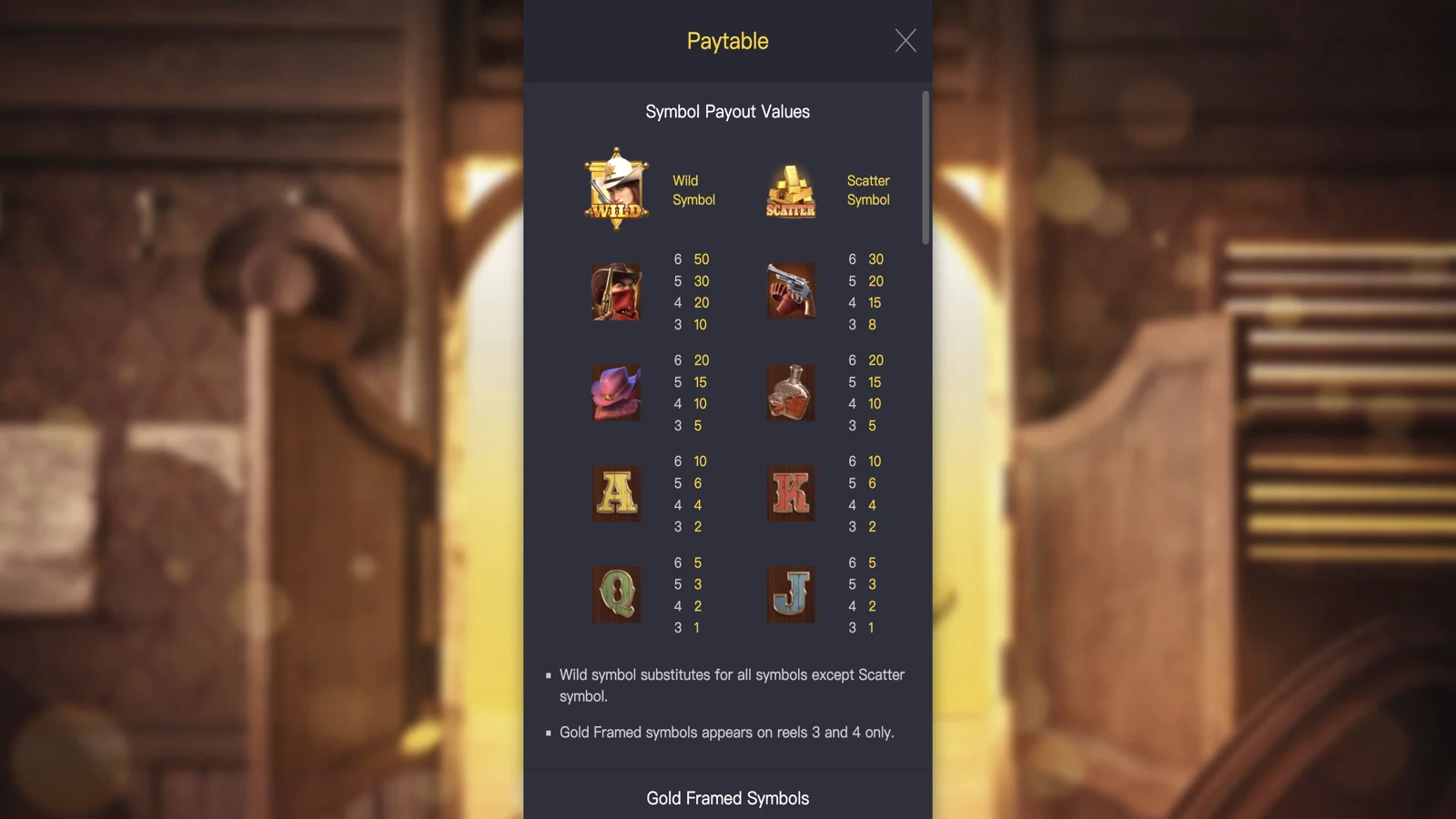

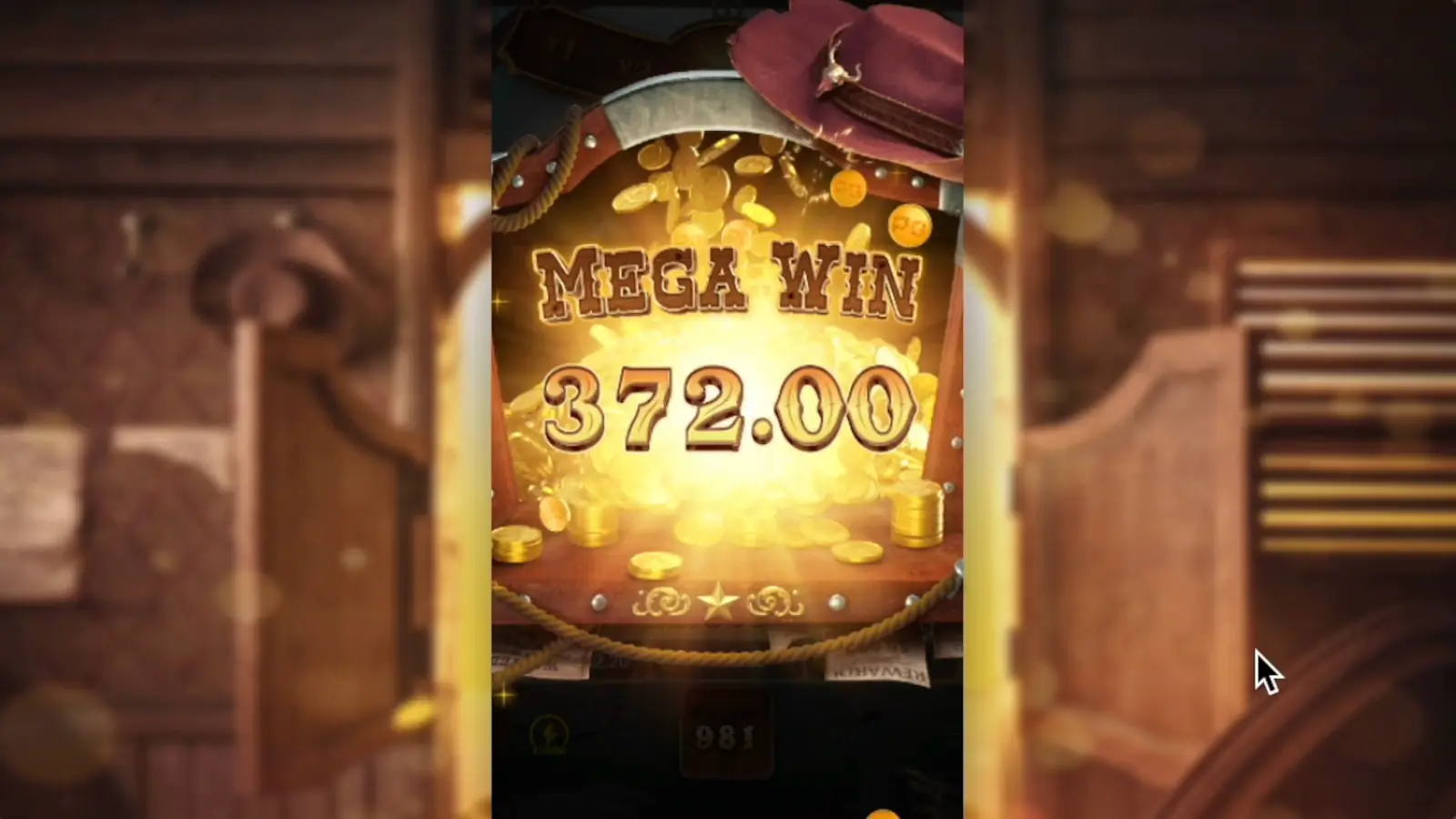
If your main reason for searching Wild Bounty Showdown similar slots is the 5000x payout ceiling, then max-win alignment should guide your next pick. Not every 5000x game feels the same, but matching the top-end cap does help preserve your upside expectations. The practical math is simple. Multiply stake by max-win multiple to estimate the highest advertised payout. For Wild Bounty Showdown, a 5-coin stake gives a theoretical top payout of 25,000 coins because 5000 x 5 = 25,000. At the minimum bet of 0.2, the same ceiling becomes 1,000 stake units. This matters when comparing alternatives because two games can share a 5000x cap while supporting different betting ranges and therefore different practical session planning. A player with a 100-coin bankroll who wants 200 spins at 0.5 coin each is staking the full bankroll across the session. On a high-volatility title, that is aggressive. A safer plan is often 0.2 to 0.4 per spin if you specifically want to survive long enough to reach a bonus cycle. Actionable tip: if your goal is pure top-end pursuit, compare max win and stake flexibility together, not separately. Games with a similar 5000x cap but lower maximum bets can still be more manageable for controlled sessions. Use the table to see how each slot converts its multiplier into coin terms at common stake levels.
| Game | Provider | Max Win | Min Bet | Max Bet | Top Payout at 5 Bet | Worked Example |
|---|---|---|---|---|---|---|
| Wild Bounty Showdown | PG Soft | 5000x | 0.2 | 100 | 25,000 | 5000 x 5 = 25,000 |
| Canyon Gold Rush | PG Soft | 5000x | 0.2 | 80 | 5,000 | 5000 x 1 = 5,000 |
| Gold Sheriff Ways | PG Soft | 5200x | 0.2 | 60 | 10,400 | 5200 x 2 = 10,400 |
| Wild Bandito | PG Soft | 5000x | 0.2 | 50 | 2,500 | 5000 x 0.5 = 2,500 |
The strongest mechanic-based alternatives to Wild Bounty Showdown are cascade multiplier games, because the experience of a spin is driven as much by win sequencing as by theme. In Wild Bounty Showdown, a single paid hit can remove symbols, trigger a drop, and let the multiplier build across a chain. That structure changes expected value distribution: many small wins can combine into one meaningful sequence, and free spins become more dangerous because they allow more opportunities for multiplier escalation. To compare this with rivals, look at ways-to-win count, whether cascades are active in both base and bonus play, and whether the multiplier persists or resets between drops. Here is a useful session example. Assume a 1-coin stake and a bonus round that produces four consecutive cascades with visible multiplier steps of 1x, 2x, 3x, and 5x applied to sequential base wins of 0.8, 1.1, 0.6, and 2.0. The total return is not 4.5 coins; it becomes (0.8 x 1) + (1.1 x 2) + (0.6 x 3) + (2.0 x 5) = 0.8 + 2.2 + 1.8 + 10 = 14.8 coins. That is why cascade games can outperform standard line games during short feature bursts even when their base hit rate looks ordinary. Actionable tip: if you enjoy Wild Bounty Showdown because wins can snowball, prioritize games where the multiplier clearly stacks through the entire sequence. If you prefer less variance, choose a cascade slot without a progressive multiplier, because it will usually deliver a flatter reward curve.
| Game | Ways | Cascades | Multiplier | Hit Frequency | Best Use Case |
|---|---|---|---|---|---|
| Wild Bounty Showdown | 3600 ways | Yes | Yes | 29.04% | Best for players who want chained wins plus bonus acceleration |
| Dead Man's Trail | 243 ways | Yes | Yes | 30.10% | A slightly more active hit rhythm with smaller average connections |
| Outlaw Trails Megaways | Up to 117,649 ways | Yes | Yes | 27.80% | Higher reel variability but rougher short sessions |
| Bounty Tracks | 1024 ways | Yes | No | 31.40% | Better if you prefer simpler cascades without aggressive escalation |
Now that you understand which Wild Bounty Showdown similar slots match its RTP range, volatility, max-win bracket, and cascade structure, the next step is choosing a stake that fits your session plan. A practical rule for high-volatility games is to target at least 200 spins from your bankroll so variance has room to play out. With a 100-unit bankroll, that points to a 0.5-unit stake at the absolute top end, while 0.2 to 0.4 is more conservative for bonus hunting. If your focus is feature access, pick the strongest cascade-multiplier option. If your focus is top-end chase, stay near the 5000x class.
This Wild Bounty Showdown FAQ answers the search queries players ask most often, including RTP, free spins, volatility, maximum win, betting limits, demo access, mobile play, and legal deposit planning. The game combines a 6-reel 3-4-5-5-4-3 layout, 3,600 ways to win, cascading symbols, wild substitution, a gold-frame mechanic, and an 8x starting free spins multiplier, so understanding the numbers matters before you spin.
At a glance, Wild Bounty Showdown is a high-volatility PG Soft slot with 96.75% RTP, a 29.04% hit frequency, and a top payout of 5,000x stake. The betting range is 0.2 to 100, and the layout uses 6 reels in a 3-4-5-5-4-3 configuration for 3,600 ways to win. These numbers explain why bankroll planning matters: if you stake 0.2, a 50-coin budget can cover roughly 250 spins, while the same budget at 1 coin covers only 50 spins. Because the game relies on cascading wins, wild substitution, and a progressive multiplier, one spin can generate more than one payout event, but long dry stretches are still normal in a high-volatility model.
The most important practical tip is to match your session size to variance. If you want time to naturally chase free spins, use a smaller bet that supports at least 150 to 250 spins. If you prefer direct access and your casino allows it, evaluate the feature buy only after comparing its cost to your full bankroll, because paying for bonus entry can compress risk dramatically. For readers searching specifically for a Wild Bounty Showdown FAQ that gives real numbers instead of generic descriptions, the table below summarizes the core data you should know before playing.
| Metric | Value | Why it matters |
|---|---|---|
| RTP | 96.75% | Theoretical long-run return; house edge is 3.25% |
| Volatility | High | Expect bigger swings and more value concentrated in features |
| Hit Frequency | 29.04% | About 29 paying spins per 100 on average |
| Max Win | 5,000x | At 0.2 bet = 1,000 coins; at 100 bet = 500,000 coins |
| Grid | 3-4-5-5-4-3 | Creates 3,600 ways through reel-height multiplication |
| Free Spins Trigger | 3+ scatters | 10 spins to start; +2 spins per extra scatter; starts at 8x |
The game’s bonus profile revolves around four linked mechanics: cascading wins, the gold-frame mechanic, a progressive multiplier, and the free spins feature. Free spins begin when 3 or more scatters land. The standard trigger gives 10 free spins, and each extra scatter adds 2 more, while the bonus starts at 8x. That opening multiplier is not cosmetic; it changes the economics of the round immediately. For example, a 12-coin base win in free spins becomes 96 coins at 8x before any multiplier growth from additional cascades. This is why many players treat the bonus round as the real source of high-end value rather than the base game alone.
RTP and volatility should always be read together. A 96.75% RTP sounds strong on paper, but a high-volatility slot can still produce long downturns because much of that return is hidden inside infrequent premium events. The best actionable approach is to plan for variance, not fight it. If your bankroll supports only 50 spins, you are more exposed to random swings than if it supports 200. If you want lower emotional pressure, use demo mode first and record your bonus frequency over a controlled sample. That kind of disciplined testing is more useful than relying on short-term stories about hot or cold sessions.
| Scenario | Calculation | Result |
|---|---|---|
| House edge on 100 coins wagered | 100 × 3.25% | 3.25 coins theoretical loss |
| Expected paying spins in 200 spins | 200 × 29.04% | 58.08 paying spins on average |
| 4-scatter bonus trigger | 10 + 2 | 12 free spins |
| 12-coin bonus hit at starting multiplier | 12 × 8 | 96 coins |
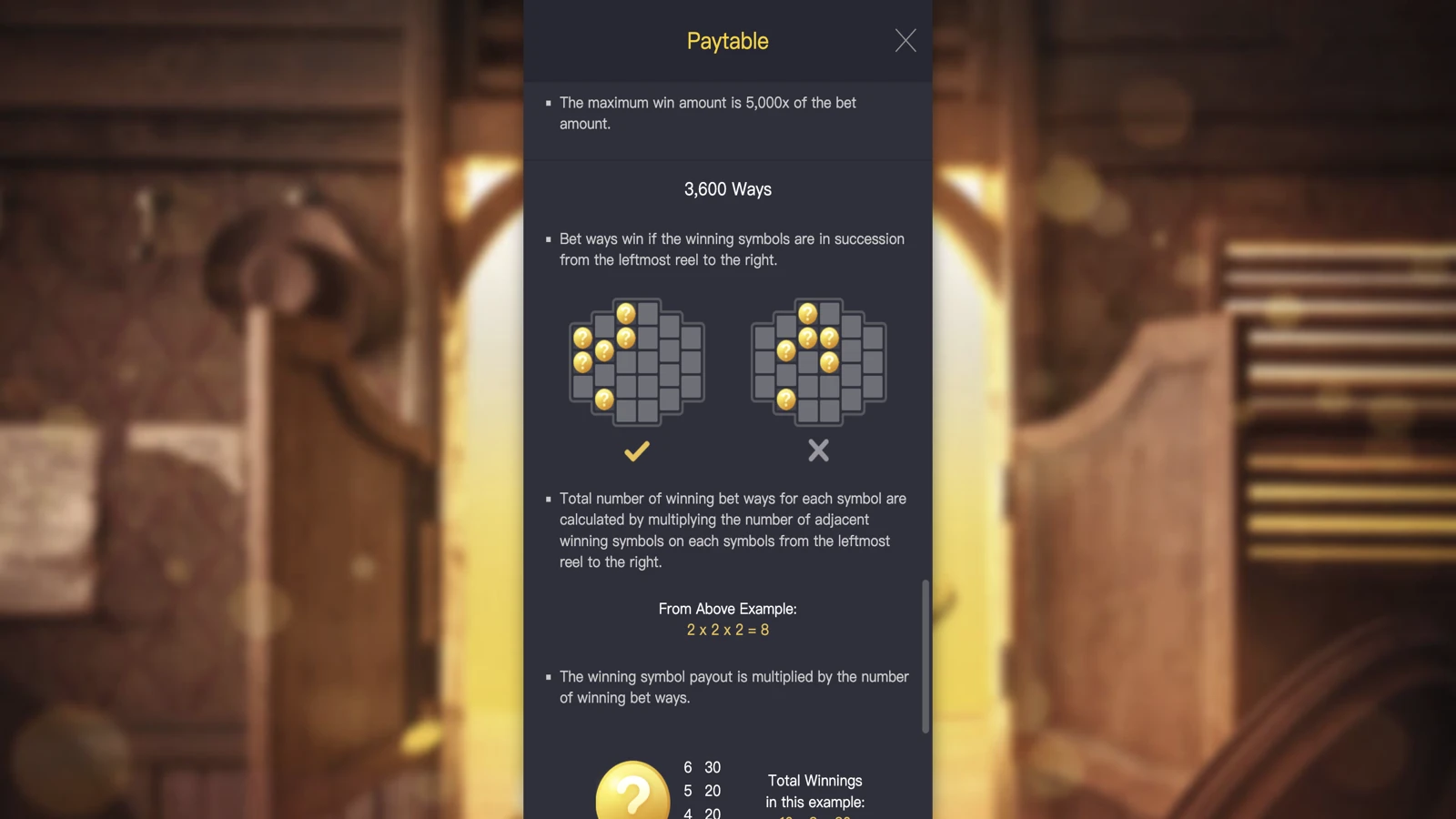
Searchers looking for Wild Bounty Showdown FAQ details often want to know two things before anything else: can they legally access the game in the US, and how much should they deposit if they do? The legal answer depends on your state and the license held by the gambling site, not only the game provider. That means the correct process is to verify local rules, confirm the platform is regulated, read the bonus terms, and check whether features like autoplay or feature buy are enabled in your jurisdiction. Never assume availability based on ads, affiliate lists, or mirror sites.
Deposit planning should be built around volatility. With a minimum bet of 0.2, a 40-coin budget supports around 200 spins, which is usually a healthier testing sample for a game with a 29.04% hit rate than a short burst at a higher stake. If the same player deposits 40 coins and stakes 2 per spin, the session shrinks to just 20 spins, leaving far less time to reach free spins or a strong cascade chain. That difference is why low-to-moderate stake sizing is usually the safer route for first sessions. A reliable deposit strategy is more important than chasing the 5,000x headline from the start.
| Budget | Stake | Approximate Spins |
|---|---|---|
| 40 coins | 0.2 | 200 spins |
| 40 coins | 0.5 | 80 spins |
| 40 coins | 1 | 40 spins |
| 40 coins | 2 | 20 spins |
Wild Bounty Showdown has a stated RTP of 96.75%, which means the game is designed to return about 96.75 coins for every 100 coins wagered over a very large sample of spins. That does not guarantee a short session result, because the slot also carries high volatility. In practical terms, a player staking 1 coin per spin across 1,000 spins would wager 1,000 coins; the long-run theoretical return is 967.5 coins, while the theoretical house edge is 32.5 coins. Real sessions can land much higher or lower because bonus rounds, cascades, and the multiplier system concentrate value into fewer but stronger wins. For deeper number breakdowns, compare the game math on the RTP guide and the statistics page.
Now that you understand the Wild Bounty Showdown FAQ, RTP, volatility, free spins math, and bankroll basics, try it yourself:
Start Playing18+ | T&Cs ApplyThe Wild Bounty Showdown slot is built for high-intensity sessions: it has 96.75% RTP, high volatility, a 29.04% hit frequency, and a 5000x max win. Those numbers matter for responsible play because a game with high volatility can go through long dry spells before a larger result appears. In practical terms, that means bankroll swings can feel sharper than on lower-volatility games, even if the long-term RTP looks competitive. If you are playing this title, the safest approach is to treat every spin as paid entertainment, not income. A quick example shows why. If you spin at 1 coin for 100 spins, your total stake is 100 coins. Using the listed RTP, the theoretical long-run return is 100 × 0.9675 = 96.75 coins, which means an average theoretical cost of 3.25 coins over a very large sample. But because volatility is high, a short session can finish far above or far below that average. The 29.04% hit frequency also means roughly 29 winning spins per 100 spins on paper, so about 71 spins in 100 may return nothing. That losing-spin clustering is exactly why chasing losses is dangerous. If a session becomes emotional, rushed, or bigger than your original budget, the problem is no longer the slot mechanics but the decision-making around them. The advice below is meant to help you spot risk early, slow down before mistakes get expensive, and find support if gambling stops feeling like a controlled leisure activity.

Ask yourself these questions honestly before and after a session on Wild Bounty Showdown slot. Do you increase your stake after losses because you want to win money back quickly? Do you keep playing after reaching your spending limit because a bonus feature feels “due”? Do you borrow money, use bill money, or dip into savings to keep spinning? Do you hide gambling activity from family or friends? Do you feel irritated, anxious, or restless when you try to stop? Do you spend more time thinking about gambling than planning your normal routine? Even two positive answers can be a useful signal to step back. The game data gives a clear reason: high volatility means outcomes are uneven, and uneven outcomes can trigger emotional decisions. If your session plan was 40 units and you reload another 40 because you believe the free spins feature is close, your total risk just doubled. If your bet was 0.5 and you move to 2 after a downturn, that is a 4x increase in exposure per spin. On a rough stretch of 50 spins, your possible loss ceiling changes from 25 units to 100 units. That kind of escalation is one of the clearest warning signs of problem gambling behavior.
Responsible gambling works best when your rules are numerical, not emotional. Start by setting a hard loss limit, a time limit, and a maximum bet before the first spin. For a high-volatility slot like Wild Bounty Showdown slot, many players prefer at least 150 to 250 spins of bankroll coverage at their chosen stake to reduce the chance of busting too quickly. The math is simple. If your budget is 50 units, then a 0.2 stake gives 250 spins of coverage because 50 ÷ 0.2 = 250. A 0.5 stake gives 100 spins because 50 ÷ 0.5 = 100. A 1 stake gives only 50 spins. More coverage does not guarantee wins, but it does reduce the speed at which volatility can damage your bankroll. Next, decide on a stop-win and stop-loss rule. For example, if you start at 50 units, you may stop if you fall to 35 units or rise to 80 units. That keeps both downside and greed in check. Another good habit is to avoid feature buy decisions when frustrated. If a bonus buy costs the equivalent of many base spins, compare it to your total budget first. If a bonus buy were 100x your stake and your total bankroll was 120x, then one purchase would consume about 83.3% of your funds. That is usually too much concentration for a responsible session. Finally, take breaks every 20 to 30 minutes, disable auto-pilot behavior in your own routine, and never gamble when tired, drinking, or under pressure to solve money problems.

This section matters for responsible play because game math affects emotional pressure. The Wild Bounty Showdown slot combines a 96.75% RTP with high volatility and 29.04% hit frequency. RTP is a long-run theoretical return, not a short-session promise. Volatility describes the size and spacing of wins, not whether the game is “better.” High volatility can produce exciting peaks, but it can also deliver extended periods with limited returns. If you misread that variance, you may start raising stakes, extending session length, or buying features at the wrong time. A more disciplined view is to estimate risk before you play. If around 29.04 spins in 100 are winning spins on paper, then around 70.96 spins in 100 may lose. That does not mean every winning spin is profitable, because some wins can be smaller than the triggering stake. So a player can see frequent animation and still be net down. This is why “I hit often enough” is not a safe indicator. The better indicator is whether you stayed inside your spending plan. Use the table below to translate the game profile into practical risk control.
The 5000x headline is exciting, but responsible gambling starts by putting that number in context. A max win is the upper ceiling, not the expected outcome of a normal session. If you stake 0.2, then 5000x equals 1000 units because 5000 × 0.2 = 1000. If you stake 1, the ceiling becomes 5000 units. If you stake 5, it becomes 25000 units. Those numbers look huge, which is why they can distort judgment. Some players start thinking a larger bet gives them a “better chance” to reach the cap. It does not change the structure of volatility; it only changes the money attached to each outcome. Responsible play means separating win potential from bet sizing. A safer question is not “How much could I win?” but “How many losses can I absorb without breaking my budget?” If your bankroll is 100 units and you bet 2 per spin, you have 50 spins of coverage. With a 0.5 bet, you have 200 spins. For a high-volatility title, the second option usually gives more control. The practical takeaway is simple: admire the 5000x ceiling, but never build a session plan around hitting it.
The 6-reel 3-4-5-5-4-3 grid and 3600 ways to win can make the game feel busy and generous, but more ways do not remove risk. They simply describe how symbol combinations can connect across adjacent reels. The real responsible gaming lesson is that visually frequent action can mask overall spending. Cascading wins, wild substitutions, gold-frame upgrades, and progressive multipliers create momentum, and momentum can trick players into ignoring session limits. One useful habit is to review total stake, not animation count. If you play 120 spins at 0.5, your total outlay is 60 units. If several cascades produce many small returns but your balance still drops from 100 to 74, the session result is minus 26 units no matter how active the reels felt. This is why a written stop point beats intuition. For Wild Bounty Showdown slot, treat the feature set as entertainment value, not evidence that a comeback is close.
If gambling is causing financial strain, emotional stress, conflict at home, or a loss of control, get support early. The strongest move is often the simplest one: stop the session, block further deposits, and talk to someone before placing another bet. If you are in the Philippines or using Philippine-facing gambling services, use the official responsible gaming resource below. When reading support information, focus on practical steps: self-exclusion, cooling-off tools, deposit limits, and contact points for counseling or regulator guidance. You do not need to wait for a crisis to ask for help. If the Wild Bounty Showdown slot has shifted from fun to pressure, that change alone is enough reason to pause and seek support.
18+ only. Gambling should be limited to adults who can afford to lose. Never use borrowed funds, money for bills, rent, food, or essential expenses. If you feel loss of control, stop immediately and seek help.
Now that you understand the risks, limits, and warning signs for Wild Bounty Showdown slot, try it only if you can stay within a strict budget:
Play Now18+ | T&Cs Apply